Study at world-class universities in the United States and gain globally recognised degrees. Build your future with innovative education, research opportunities, and global career prospects.

Study at world-class universities in the United States and gain globally recognised degrees. Build your future with innovative education, research opportunities, and global career prospects.

The United States is one of the most popular destinations for international students, offering world-class universities, advanced research facilities, and diverse academic programmes. With its strong economy and innovative education system, the USA provides excellent opportunities for students to receive a high-quality education and build successful global careers.
Studying in the USA also allows students to experience a vibrant multicultural environment while developing valuable skills and professional networks. With expert guidance from Focus Education, students can choose the right university, course, and visa pathway that align with their goals and begin a successful international journey.
Choosing the right career path is an important decision for every student planning to study abroad. At Focus Education, our expert counsellors provide personalised career guidance based on students’ academic background, interests, and long-term goals.
We help students understand different career opportunities, study programs, and future job prospects. Our counselling ensures that students make well-informed decisions about their education and career journey.
The United States offers a wide range of globally recognised programmes designed to meet industry demands and prepare students for future career opportunities. Students can choose from diverse academic fields that provide strong research exposure, practical learning, and excellent job prospects.
To begin your USA student visa application, prepare all required documents in advance. Proper documentation helps ensure a smooth process and improves the chances of successful visa approval.

The United States has one of the most advanced and diverse education systems in the world, offering students a wide range of academic opportunities and innovative learning environments. From universities and colleges to community colleges, the USA provides flexible pathways that help students develop strong academic knowledge, research skills, and creative thinking.
The higher education system in the USA offers multiple degree options, including bachelor’s, master’s, and doctoral programs across various fields. With top-ranked universities, diverse courses, and excellent career opportunities, studying in the USA allows students to gain world-class education, global exposure, and valuable professional experience in a multicultural environment.
Studying in the USA is a popular choice for international students seeking world-class education and global career opportunities. To gain admission to US universities, students must demonstrate their academic qualifications and English language proficiency. Commonly required exams include aptitude tests such as SAT, ACT, GRE, or GMAT, along with English proficiency tests like IELTS, TOEFL, PTE, or Duolingo.
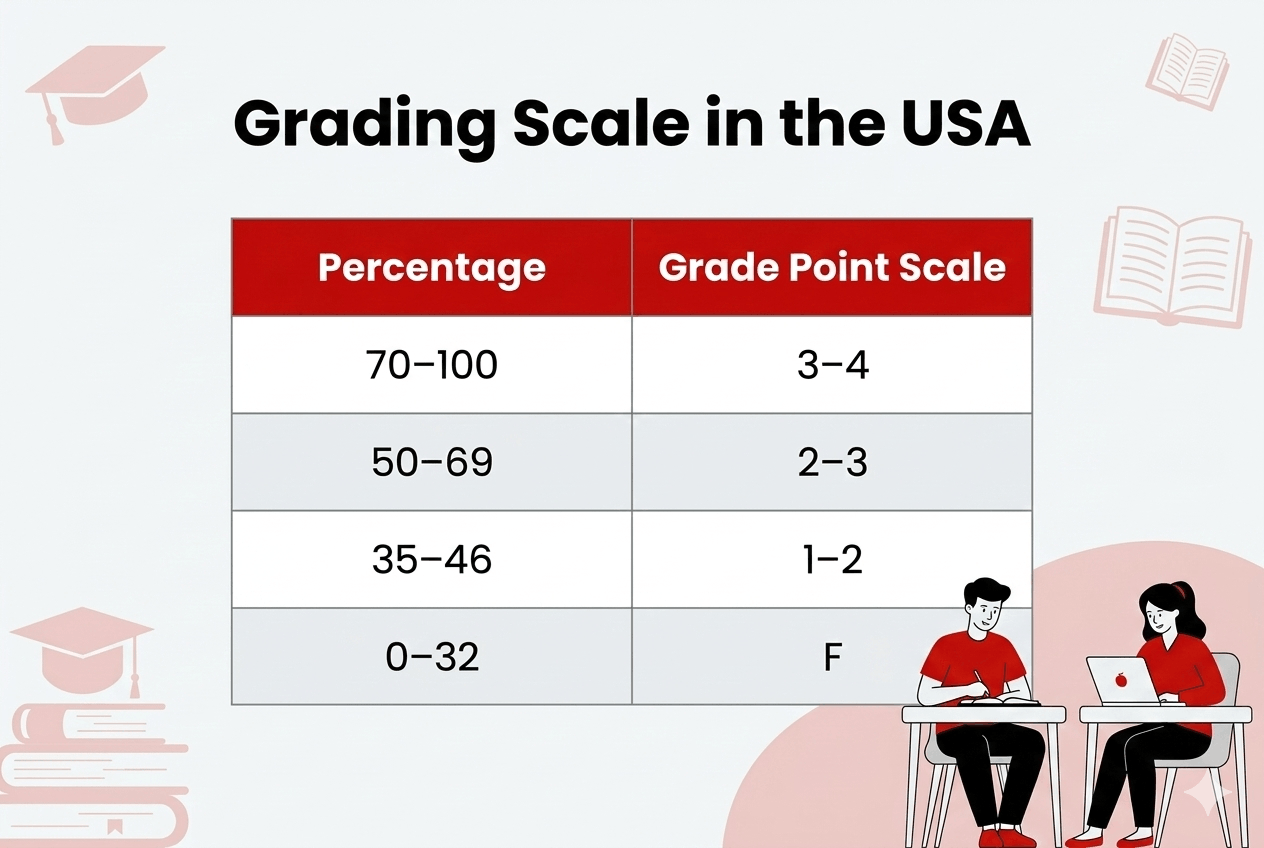
Indian students must also meet specific eligibility criteria, including academic transcripts, standardized test scores, letters of recommendation, and personal statements depending on the chosen university and program. The US education system also uses a grading scale ranging from A to F, often calculated through Grade Point Average (GPA) to evaluate students’ academic performance.
The cost of studying in the USA generally includes tuition fees, living expenses, and other academic costs. Tuition fees vary depending on the university, program, and location, but on average students spend between $15,000 to $55,000 per year. Undergraduate programs usually cost around $20,000 to $40,000 per year, while master’s programs may range from $15,000 to $40,000 annually. Proper planning helps students manage their budget effectively while pursuing their education.
Apart from tuition fees, students must also consider the cost of living in the USA, which varies based on the city and lifestyle. Common expenses include accommodation, food, books, travel, and personal expenses. On average, students spend on housing, food, study materials, and daily living costs, which can differ between large metropolitan cities and smaller towns.
US universities offer three major admission intakes: Fall (September–December), Spring (January–May), and Summer (starting from May). Students must also meet academic qualifications, English language requirements, and visa regulations to study in the USA. Scholarships are also available for Indian and international students, helping reduce tuition fees and making higher education more accessible.
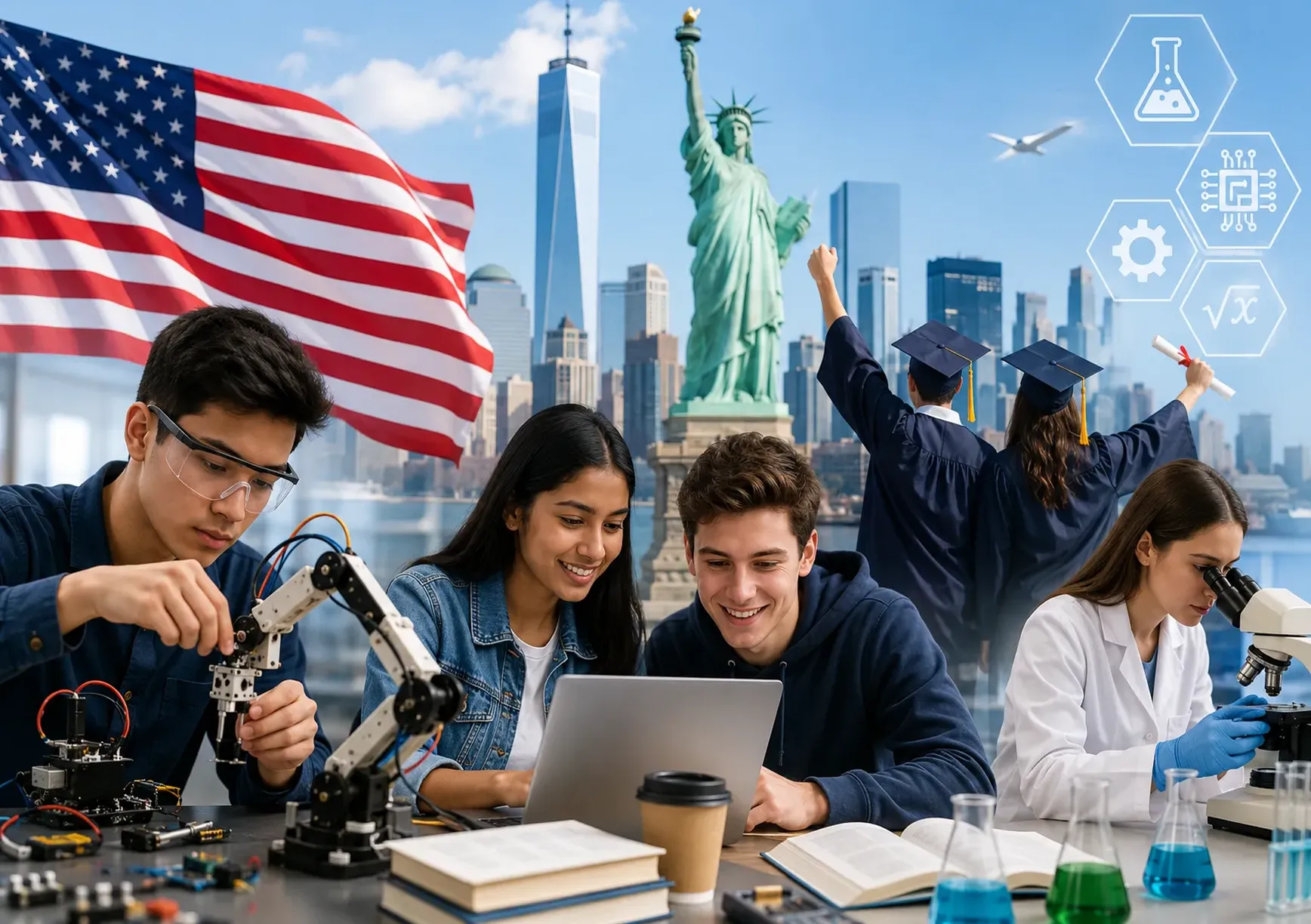
STEM, which stands for Science, Technology, Engineering, and Mathematics, is one of the most popular study fields in the United States. These programs combine multiple disciplines to develop critical thinking, innovation, and problem-solving skills. Due to the growing demand for technology and research professionals, STEM courses are highly valued and attract students from around the world.
One of the biggest advantages of STEM programs is the Optional Practical Training (OPT) extension of up to 24 months, which allows international students to gain practical work experience after completing their studies. This opportunity helps students develop professional skills, gain industry exposure, and build strong career pathways in leading global companies.
The USA also offers excellent career opportunities across industries such as technology, healthcare, finance, and engineering. Students can benefit from internships, part-time work opportunities, and post-study work options that help them gain real-world experience and expand their professional network while studying or after graduation.
Everything you need to know before starting your study abroad journey.
Yes, both of the documents play an inevitable role in application success, leading to acceptance into the program applied for; hence, having properly drafted SOP and LORs are required.
USA universities have three intakes each year – January, May, and September – commonly referred to as Fall, Spring, and Winter intakes. However, the majority of the courses are offered in the September intake, so the students who are in their final semesters can start preparing as early as 3 to 4 months before the planned admission intake to ensure course availability and sufficient processing time.
A university admission SOP should be clear, concise, and academically focused.
It should include:
Introduction: Course applied for and your academic motivation.
Academic Background: Relevant qualifications, coursework, projects, or research.
Relevant Experience: Internships, work experience, or research related to the course (if applicable).
Why This Course & University: Specific modules, teaching style, or academic strengths.
Skills & Strengths: Key academic and professional skills supported by brief examples.
Career Goals: How the course aligns with your short- and long-term plans.
Conclusion: Reaffirmation of motivation and readiness for the program.
The tone should be formal, and a generic approach should be avoided.
Each university has its own strengths in specific academic domains. As per your recently completed studies and inclination towards the major or multidisciplinary domain, a student should shortlist the universities as per the rankings, tuition fees, and acceptance ratio.
All the universities in the USA have an online application platform, where all the personal and academic information can be filled in alongside the supporting documents, like academic and experience documents to complete the application submission.
In USA, universities do not conduct mandatory interviews as a part of the application process, before issuing the letter of acceptance. However, the US embassy conducts visa interviews to assess the genuine intent of the student as well as financial stability and plans to return after course completion before issuing the visa.
Most US universities require applicants to submit English Proficiency Test scores such as IELTS, PTE, or TOEFL. These scores are also required by visa authorities and must be submitted along with the visa application.
There is a significant reduction in the requirement of GRE or GMAT scores by the universities after the COVID-19 period. However, some top-tier and Ivy League universities recommend or mandate these scores as a part of the application. Submitting GRE or GMAT results can improve the chances of acceptance into the program and enhance visa application credibility.
A full-time international student is permitted to work up to 20 hours per week during term time, strictly on campus.
It is not advisable to work off-campus as it would lead to a violation of student visa norms.
It varies from universities and programs applied to, as some of the post-graduate research and PhD programs may take up to 6 to 8 weeks, whereas undergraduate and postgraduate programs generally issue decisions within 2 to 4 weeks.
Yes. Students in their final year or semester of their undergraduate program can apply for conditional admission. Final acceptance is granted once proof of course completion is submitted.
This process allows students to reserve a seat for a short-period.
Yes, an academic gap after higher secondary education is accepted up to 3 years with proper justification. After a bachelor’s Degree, a gap up to 10 years may be accepted subject to relevant work experience or self-employment documentation.
Yes, it is possible to change the institution after arriving in the USA. However, only after the completion of the first semester as per the USCIS Regulations. Moreover, it is strongly recommended that the course level is not downgraded while changing the institution.
It is the number denoted by the USCIS for the universities, which is issued upon meeting the financial and academic conditions of acceptance. It is one of the crucial documents to be carried at the time of visa appointment as well as while travelling to the USA.
OPT (Optional Practical Training) allows international students on an F-1 Visa to gain temporary work experience directly related to their field of study. It is valid for 12 months with an extension of up to 36 months for STEM fields.
STEM stands for Science, Technology, Engineering, and Mathematics. Programs under these domains allow eligible international students to receive up to 36 months of Optional Practical Training on an F-1 visa.
A full-time international student is permitted to work up to 20 hours per week during term time, strictly on campus.
It is not advisable to work off-campus as it would lead to a violation of student visa norms.
It varies from universities and programs applied to, as some of the post-graduate research and PhD programs may take up to 6 to 8 weeks, whereas undergraduate and postgraduate programs generally issue decisions within 2 to 4 weeks.
Yes. Students in their final year or semester of their undergraduate program can apply for conditional admission. Final acceptance is granted once proof of course completion is submitted.
This process allows students to reserve a seat for a short-period.
Yes, an academic gap after higher secondary education is accepted up to 3 years with proper justification. After a bachelor’s Degree, a gap up to 10 years may be accepted subject to relevant work experience or self-employment documentation.
Yes, it is possible to change the institution after arriving in the USA. However, only after the completion of the first semester as per the USCIS Regulations. Moreover, it is strongly recommended that the course level is not downgraded while changing the institution.
It is the number denoted by the USCIS for the universities, which is issued upon meeting the financial and academic conditions of acceptance. It is one of the crucial documents to be carried at the time of visa appointment as well as while travelling to the USA.
OPT (Optional Practical Training) allows international students on an F-1 Visa to gain temporary work experience directly related to their field of study. It is valid for 12 months with an extension of up to 36 months for STEM fields.
STEM stands for Science, Technology, Engineering, and Mathematics. Programs under these domains allow eligible international students to receive up to 36 months of Optional Practical Training on an F-1 visa.
Get expert guidance for admissions and visas with personalised support designed for your goals.Begin your study abroad journey confidently with trusted counsellors by your side.