Study Abroad in Canada

Study at top Canadian universities and gain globally recognised degrees. Canada offers high-quality education and excellent career opportunities for international students.

Study in Canada

Quality Education for a Global Future

Canada has become one of the most preferred destinations for international students seeking high-quality education and global career opportunities. Every year, thousands of students choose Canada for its world-class universities, innovative learning environment, and internationally recognised degrees that open doors to successful careers.

The country is known for its multicultural society, safe communities, and high standard of living. International students find Canada welcoming and inclusive, making it easier to adapt to a new culture while enjoying a vibrant student life and gaining valuable global exposure.

With affordable education options, excellent research facilities, and strong employment opportunities, Canada offers students the chance to build a bright future. The country also provides pathways to work experience and potential immigration opportunities after graduation, making it an attractive choice for higher education.

Canada Study Visa & Costs

To start the Canada student visa process, students must prepare important documents such as a valid passport, academic transcripts, English language test scores (IELTS, TOEFL, or PTE), updated CV, work experience letters if applicable, letters of recommendation (LOR), and a statement of purpose (SOP). In case of previous visa refusals, students may also need to provide a visa rejection letter. Having complete and accurate documentation helps ensure a smooth and successful visa application process.

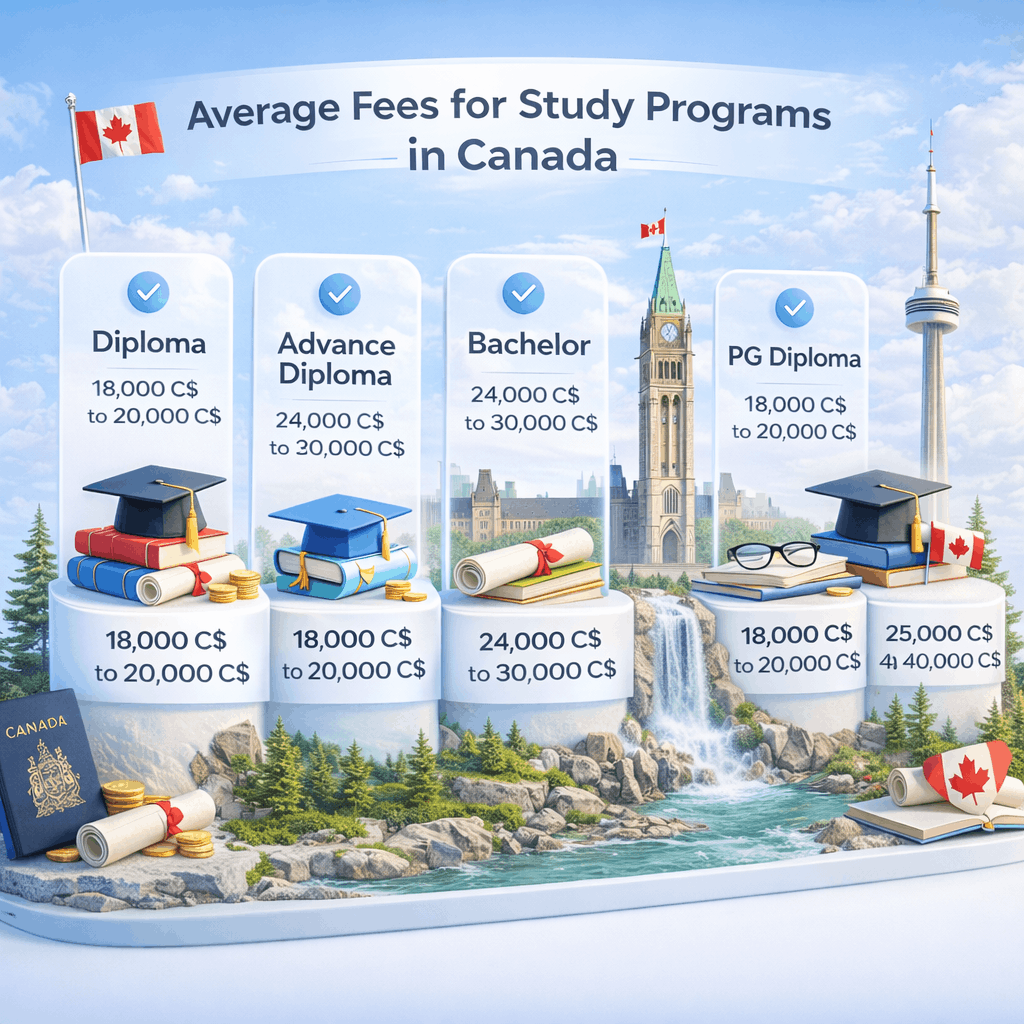
The cost of studying in Canada varies depending on the university, program, and location. On average, international students may expect to pay between CAD 18,000 and CAD 40,000 per year for tuition fees. Professional and medical programs may cost more than arts or humanities courses, but Canadian education offers excellent value due to its high academic standards and global recognition.

Apart from tuition fees, students must also consider the cost of living in Canada. Monthly expenses may include accommodation, food, travel, and leisure activities. On-campus housing generally ranges from CAD 900 to CAD 1000 per month, while off-campus accommodation may cost CAD 500 to CAD 800 per month. Living costs can vary depending on the city, lifestyle, and personal spending habits.


Job Opportunities in Canada:

Canada offers excellent career opportunities with its strong economy, high standard of living, and welcoming multicultural society. The country attracts skilled professionals and international students from around the world who wish to build successful careers. Students who complete a two-year program in Canada may receive a post-study work permit of up to three years, while a one-year program may allow a one-year work permit.


Canada’s job market is growing rapidly across several industries, especially in Information Technology and healthcare. Cities such as Toronto, Vancouver, and Montreal are known as major technology hubs, creating strong demand for IT professionals. At the same time, the healthcare sector continues to expand, offering opportunities for doctors, nurses, pharmacists, and other healthcare professionals.


In addition to technology and healthcare, Canada also provides career opportunities in natural resources, engineering, finance, education, hospitality, and creative industries. With its focus on work-life balance, quality education, healthcare services, and social welfare programs, Canada remains one of the best destinations for individuals seeking long-term career growth and a high quality of life.

Top courses in Canada:

Canada offers a wide range of career-focused programmes designed to meet global industry demands. Students can choose from diverse fields that provide excellent job opportunities and strong career growth.

Canada Student Visa Documents

Our step-by-step guidance helps students navigate the entire study abroad journey smoothly. From career counselling to visa application, we support you at every stage of the process.

Top Colleges in Canada

Top Colleges in Canada

S.No College Name Website
1Lakehead University through Georgian CollegeVisit
2Simon Fraser University through Fraser International CollegeVisit
3Wilfrid Laurier University through Wilfrid Laurier International CollegeVisit
4University of Manitoba through International College of ManitobaVisit
5Toronto Metropolitan University, through Toronto Metropolitan University International College (TMUIC) Visit
6Seneca CollegeVisit
7George Brown CollegeVisit
8Sheridan CollegeVisit
9Sheridan College at CCTTVisit
10Bow Valley CollegeVisit
11Douglas CollegeVisit
12Niagara CollegeVisit
13Niagara College TorontoVisit
14Fanshawe CollegeVisit
15Fanshawe College through ILAC International CollegeVisit
16Durham CollegeVisit
17Cambrian College – Hanson CampusVisit
18Confederation CollegeVisit
19Fleming CollegeVisit
20Fleming College Toronto CampusVisit
21North Island CollegeVisit
22Georgian CollegeVisit
23Langara CollegeVisit
24Loyalist CollegeVisit
25Sault CollegeVisit
26Lakeland CollegeVisit
27Centennial CollegeVisit
28Conestoga CollegeVisit
29College of New CaledoniaVisit
30LaSalle CollegeVisit
31College of the RockiesVisit
32Lethbridge PolytechnicVisit
33Northern Lights CollegeVisit
34Northern CollegeVisit
35St. Lawrence CollegeVisit
36Lambton CollegeVisit
37Selkirk CollegeVisit
38Assiniboine Community CollegeVisit
39Keyano CollegeVisit
40Canadore CollegeVisit
41Alexander CollegeVisit
42Brescia University College (affiliated with Western University)Visit
43Vancouver Community CollegeVisit
44Medicine Hat CollegeVisit
45NorQuest CollegeVisit
46Coquitlam CollegeVisit
47Portage CollegeVisit
48Coast Mountain CollegeVisit
49Great Plains CollegeVisit
50North West CollegeVisit
51Suncrest CollegeVisit
52Vancouver Premier CollegeVisit
53King’s University College at Western UniversityVisit
Top Universities in Canada

Top Universities in Canada

No. University 2026 Ranking 2025 Ranking
1University of Toronto29th25th
2University of British Columbia40th38th
3McGill University27th29th
4University of Alberta94th96th
5McMaster University173rd176th
6University of Calgary211th198th
7University of Waterloo119th115th
8Carleton University781-900th741-750th
9York University333rd362nd
10Concordia University465th415th
11University of Ottawa219th189th
12Dalhousie University283rd275th
13University of Guelph504th456th
14University of Windsor564th547th

Quick Answers to Yours Queries

Everything you need to know before starting your study abroad journey.

How much in advance should a student prepare for the application?

Canada’s universities have three intakes a year – January, May, and September; however, the majority of the courses are offered in the September intake, so the students who are in their final semesters can start preparing as early as 5 to 7 months before the planned admission intake to ensure the course availability and adequate processing time.

Evidently, both documents play an inevitable role in application success, leading to acceptance into the applied program; hence, properly drafted SOPs and LORs are required.

A university admission SOP should be clear, concise, and academically focused.

It should include:

Introduction: Course applied for and your academic motivation.

Academic Background: Relevant qualifications, coursework, projects, or research.

Relevant Experience: Internships, work, or research linked to the course (if any).

Why This Course & University: Specific modules, teaching style, or academic strengths.

Skills & Strengths: Key academic and professional skills with brief examples.

Career Goals: How the course supports your short- and long-term plans.

Conclusion: Reaffirm motivation and readiness for the program.

The tone of the explanation should be formal, and a generic approach should be avoided.

Each university has its exclusive strengths in particular domains. As per your recently completed studies and inclination toward a major or multidisciplinary domain, a student should narrow down the universities according to rankings, tuition, and acceptance ratio.

All Canadian universities have an online application platform, where personal and academic information can be filled in alongside the supporting documents, namely academic and experience documents, which will complete the application submission.

No, Canadian Universities do not mandatorily conduct interviews as a part of the application, before issuing the letter of acceptance. However, some top-tier universities conduct subject expert interviews to ensure that students are competent to meet the quality and reputation of the program, as well as being able to handle the academic burden of the program duration.

Is the English Language Test Mandatory for the application?

Canadian universities require candidates appearing for English Proficiency Tests such as IELTS, PTE, or TOEFL, which must be submitted along with the visa application. 

A full-time international student is allowed to work 24 hours per week during term time, whereas during term breaks, as per the university schedule, students can work full-time.

Also, during Co-Op internship terms, students are also allowed to work full-time.

It varies from universities and programs applied to, as some of the post-graduate research and PhD programs may take up to 6 to 8 weeks, whereas post-graduate taught as well as undergraduate programs usually release decisions in 2 to 4 weeks.

Yes, in Canada, those who are in the final year/semester of their undergraduate program can apply for conditional acceptance, where they will have to provide the course completion evidence before they can get final admission.

This procedure allows students to reserve a seat for a short period.

Yes, an academic gap after Higher Secondary Certificate is accepted up to 3 years with proper explanation, whereas after a Bachelor’s Degree, up to 10 years of gap is accepted, subject to proper work experience or self-employment documentation.

DLI refers to a Designated Learning Institution, which is recognized by the Education Ministry of Canada, ensuring the credibility of universities or colleges that are allowed to admit international students.

Canadian universities require candidates appearing for English Proficiency Tests such as IELTS, PTE, or TOEFL, which must be submitted along with the visa application. 

A full-time international student is allowed to work 24 hours per week during term time, whereas during term breaks, as per the university schedule, students can work full-time.

Also, during Co-Op internship terms, students are also allowed to work full-time.

It varies from universities and programs applied to, as some of the post-graduate research and PhD programs may take up to 6 to 8 weeks, whereas post-graduate taught as well as undergraduate programs usually release decisions in 2 to 4 weeks.

Yes, in Canada, those who are in the final year/semester of their undergraduate program can apply for conditional acceptance, where they will have to provide the course completion evidence before they can get final admission.

This procedure allows students to reserve a seat for a short period.

Yes, an academic gap after Higher Secondary Certificate is accepted up to 3 years with proper explanation, whereas after a Bachelor’s Degree, up to 10 years of gap is accepted, subject to proper work experience or self-employment documentation.

DLI refers to a Designated Learning Institution, which is recognized by the Education Ministry of Canada, ensuring the credibility of universities or colleges that are allowed to admit international students.

Begin Your Global Journey With Confidence

Get expert guidance for admissions and visas with personalised support designed for your goals.Begin your study abroad journey confidently with trusted counsellors by your side.

Start Your Journey With Us