
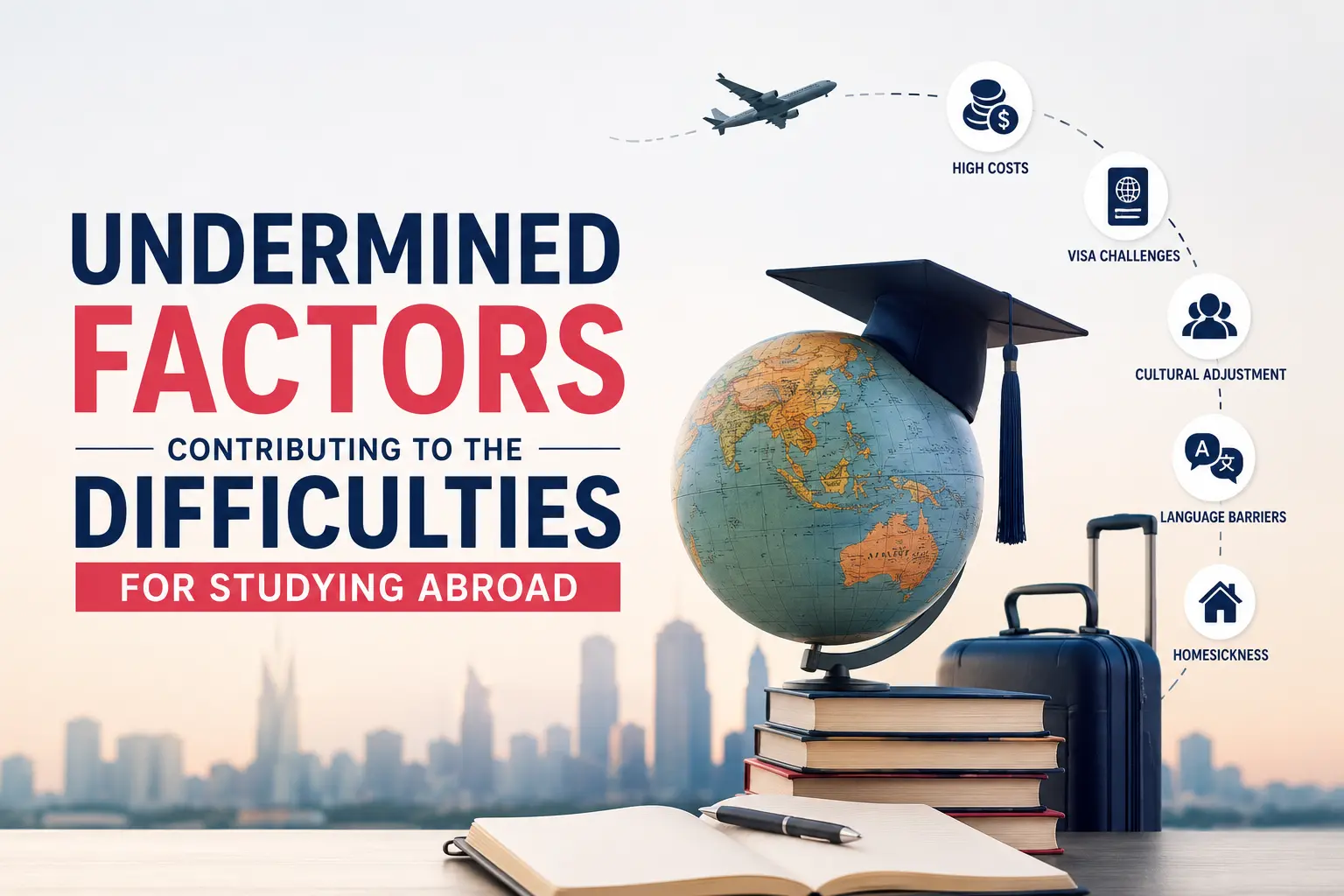
Studying abroad is often portrayed as a dream—a golden ticket to global opportunities, independence, and world-class education. While that’s partly true, the journey is rarely smooth. Beneath the surface of glossy brochures and Instagram-worthy campuses lie a host of undermined or often overlooked factors that make studying abroad more challenging than expected.
In this blog, we’ll explore some of the less-discussed but deeply impactful obstacles students face when pursuing education overseas.
Most students prepare for tuition fees, but hidden costs can quickly pile up:
These costs are often underestimated, leading to financial strain—even for those with scholarships or part-time jobs.
Living abroad can be emotionally exhausting. The excitement of a new culture often masks:
These issues are rarely discussed during the application phase, yet they can seriously impact a student’s performance and well-being.
Visa approval is one thing—maintaining legal status is another. Many students find it hard to navigate:
Minor errors can result in visa cancellations or academic consequences—something students often aren’t warned about in advance.
Even academically strong students can struggle due to differences in teaching styles or curriculum expectations:
The shift from one educational culture to another isn’t always smooth, especially if pre-arrival orientation is minimal or non-existent.
Even if your program is in English, communication can still be a challenge:
These subtle barriers often affect both academics and social life, making integration harder than anticipated.
Many institutions focus on admissions and forget what happens after students arrive:
Without these structures, students are left to figure things out on their own, which can feel overwhelming—especially in a foreign country.
Unfortunately, international students sometimes face subtle forms of exclusion or discrimination:
These experiences can be isolating and may not be addressed by the university at all.
Social media, movies, and marketing campaigns create an idealized version of studying abroad. When students encounter the real deal—homesickness, part-time jobs, long winters, visa stress—they can feel unprepared and disillusioned.
The goal of this blog isn’t to scare you away from studying abroad. It’s to show you the full picture, so you can prepare more realistically—and thrive once you’re there.
Understanding these undermined factors gives you the tools to:
Studying abroad can still be one of the most rewarding experiences of your life—if you go in with your eyes open.