
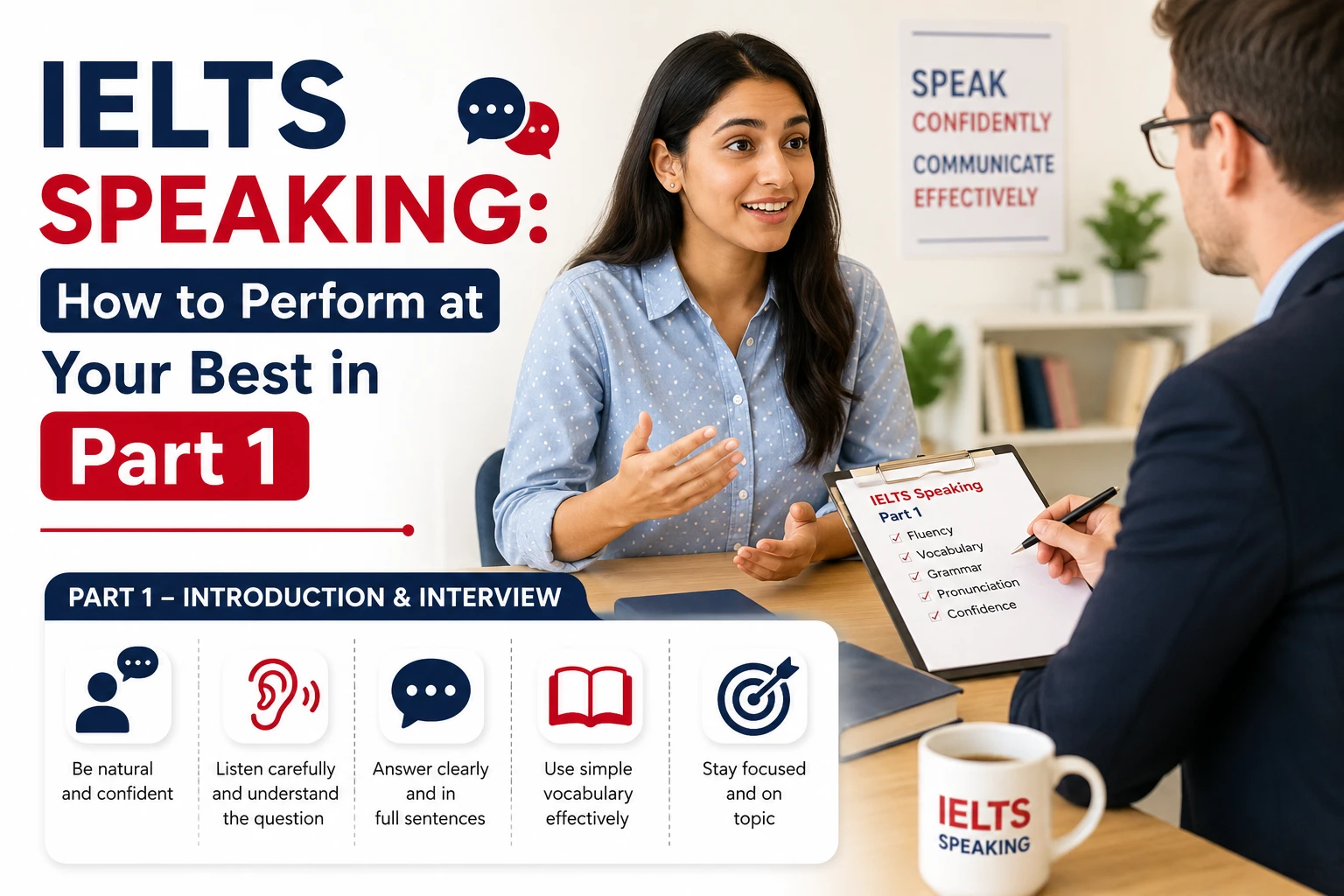
The IELTS Speaking test is either a face-to-face or virtual interview that lasts 11–14 minutes and is divided into three parts.
Part 1 is the introduction and interview section, where the examiner asks simple, everyday questions about your life, habits, and personal experiences. Although this part is often considered the easiest, many students underestimate it and end up feeling nervous or giving very short answers.
In this blog, we will focus on how you can perform your best in Part 1. In the coming blogs, we will also talk about how to succeed in Part 2 (the cue card) and Part 3 (discussion questions).
Many students feel that Part 1 will be easy because the questions are personal. However, once the test begins, even simple questions can feel challenging. Students sometimes worry about grammar, hesitate while speaking, or give quick one-line answers because they are unsure how much they should say. They may also fear being judged, making mistakes, or not understanding the question.
But with the right preparation, Part 1 becomes a great opportunity to build confidence and start the test strongly.
Part 1 always starts in a predictable way. The examiner will:
The topics in Part 1 are simple and familiar: hobbies, daily routine, friends, food, hometown, weather, music, and so on.
For example:
Q: Do you enjoy reading?
A: Yes, I do. I enjoy reading mainly in the evenings because it helps me relax after a long day. I prefer non-fiction books.
Useful Functional Language for Part 1
These phrases help you start and extend your answers naturally:
You do not need to use all of them, but including a few makes your speaking smoother and more confident.
Here are some typical questions the examiner may ask:
Home & Hometown
Work & Study
Daily Life
Likes & Preferences
Q: Do you enjoy watching movies? A: Yes, I do. I watch movies at least once a week because it helps me relax. These days, I mostly enjoy watching light-hearted comedies.
Q: Where do you usually go on weekends? A: I usually spend my weekends at home. After a busy week, I like having some quiet time. Sometimes I meet friends for a short outing.
Q: Did you enjoy school as a child? A: Yes, I did. When I was young, I really enjoyed going to school because I liked my teachers and I loved taking part in activities.
IELTS Speaking Part 1 is simple, but performing well requires clear communication, correct tense usage, and confident delivery. With steady practice, you can turn this section into a strong start that sets the tone for the rest of your test. Build comfort with common topics, practice extending answers naturally, and remember that small mistakes are normal. The key is to stay relaxed and speak naturally.
If you want guided speaking practice and personalised feedback, Focus Education offers structured sessions to help you perform your best.