
Studying Computer Science in Germany

Studying Computer Science in Germany There is no doubt that students and aspirants always come across the image of the United States of America whenever there is a callout for Computer Science studies. However, it is not the only nation where there are sophisticated courses and research-based developments in the field. Germany is becoming the hot-spot nation when it comes to Computer Science studies in recent years due to the number of exclusive student-supportive environments as well as research-driven program curriculums, and that too at affordable or minimal tuition fees compared to many other countries. Also, Germany’s leading computer science universities are also listed among the world’s top universities. Computer science is one of the most popular subjects of study in Germany, not just among native students but also among foreign students. This area of study also has a high employment rate. In this article, you will find the details about the best public and private universities for Computer Science in Germany. ⇒ Reasons to Choose Germany for Computer Science Technological Epicenter There are only a few countries that have had as much of an impact as Germany when it comes to science, engineering, and technology innovations and research. Germany has risen up the benchmarks over the years, becoming one of the most significant countries in Europe and beyond in terms of development and innovation. German organizations and industrial giants engage in research and development, which leads to outstanding results in the country’s economy, which is also one of the greatest in Europe and the globe. In fact, Germany was rated the world’s most technically sophisticated nation in the seventh edition of the Bloomberg Index Score in 2020. Germany has extensively embraced digitization, which has increased the demand for IT and Computer Science specialists of all specializations. Best Computer Science Programs Germany has about 400 higher education institutions that are distinguished by their optimal blend of academic and practical exposure-based pedagogies. In Germany, computer science programs are crafted to fulfil the demands of the labor market. To deliver a good higher education environment, learning, administration, and research are inextricably linked. Aside from having excellent undergraduate and postgraduate CS programs, most public institutions in Germany provide tuition-free education. Students enrolled in public universities are required to bear only administrative fees, which vary from barely EUR 100 to 500 per term. Globally Valued Qualifications There is a vast difference when it comes to the meaning of Globally Recognized Programs and Globally Valued Curriculums. Regardless of any reputed university that offers an undergraduate or graduate-level program, it would have it globally recognized, but it cannot be asserted that it would hold the value of it among the countries and respective employers. German certifications are well-known around the globe for their high quality and updating of curriculum over time to meet the evolving requirements. International companies prioritise computer science credentials, especially given Germany’s reputation for technical development and creativity. As a CS graduate from a German university, you will most certainly have a plethora of opportunities in the worldwide employment market. Whether you want to work in your native country, Germany, or somewhere in Europe or beyond, German credentials will provide you with the academic and practical skills you need to succeed. Wider Horizon for Employment Germany is a magnificent place to work as a computer engineer since its firms heavily invest in development and research, helping the country to keep its position as Europe’s biggest and one of the world’s largest economies. It boasts a number of start-ups and medium-sized tech enterprises, as well as huge international corporations with subsidiaries all over Europe and the world. Deutsche Bank is an excellent example since, despite being a financial company, it employs a considerable number of computer engineers, programmers, and IT professionals. Siemens, Skytec, and even automobile manufacturers mainly BMW and Daimler, are among the prominent German corporations that recruit IT graduates. Obtaining a certificate from one of the Germany’s premier institutions is, without a doubt, a persuasive means of getting a decent career anywhere in Europe and beyond. Affordable Tuition Fees The Federal Government has a dedicated approach towards education opportunities, not only for German nationals but also for global talents and enthusiastic students who want to gain higher education. For this, the primary hurdle that comes into the scenario is the tuition fees, which have been leveled at the same scale regardless of the nationalities of the students. Also, most public universities do offer programs without any tuition fees, charging only the bare minimum administrative fees ranging from EUR 100 to 500 per semester, making it affordable for all. On the other hand, even if students seek admission into private universities, fees are significantly lower, in the range of EUR 6000 to EUR 9000, which remains within financial reach for the majority of applicants. Furthermore, living costs are low across Germany, lowering the overall cost of pursuing higher education in Germany as a foreign student. ⇒ Top Specializations in Computer Science in Germany Artificial Intelligence The capacity of a computing system to solve problems, make predictions, or execute complicated tasks is referred to as artificial intelligence (AI). AI applications make use of cutting-edge technology like NLP, which understands written and spoken words, and ML, which allows applications to anticipate and propose actions. Human-Computer Interaction This specialization considers the many ways that people interact with computers, from websites and mobile phones to voice-enabled speakers and virtual reality. To maintain the interoperability and usability of programs across systems, effective interface creation and deployment necessitate the usage of standard libraries. Skills required: Communication, interpersonal skills, attention to visual detail, and mapping how people use software and systems. Game Design Aside from the realistic graphics that make today’s video games so enticing, the computer science specialty of game design examines the AI and machine learning that govern how players move through a game. Game design also takes into account how the efforts of front-end designers and back-end programmers should be integrated to create a unified product
USA: Why it is still the favorable country for studies among immigration turmoil?

USA: Why it is still the favorable country for studies among immigration turmoil? USA: Why it is still the favorable country for studies among immigration turmoil? Ever since the Mr. Donald Trump has been elected as the President of the United States of America, as per his election campaigns’ commitments of “Make America Great Again” has led many students and class of immigrants into fear of uncertainty towards their career and establishment aspirations in USA; however, on the other hand, President himself clearly indicated in one interview post his taking over of the White House that, “we do not have any issues with legal immigration, in fact we want legal immigration and global talent. This statement clearly indicated the motives of Trump Administration that, despite their immigration filtration drives to deport the illegal migrants and also reducing and reforming the employment-based visa categories and quota, they are willing to welcome the global talent. The universities in USA, have been actively known for research-oriented STEM programs as well as excellent student support environment. Moreover, the universities have also declared the number of student facilitation programs amid these concerns of rules changes in temporary immigration sector. Alongside this, it is evident that, the students who had been deported by the Immigration and Customs Enforcement (ICE) Police, has other side of the coin, which is left unnoticed. As per the indicative reports, such students had violated the F-1 Student Visa regulations, mainly working off-campus and that too illegally without having their wages recorded under social security number. Also, absconding or having irregularity in classroom presence, which led universities to report the data to Immigration Enforcement, led such students to be deported. Citing this, recently, US Secretary of State Marco Rubio, had also commented that, “We have issued you the student visas, to come here and study with dedication, but not to violate the rules of the issued visa for monetary gains”. Ergo, the remarks from the authorities clearly indicated that, there is no negative sentiments towards international students but if caught violating the rules of visa and other policies, it would not be in great favor of the student. Hence, those who are still willing to pursue studies in STEM programs and had earlier decided to pursue studies in USA but setting back a foot, due to such grounds of the evolving immigration environment, which is in reality is quite stable for those who are willing to be a genuine student instead of exploiting the issued visa rights. Ergo, we are constantly observing the trends of studying abroad, primarily the immigration regulations factors, which requires to be delivered to the students aspiring to study in USA, for which, the Focus Education is at your assistance with expertise and thorough guidance. At Focus Education, we understand the unique challenges faced by international students and specialize in helping Indian students achieve their dream of studying abroad. With years of expertise in higher education consultancy, we have proudly assisted thousands of students in securing successful visas, attaining their academic goals, and earning their degrees to embark on rewarding careers overseas. Many of our successful students have gone on to obtain post-study work permits, while others have chosen to settle permanently, building thriving lives in their new home countries. Our personalized approach ensures that every student receives tailored guidance, from selecting the right university and navigating the application process to adapting to new cultural environments. At Focus Education, we empower you to unlock your potential and seize every opportunity. With a proven track record of success, we are committed to turning your aspirations into accomplishments and helping you achieve a brighter future abroad.
Ireland: A Hub for Pharmaceutical Studies and Research
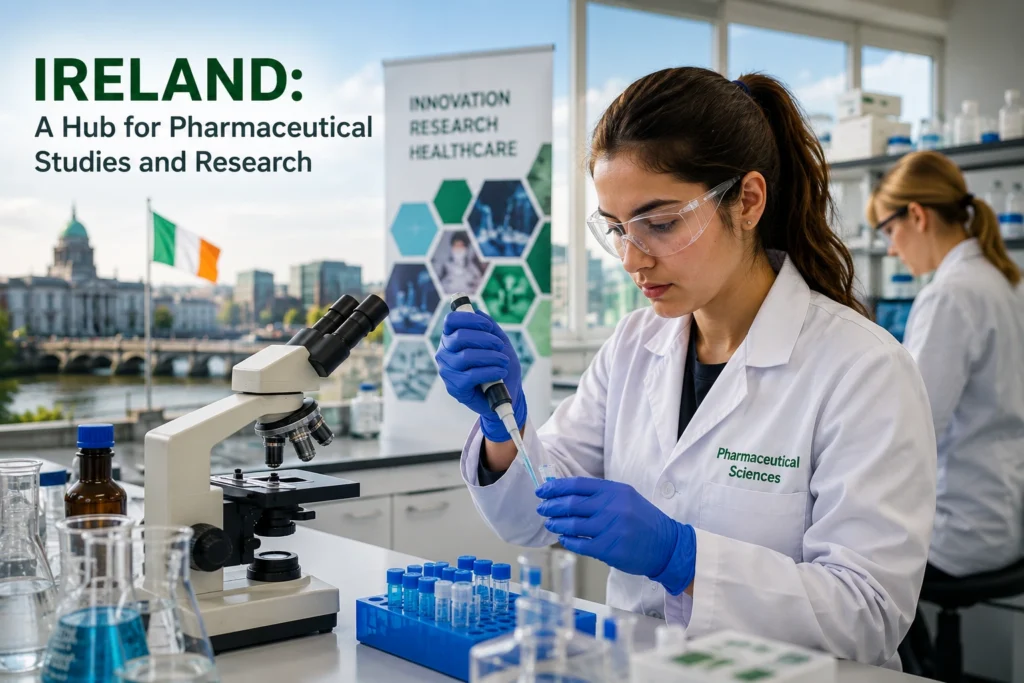
Ireland: A Hub for Pharmaceutical Studies and Research Ireland: A Hub for Pharmaceutical Studies and Research In last few years across the world, especially the phase of CoVID-19, led to have the understanding and importance of the robust healthcare systems for many nations as well as the pharmaceutical manufacturing and research aspects for any particular country, where even before the CoVID-19 pandemic, amongst many countries, Ireland emerged as the pharmaceutical prowess and led many breakthrough discoveries helping curtail number of illness and uplifting the health & well-being standards. In Ireland, there are number of fields in education which are prioritized namely business management as well as information technology and analytics, but the underdog field of pharmaceutical science for which Ireland is undermined. There are many reputed universities in Ireland having the legacy of more than fifty to hundred years, allowing the student to secure the admit and further pursue the program at graduate level. It being a great place to gain a third-level qualification while also enjoying a vibrant culture. It is one of the most globalized and open economies in the world with over 35,000 international students from over 160 countries choosing to study in Ireland. Focusing over the pharma research and education, it enjoys the benefits of having the English-speaking population instead of local Irish dialect, friendly business environment and most importantly the favorable taxes at only 12.5% for the corporates attracting many global giants to establish their headquarters and manufacturing facilities. Also, the many pharma companies are based in Ireland, as it allows industries convenient geometries to take entry and exit to mainland European markets as well as having other companies to establish their headquarters. This results into the higher employment opportunities around the country for the local graduates as well as international students, as the companies namely Johnson & Johnson, Pfizer, Amgen and Abbvie are having locations in Dublin, Limerick and Cork, having more than 19000 employees at the present. Hence, the overall facets such as highly research-intensive education and linkages of industries not only towards European Union but also the United States, makes the Ireland a hotspot for pharmaceutical studies and research alongside employment opportunities. For those who are healthcare and pharmacy undergrads willing to pursue studies in Ireland, we at Focus Education are attentive to provide the precisive guidance from course selection to visa support. At Focus Education, we understand the unique challenges faced by international students and specialize in helping Indian students achieve their dream of studying abroad. With years of expertise in higher education consultancy, we have proudly assisted thousands of students in securing successful visas, attaining their academic goals, and earning their degrees to embark on rewarding careers overseas. Many of our successful students have gone on to obtain post-study work permits, while others have chosen to settle permanently, building thriving lives in their new home countries. Our personalized approach ensures that every student receives tailored guidance, from selecting the right university and navigating the application process to adapting to new cultural environments. At Focus Education, we empower you to unlock your potential and seize every opportunity. With a proven track record of success, we are committed to turning your aspirations into accomplishments and helping you achieve a brighter future abroad. “`
Fluency vs. Accuracy: What Matters More in IELTS Speaking?

Fluency vs. Accuracy: What Matters More in IELTS Speaking? Fluency vs. Accuracy: What Matters More in IELTS Speaking? When preparing for the IELTS Speaking test, one question pops up again and again: What’s more important—fluency or accuracy? Should you focus on speaking quickly and smoothly, or on avoiding grammar mistakes and choosing the perfect word every time? The truth is, both fluency and accuracy are important—but how they affect your score, and how you should balance them in your preparation, is what really matters. In this blog, we’ll break down what IELTS examiners look for, how fluency and accuracy play a role, and which one you should prioritise (and when) during your speaking practice. What Do IELTS Speaking Examiners Look For? Before diving into the fluency vs. accuracy debate, it’s essential to understand how the IELTS Speaking test is graded. Examiners assess your speaking performance based on four key criteria: Fluency and Coherence Lexical Resource (your vocabulary) Grammatical Range and Accuracy Pronunciation Each criterion carries equal weight – 25% of your total Speaking band score. So yes, both fluency and accuracy directly impact your final result. What Is Fluency? Fluency refers to how naturally and smoothly you can speak without unnatural pauses or excessive hesitation. In IELTS terms, fluency isn’t about speaking fast, it’s about being able to express yourself clearly and continuously. Strong fluency looks like: Speaking without long pauses or frequent fillers (like “umm” or “you know”) Being able to extend your answers with explanations and examples Maintaining a natural rhythm and pace Why Fluency Matters: In a real-world English-speaking environment, communication is key. If you pause too often to search for words or constantly self-correct, it disrupts the flow, and that affects your coherence. A fluent speaker shows confidence and control over their language. What Is Accuracy? Accuracy means using correct grammar, vocabulary, and sentence structures. This includes: Using the right verb tenses Plural and singular forms Prepositions and articles Sentence structure and subject-verb agreement Why Accuracy Matters: Making too many grammatical or vocabulary errors can confuse the listener and make your message unclear. Consistent errors, especially with basic grammar, can limit your score to Band 6 or below, even if you’re fluent. So, Which Is More Important? Here’s the truth: It’s not about choosing one over the other. The highest band scores come from candidates who demonstrate a balance of both fluency and accuracy. However, if you’re aiming for Band 6.5 or above, fluency often plays a slightly bigger role. Why? Because IELTS examiners want to see your ability to communicate comfortably and naturally in English. Occasional grammar mistakes are expected, even Band 8 candidates make them, as long as they don’t interfere with understanding. If your fluency is strong but you make a few errors that don’t confuse the listener, you can still score high. But if you’re overly focused on speaking perfectly and keep stopping to fix every mistake, it can hurt your fluency score—and make you seem less confident. Real-Life Example: Imagine two candidates answering a Speaking Part 2 cue card about a memorable trip. Candidate A: Speaks confidently and continuously for 2 minutes Makes a few grammar mistakes (e.g., “I go to Paris last year” instead of “I went”) Keeps the story interesting and easy to follow Candidate B: Tries to speak perfectly but pauses often to think Uses short, choppy sentences Sounds nervous and unsure Candidate A will likely score higher, even with the grammar slip-ups, because communication was smoother and more natural. How to Improve Both Fluency and Accuracy For Fluency: Practice speaking every day (even to yourself!) Use cue cards or random topics to simulate the test Focus on extending your answers—use reasons, examples, and opinions Record yourself and listen for hesitation or repetition For Accuracy: Review common grammar structures (especially tenses, articles, prepositions) Get feedback from teachers or speaking partners Practice paraphrasing and using synonyms correctly Write out your answers and then speak them out loud to see how grammar flows Balance Is Key Think of fluency and accuracy as two sides of the same coin. The goal isn’t to speak perfectly, it’s to speak naturally while maintaining clarity and control. If you’re struggling with both, focus first on building fluency and getting comfortable speaking. Then gradually increase your focus on fixing common mistakes and improving grammar. In the IELTS Speaking test, it’s not about choosing between fluency and accuracy; it’s about showing both in balance. If you can express your ideas clearly, keep the conversation flowing, and use mostly correct grammar, you’re well on your way to a high band score. So don’t be afraid to speak. Let your ideas flow, stay confident, and polish your grammar over time. The more you practice with intention, the better both your fluency and accuracy will become. Focus Education is your ultimate destination for mastering IELTS preparation. With expert trainers, personalized mentorship, and a strong focus on grammar and verbal skills, we ensure you’re well-equipped for success. You’ll receive personalized feedback, tailored to your improvement areas, alongside the latest study materials designed to enhance your learning experience. Our structured coaching sessions are conducted in small batch sizes to provide focused attention, and flexible timings are available to fit your schedule seamlessly. Guided by experienced faculty, we prepare you for both IELTS Academic and General Training exams, helping you achieve your best possible score and unlock opportunities for study or work abroad. “`
Fair Code of Conduct for Better Student Life and Work Opportunities in the UK: A Guide for International Students

Fair Code of Conduct for Better Student Life and Work Opportunities in the UK: A Guide for International Students Fair Code of Conduct for Better Student Life and Work Opportunities in the UK: A Guide for International Students Studying abroad is one of the most rewarding experiences, especially when you choose to study in the UK. With world-class universities, a rich cultural experience, and vast career opportunities, international students are drawn to the UK every year. However, while you focus on building your academic and career future, it is crucial to understand the balance between study commitments and part-time work, especially if you are on a Tier 4 student visa. Mismanaging this balance can result in visa complications, academic issues, or even deportation. To help you navigate these challenges, we have created this Fair Code of Conduct for international students, outlining the key points to consider when balancing your studies and part-time work in the UK. Why is a Fair Code of Conduct Important? The UK government enforces strict rules on the number of hours international students can work, particularly those on a Tier 4 student visa. These rules ensure students focus primarily on their studies while still having the opportunity to gain work experience and support themselves financially. Failing to adhere to these rules can lead to visa issues, academic setbacks, and even deportation. 1. Understanding Work Limitations for Student Visas As a Tier 4 student visa holder, you must follow clear work restrictions: During term time: You can work a maximum of 20 hours per week if studying at degree level or above (e.g., undergraduate or postgraduate courses). During university holidays: You can work full-time during official breaks, provided you have no academic commitments. It is crucial to follow these work-hour limits, as exceeding them could jeopardize your visa status and cause serious legal consequences. 2. Why Adhering to Study Commitments is Crucial? Your primary purpose for being in the UK is education. The UK government expects that studying should remain your top priority. Here’s why adhering to study commitments is essential: Decreased academic performance: Working too many hours could impact your ability to meet deadlines and perform well in exams and assignments. Visa complications: Not meeting your academic requirements or showing that you’re attending classes can lead to your visa being revoked. Risk of deportation: In extreme cases, failing to comply with work restrictions could result in deportation from the UK. 3. Part-Time Work: Finding the Right Balance Balancing study and work is key to a successful student life. Here is how to find the right balance: Plan your schedule: Make sure your part-time job doesn’t interfere with critical study times, like revision periods or assignment deadlines. Use university career support: Many UK universities offer services that help you find part-time jobs that align with your study schedule. Prioritize health and well-being: Don’t overwork yourself. Ensure you have time for rest, socializing, and self-care. 4. Seek Guidance When Needed If you are uncertain about the rules surrounding your visa and work limitations, always seek professional advice: University Advisors: Your university likely has immigration and international student advisors who can help you understand visa restrictions. The Home Office: The UK Home Office provides detailed guidance on work restrictions attached to your student visa. Employers: Ensure that your part-time employer is aware of your work restrictions and that they do not pressure you into exceeding your allowed work hours. 5. Consequences of Violating the Code of Conduct Not following work regulations can lead to severe consequences: Visa revocation: Exceeding your work hours can lead to your visa being cancelled, and you may be required to leave the UK. Deportation: In serious cases, violations can result in deportation and a ban on returning to the UK for a specified period. Academic impact: Overworking can affect your grades and lead to course failures, loss of scholarships, or delayed graduation. 6. Tips for Finding the Right Job If you are looking for part-time work, it is important to choose a job that is manageable and relevant to your career development. Consider these tips: On-campus jobs: Universities often offer jobs within libraries, student unions, cafes, and administrative offices, making them ideal for students. Internships: Seek internships or work placements that complement your academic studies and enhance your skills. Tutoring: If you excel in a particular subject, tutoring is a great way to earn money while reinforcing your knowledge. 7. Work Ethics and Fair Treatment As an international student, it is important to be aware of your rights as an employee. The UK has strong labour laws to ensure fair treatment: Fair pay: Make sure you are being paid at least the national minimum wage or national living wage, depending on your age. Safe working conditions: Employers must provide a safe working environment. Know your rights: Familiarize yourself with your rights regarding sick leave, holidays, and overtime. If your employer is mistreating you, there are resources available to help. Conclusion: Building a Successful Student Life in the UK Studying in the UK offers a unique opportunity to advance both academically and professionally. However, balancing your studies with part-time work requires careful planning and adherence to visa rules. By following the Fair Code of Conduct, you can maintain your legal status, avoid the risk of deportation, and fully enjoy your time in the UK—academically and professionally. Remember, your education should always be your top priority. If you ever feel overwhelmed by the demands of balancing study and work, don’t hesitate to reach out to your university’s student support services. They are there to assist you in managing both your academic and personal challenges. Final Tip: If you ever feel overwhelmed by the pressures of balancing work and study, don’t hesitate to talk to your university’s student support services. They are there to help you succeed both academically and personally! For further support, especially regarding visa compliance and finding the right study/work balance, you can contact Focus Education Pvt Ltd, experts in helping international students
Germany: An Emerging Destination for Students to Pursue Higher Studies

Germany: An Emerging Destination for Students to Pursue Higher Studies Germany: An Emerging Destination for Students to Pursue Higher Studies There is a significant wave of national elections amongst many nations, driving the geopolitical changes which has driven major changes in terms economy and manufacturing as well as migration, where it has led to an astonishing rise of Germany as a favorable study destination over the other reputed known countries for international students. It is evident that the majorly preferred countries namely USA, UK, Canada and Australia are still serving the needs of the international students, but considering the drastic shift not only in global power politics but also in terms of educational and economical stability, where among many European Union Countries, German Universities and Federal Benefits is serving the needs of the international students. Safe and Stable Country Amid the global war tensions risen since Russia and Ukraine War, there are many countries which have been alarmed due to their compromised military strength for their nation’s safety, whereas Germany is very stable when it comes to military power, politics and economy, for which it was ranked at 9th Place for its perceived stability. It would ensure the fact that, students would not have lingering threat on their heads while pursuing studies away from their native country. Range of Study Programs Upon hearing the name of Germany for students, the notions that comes into the mind that, the Germany is known for engineering studies especially mechanical and automobile engineering; however, the evolution of fields and its inter-linkage has led to the growth of many fields such as Business Analytics, Information Science, Healthcare and Pharmacy as well as Business Operations and Logistics. To meet such demand, there are many reputed unis having curriculum formed and delivered with the expertise, allowing the students to get admitted into their desired program and field. English-Taught Programs Upon deciding to pursues studies in any European Nation, perceived notions that comes into the student’s mind that, how they would cope-up with the language barrier without learning much of the local languages. It is true that learning basics of any particular language would help bridge the communication gaps with locals but there is no need to worry when it comes to pursuing the program, where universities are quite aware about catering the needs of international students, where majority of the programs are widely offered in English instructions. Lower Tuition Fees There are many who wish to pursue studies abroad, but they go on back foot due to their financial stringency; however, German Universities are known for delivering the programs with lowest tuition fees amongst other commonwealth nations as well as European neighbors. Though, the structure differs between public unis, applied sciences unis and private-funded unis, but all such unis fall under the fees range, which are significantly lower and affordable. Recognition of German Student Visa Germany, being the member state of European Union and one of the strongest countries amongst the world and in EU, securing the visa of Germany would allow the student to not only reside in Germany, but to have visa-free access to Schengen Area, can allow to travel without borders and explore the holiday period Cost of Living In Germany, students are allowed to work part-time during their studies. You can work up to 20 hours a week, or 120 full days a year. Working alongside your studies is a good option for those who may need extra money to fund their time abroad, but it can also be helpful to gain work experience and increase your employability. Some common jobs for students in Germany include babysitters, administrative staff in universities, bartenders, or English tutors. Employment Opportunities Once the student finishes the program, it does not only open the door to employment with reputed employers having German Origins such as SAP, Skoda Group, Siemens and Lufthansa Systems, ensuring the higher returns on investments made as a student. Settlement Pathways International Students are entitled to have 18-months of job-seeker visa upon completion of the program, where 90% of the students finds the employment in first 6-to-8 months allowing them to extend their stay by means of employer-based work-permit. Further extension support from the employer, leads the candidate towards securing the temporary residence and eventually acquiring permanent residency. Ergo, we are constantly observing the trends of studying abroad, primarily the immigration regulation factors, which requires to be delivered to the students aspiring to study abroad, for which, the Focus Education is at your assistance with expertise and thorough guidance. At Focus Education, we understand the unique challenges faced by international students and specialize in helping Indian students achieve their dream of studying abroad. With years of expertise in higher education consultancy, we have proudly assisted thousands of students in securing successful visas, attaining their academic goals, and earning their degrees to embark on rewarding careers overseas. Many of our successful students have gone on to obtain post-study work permits, while others have chosen to settle permanently, building thriving lives in their new home countries. Our personalized approach ensures that every student receives tailored guidance, from selecting the right university and navigating the application process to adapting to new cultural environments. At Focus Education, we empower you to unlock your potential and seize every opportunity. With a proven track record of success, we are committed to turning your aspirations into accomplishments and helping you achieve a brighter future abroad.
Best Apps and Tools for International Students in the USA
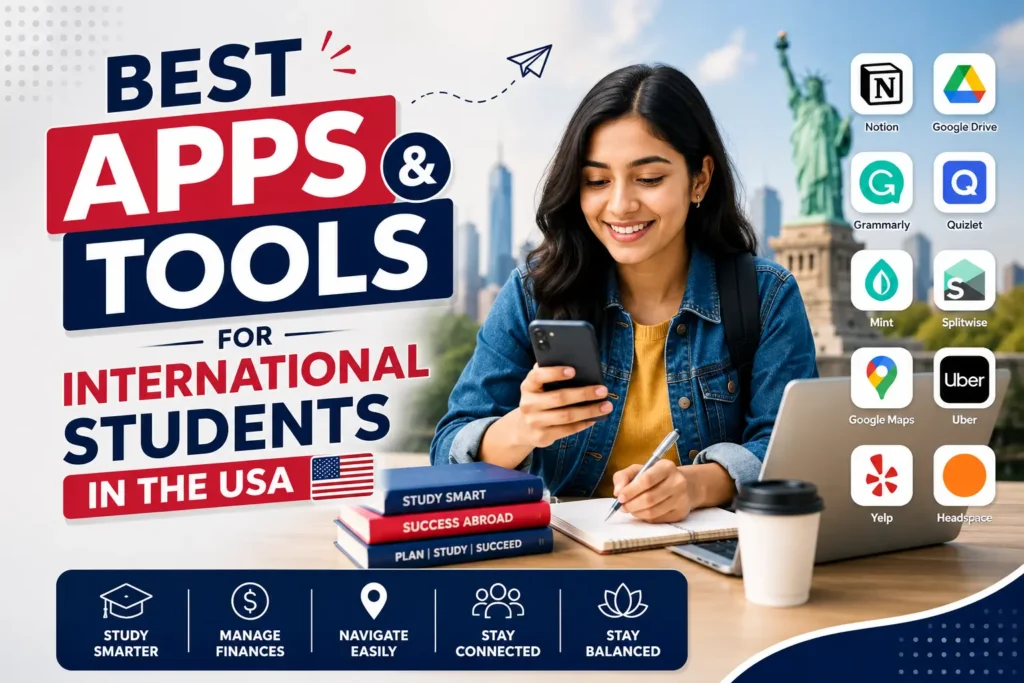
Best Apps and Tools for International Students in the USA Best Apps and Tools for International Students in the USA Studying abroad in the United States can be an exciting yet challenging experience for international students. From navigating a new academic environment to adjusting to a different culture, the journey is filled with both opportunities and obstacles. Thankfully, there are numerous apps and tools designed to help international students thrive during their time in the USA. Whether it’s managing your schedule, improving your English, or finding local services, these tools can make your transition smoother and more enjoyable. Here’s a complete guide to the best apps and tools for international students in the USA. 1. Language and Communication Duolingo: One of the most popular language-learning apps, Duolingo offers interactive lessons in a variety of languages. It’s perfect for international students looking to improve their English skills or learn a new language. HelloTalk: This app connects users with native speakers around the world for language exchange. International students can practice their English with native speakers while helping others learn their own language. Grammarly: Grammarly is an essential tool for improving written English. It helps with grammar, punctuation, and style, making it a great aid for essays, emails, and other written assignments. 2. Academic Assistance Evernote: Evernote is a versatile note-taking app that helps students organize their notes, create to-do lists, and set reminders. Its ability to sync across devices ensures you have your notes with you wherever you go. Google Scholar: For academic research, Google Scholar is an invaluable tool. It provides access to a wide range of scholarly articles, theses, books, and conference papers, helping students find credible sources for their research. Wolfram Alpha: This computational engine is great for solving mathematical problems, generating plots, and providing answers to complex queries. It’s especially useful for STEM students who need quick solutions and explanations. 3. Time Management and Organization Google Calendar: Google Calendar is essential for managing your schedule, setting reminders for assignments, exams, and meetings, and staying organized. It also integrates with other Google services, making it a central hub for your planning needs. Trello: Trello is a project management tool that uses boards, lists, and cards to help you organize tasks and projects. It’s especially useful for group work and keeping track of various responsibilities. Focus Booster: Based on the Pomodoro Technique, Focus Booster helps students manage their time by breaking study sessions into focused intervals with short breaks in between. This can enhance productivity and prevent burnout. 4. Financial Management Mint: Mint is a personal finance app that helps you track your expenses, set budgets, and manage your money. For international students, it’s crucial to keep an eye on your finances to ensure you stay within budget. Splitwise: If you’re living with roommates or sharing expenses, Splitwise is a great tool for managing and splitting costs. It tracks who owes what and can help avoid misunderstandings about money. Wise (formerly TransferWise): Wise offers low-cost international money transfers and currency exchange. It’s useful for students needing to send money back home or convert currency for everyday expenses. 5. Social and Community Meetup: Meetup helps you find and join local events and groups based on your interests. Whether you’re looking to join a club, attend social events, or participate in community activities, Meetup is a great way to connect with others. Facebook Groups: Many universities have Facebook groups specifically for international students. These groups can be a valuable resource for finding information, asking questions, and meeting new people. Eventbrite: Eventbrite lists local events, from social gatherings to cultural festivals. It’s a great way to explore your new city and discover activities that interest you. 6. Health and Well-being MyFitnessPal: Staying healthy while studying abroad is important, and MyFitnessPal can help you track your diet and exercise. It’s a useful tool for maintaining a balanced lifestyle. Headspace: Managing stress is crucial for academic success and overall well-being. Headspace offers guided meditation and mindfulness exercises to help you stay calm and focused. Therapy Chat: Therapy Chat connects you with licensed therapists through your phone or computer. It can be a valuable resource for mental health support, especially if you’re feeling overwhelmed or homesick. 7. Travel and Navigation Google Maps: Google Maps is essential for getting around in a new city. It provides directions, local business information, and real-time traffic updates, making it easier to navigate unfamiliar areas. Uber/Lyft: These ride-sharing apps are convenient for getting around when public transportation isn’t an option. They offer an easy way to travel safely and efficiently. Citymapper: For navigating public transportation, Citymapper offers detailed route information, including bus, train, and subway options. It’s particularly useful for students living in larger cities. 8. Local Services Yelp: Yelp helps you find and review local businesses, including restaurants, cafes, and shops. It’s a handy tool for discovering places to eat and shop in your new city. Postmates: If you’re looking for food delivery, Postmates connects you with local restaurants and stores. It’s a great way to enjoy a meal without having to leave your home. Craigslist: For finding housing, furniture, or part-time jobs, Craigslist is a useful platform. It provides local classifieds for various needs, helping you settle into your new environment. Conclusion Navigating life as an international student in the USA involves balancing academics, social life, and personal well-being. The right apps and tools can significantly enhance your experience, providing support in areas from language learning to financial management. Each of the apps and tools listed above serves a unique purpose, helping you streamline various aspects of your life and making your transition to studying in the USA smoother and more enjoyable. For personalized guidance and support tailored to your individual needs, consider consulting with Focus Education. Focus Education specializes in helping international students successfully navigate their academic journey in the USA. Their team of experienced consultants offers valuable advice on everything from university selection to adapting to life in a new country, ensuring you make the
Top 10 Tips to Crack the PTE on Your First Attempt

Top 10 Tips to Crack the PTE on Your First Attempt Top 10 Tips to Crack the PTE on Your First Attempt The Pearson Test of English (PTE) is a popular English language proficiency exam accepted by universities, governments, and employers around the world. If you’re preparing for the PTE and aiming to pass it on your first try, you’re not alone. Many candidates achieve success with the right strategy, practice, and mindset. Here are the top 10 tips to help you crack the PTE exam on your first attempt: 1. Understand the PTE Exam Format Before diving into preparation, get familiar with the exam structure. The PTE consists of four sections: Speaking, Writing, Reading, and Listening. Each section has specific question types, and understanding them will help you strategise better and manage your time efficiently. 2. Practice with Real PTE Mock Tests Regularly take full-length mock tests under exam-like conditions. This will help you get comfortable with the timing, pressure, and question formats. Analyse your performance after each test to identify areas for improvement. 3. Build Strong Vocabulary and Grammar Skills A good command of English vocabulary and grammar is crucial. Focus on commonly used academic words, phrasal verbs, and sentence structures. This foundation will benefit you in all sections of the test. 4. Work on Your Typing Speed and Accuracy Since PTE is a computer-based test, fast and error-free typing can make a big difference, especially in the Writing section. Practice typing essays and summaries to improve both your speed and accuracy. 5. Master the Speaking Section Techniques For the Speaking section, focus on fluency, pronunciation, and oral clarity. Practice reading aloud, describing images, and answering short questions using sample prompts. Use a microphone to simulate test conditions and evaluate your responses. 6. Use Official PTE Practice Materials Official materials give you the most accurate representation of the test. Pearson’s practice tests and sample questions are designed to mirror the actual exam and help you gauge your readiness. 7. Improve Listening Skills with English Media Watch English news, podcasts, or TV shows to sharpen your listening skills. Focus on understanding different accents, noting key ideas, and summarizing information—skills directly applicable to the Listening section. 8. Time Management is Key Learn to manage your time wisely during the exam. Each question is time-bound, so avoid spending too long on any item. Practice pacing yourself during mock tests to stay within time limits. 9. Avoid Common Mistakes Be mindful of frequent errors like mispronunciation, grammar mistakes, skipping instructions, or not using the correct word limits in writing tasks. Awareness of these pitfalls can help you avoid unnecessary point deductions. 10. Stay Calm and Confident on Exam Day Nervousness can affect your performance. Stay calm, get a good night’s sleep before the test, and arrive early at the test centre. Trust your preparation and maintain a positive attitude throughout the exam. Focus Education: Your Partner in PTE Success Focus Education – Your Trusted Partner for Studying Abroad At Focus Education, we specialize in guiding Indian students through every step of their journey to study abroad. As one of the leading study abroad consultants in India, we understand the unique challenges international students face and provide end-to-end support—from university selection and student visa assistance to post-arrival services. With years of experience in higher education consultancy, we have successfully helped thousands of students to secure admissions in top universities across the UK, USA, Australia, Canada, and more. Our students have not only achieved their academic goals but have also gone on to obtain post-study work permits and settle permanently, building rewarding careers and fulfilling lives overseas. To support students in meeting English language requirements for international universities, we also provide specialized coaching for IELTS and PTE exams. Our experienced trainers deliver focused, result-oriented IELTS and PTE training designed to improve students’ language proficiency, boost their confidence, and help them achieve the required scores for university admission and visa approval. Whether you’re looking to pursue an undergraduate or postgraduate program abroad, Focus Education is here to make your dream a reality—through expert guidance, personalized mentoring, and proven results.
Mastering IELTS Writing Task 2: Common Topics, Sample Questions & Winning Strategies

Mastering IELTS Writing Task 2: Common Topics, Sample Questions & Winning Strategies Mastering IELTS Writing Task 2: Common Topics, Sample Questions & Winning Strategies If you’re aiming to score well on the IELTS exam, you already know how important Writing Task 2 is. This section evaluates not only your English language skills but also your ability to construct logical arguments, express opinions, and analyse real-world issues — all within just 40 minutes. One of the most effective ways to prepare for this part of the test is by familiarizing yourself with common IELTS Writing Task 2 topics. These themes often repeat across exam sessions, sometimes with slight variations. In this blog, we’ll explore the most frequently asked topics, provide sample questions, and share useful strategies to help you write impactful essays. Common IELTS Writing Task 2 Topics: While the exact wording of questions may vary, certain themes appear regularly in IELTS exams. Below are the major topics you should be prepared to write about: Education Education continues to be one of the most prominent topics. Essays may ask you to evaluate learning styles, government policies, or equality in education. Sample Questions: Do you agree that classrooms will be replaced by online learning by 2050? Education should be free for everyone. Do you agree or disagree? What are the advantages and disadvantages of studying abroad? Should students be encouraged to pursue vocational training instead of university education? Health Health-related topics focus on individual responsibility, healthcare access, and the role of governments in promoting well-being. Sample Questions: Why do older people not exercise enough? What can be done to encourage them? Should healthcare be free or privately funded? How can governments encourage people to lead healthier lifestyles? Do the benefits of medical research outweigh the ethical concerns? Technology Technology essays test your ability to assess innovation and its impact on individuals and society. Sample Questions: TV and video games affect children’s mental health. Agree or disagree? Is unrestricted access to information dangerous for society? Has technology made people more socially isolated? What are the advantages and disadvantages of artificial intelligence? Government Expenditure These questions require you to take a stance on how public funds should be allocated across various sectors. Sample Questions: Should arts funding be cut to invest more in education? Should governments invest more in public transport or roads? Is it better to invest in the military or healthcare? Should governments spend money on space exploration? Environment Environmental concerns are a growing focus in IELTS Writing Task 2. Questions often address sustainability, pollution, and conservation. Sample Questions: Is it possible to balance economic growth and environmental protection? What causes water pollution and how can we solve it? Should individuals or governments be more responsible for environmental protection? Is banning single-use plastics an effective way to reduce pollution? Sociology and Human Behaviour These essays explore cultural values, societal expectations, and human interaction in different contexts. Sample Questions: Do you agree that too much pressure is put on children to succeed? Without laws, societies cannot function. To what extent do you agree or disagree? Are traditional gender roles still relevant in today’s society? Does advertising influence the way people behave in modern society? Strategies to Prepare for IELTS Writing Task 2 To excel in Writing Task 2, content preparation is just as important as language accuracy. Here are three essential strategies: Stay Updated with Current EventsEssay topics often reflect global issues. Reading news articles and opinion pieces will help you build ideas and form well-rounded arguments. Build Topic-Specific VocabularyEach theme—such as health, education, or the environment—has its own terminology. Using accurate and varied vocabulary naturally in your writing can significantly boost your lexical resource score. Practice Across All TopicsLimiting yourself to a single topic can be risky. Practice essays from different categories to ensure you’re confident with any subject that appears on test day. Final Thoughts At Focus Education, we understand that IELTS Writing Task 2 can be challenging — but with the right guidance and consistent practice, success is within your reach. Our expert trainers break down each topic and teach you how to structure high-scoring essays step by step. If you want to master essay structure, boost your vocabulary, and learn strategies tailored to your target band, we invite you to enrol in our IELTS training program. And here’s something even more exciting: If you choose to pursue your study abroad journey through Focus Education, we’ll pay your IELTS test fee as part of our limited-time offer. Take the first step toward your global future with the right support — join us today and let your success story begin.
PTE Tips for Students: Vocabulary, Grammar & Accent

PTE Tips for Students: Vocabulary, Grammar & Accent The Pearson Test of English (PTE) is one of the most widely accepted English proficiency tests, recognised by universities, colleges, and governments across the world. For Indian students planning to study abroad, achieving a high score in PTE can be a crucial part of the admission process. However, many students often find certain areas vocabulary, grammar, and accent challenging. In this blog, we’ll dive into useful tips to help you improve your skills in these areas and ace the PTE exam! Enhance Your Vocabulary: The Key to PTE Success In the PTE exam, vocabulary plays a significant role, not just in the speaking and writing sections, but also in the listening and reading sections. Having a strong vocabulary can help you comprehend the questions more effectively, and also help you express your ideas more clearly. Tips for Building Vocabulary: Read Regularly: Reading newspapers, novels, and articles will expose you to a wide range of words. Focus on different genres and subjects—science, history, technology, and culture. This will help you become familiar with both formal and informal language, which can be useful in various sections of the test. Use Flashcards: Create flashcards with new words you encounter, along with their meanings and sample sentences. Apps like Anki or Quizlet can help you organize these cards for easy revision. Learn Synonyms and Antonyms: The PTE exam often tests your ability to understand subtle differences in word meanings. By learning synonyms and antonyms, you can expand your vocabulary and increase your chances of getting the right answer. Practice Word Usage: Try using new words in your daily conversations and writing. The more you practice, the more natural it will feel to use these words when required. Vocabulary in Context: When you are preparing for the PTE exam, remember that it’s not just about knowing words but understanding how they are used in context. For example, understanding how the word “disrupt” might change its meaning when used in different contexts can make a big difference when answering reading and listening questions. Mastering Grammar: The Foundation of Communication Grammar is the backbone of any language, and for PTE, it’s essential for achieving a high score. Grammatical accuracy is evaluated throughout the exam whether it’s in sentence construction, verb tenses, or word choice. A strong understanding of English grammar rules will help you score better in both the speaking and writing sections. Tips to Improve Grammar: Practice Sentence Construction: A lot of Indian students struggle with sentence structure, especially with long and complex sentences. Focus on building simple, clear sentences with proper subject-verb agreement. Gradually, you can add complexity while ensuring clarity. Tense Awareness: English has multiple tenses, and using the wrong tense can cost you points. Practice identifying and using the correct tense based on the time frame you are describing (past, present, or future). Articles and Prepositions: Indian languages don’t use articles like “a,” “an,” or “the,” so students often omit them. Ensure you’re using articles correctly, as they are crucial in speaking and writing tasks. Use Grammar Apps: Apps like Grammarly and the PTE-specific practice tests on websites like E2Language or PTE Tutorials can help you identify common grammatical errors and correct them. Avoiding Common Mistakes: A lot of Indian students tend to mix up word order and sentence structure due to influence from their native languages. For example, saying “I have a good knowledge in English” rather than “I have a good knowledge of English.” Practice correct phrasing to avoid such errors. Neutralizing Your Accent: Speaking Clearly and Confidently Many Indian students worry about their accent when taking the PTE exam, particularly in the speaking section. The good news is, the exam is designed to test clarity and coherence of speech, not the accent itself. However, having a neutral accent that is easy to understand can improve your overall speaking score. Tips to Improve Accent and Pronunciation: Listen and Imitate: One of the best ways to improve your pronunciation is by listening to native speakers. Watch movies, news channels, and TED talks in English. Pay attention to how they stress words and their intonation patterns. Try imitating their style to improve your fluency. Record Yourself: Use your smartphone to record your speech. Listening to your own voice can help you identify areas where your pronunciation may need improvement. Make sure to focus on enunciating words clearly. Focus on Stress and Intonation: English has specific stress patterns, especially in multisyllabic words. For example, the word “record” is stressed differently depending on whether it’s a noun or a verb. Practice these stress patterns to sound more natural. Speak Slowly and Clearly: Speaking too fast can make your accent harder to understand. Focus on speaking at a moderate pace with clear pronunciation, even if you don’t have a “native” accent. Use PTE Speaking Practice Tests: PTE’s speaking section includes tasks like “Read Aloud,” “Repeat Sentence,” and “Describe Image.” The more you practice these tasks, the more comfortable you’ll become with articulating your thoughts clearly. Breaking Accent Myths: Remember, the PTE exam doesn’t expect you to have a perfect American or British accent. What matters most is that your speech is intelligible. So, focus on clarity, coherence, and pronunciation rather than stressing about changing your accent entirely. Bonus Tips: Test-Taking Strategies Time Management: PTE is a time-bound test, so managing your time effectively is crucial. Practice taking mock tests to familiarise yourself with the pace of the exam. This will help you ensure that you don’t rush through sections and leave answers incomplete. Stay Calm and Confident: The PTE exam can be stressful, but maintaining your composure is essential. Stay confident in your ability and approach each question calmly. If you don’t know an answer, skip it and move on. Worrying over one question can throw you off for the rest of the exam. Familiarize Yourself with the Test Format: Understanding the test format is key to scoring well. Familiarise yourself with the structure of the PTE