
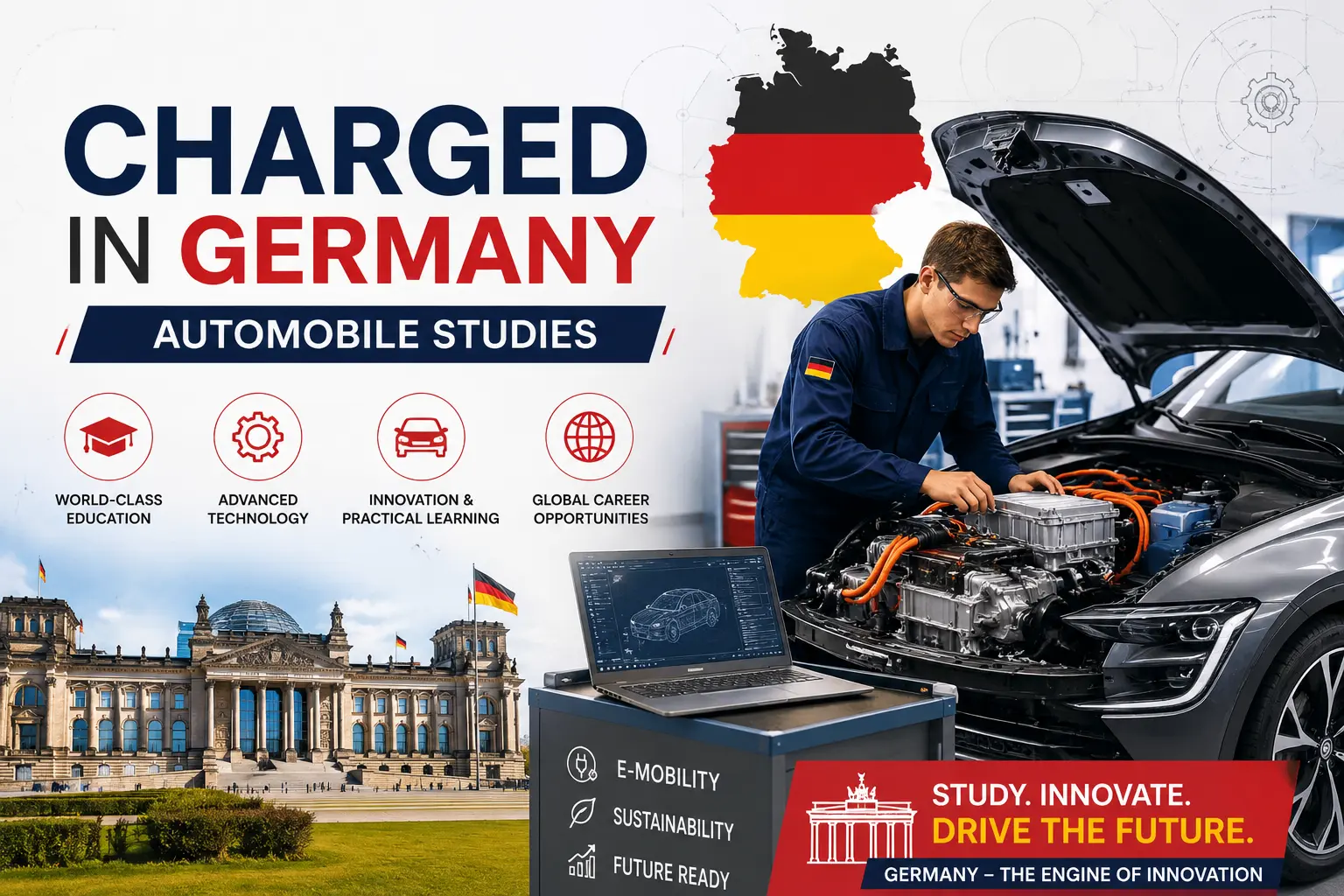
Studying Electric Vehicle (EV) Automotive Engineering in Germany is a great choice—Germany is at the heart of the global automotive industry and is rapidly transitioning toward electric mobility. Here’s a comprehensive guide on EV-focused automotive engineering studies in Germany, including top universities, programs, requirements, and career prospects:
There are few notable program offerings with English-Taught Curriculums widely acclaimed as below:
Program: M.Sc. in Automotive Engineering with EV specialization
Language: English
Highlight: Cutting-edge research at the Institute for Automotive Engineering and strong industry ties.
Program: M.Sc. in Automotive Software Engineering / Electrical Engineering & Information Technology
Special Focus: EV electronics, battery systems, autonomous driving.
Language: English/German options
Program: M.Sc. in Automotive Systems
Focus Areas: Power electronics, electric drives, system integration.
Program: M.Eng. in Automotive Engineering (International)
Highlight: Practice-oriented, with strong industry collaboration.
Language: English
Program: M.Sc. in Mobility Systems Engineering
Specialization: EV propulsion systems, battery research, charging infrastructure.
Students belonging to the fields of Mechanical, Electrical, or Automotive Engineering (or related), along with recommended experience in certain cases are eligible to apply above relevant programs; however, English proficiency test is required on primary basis alongside German (TestDaF/DSH Tests) depending upon the program language. Also, there is no need to worry about appearing for GRE.
Germany has a high demand for EV engineering talent, especially in roles like: