
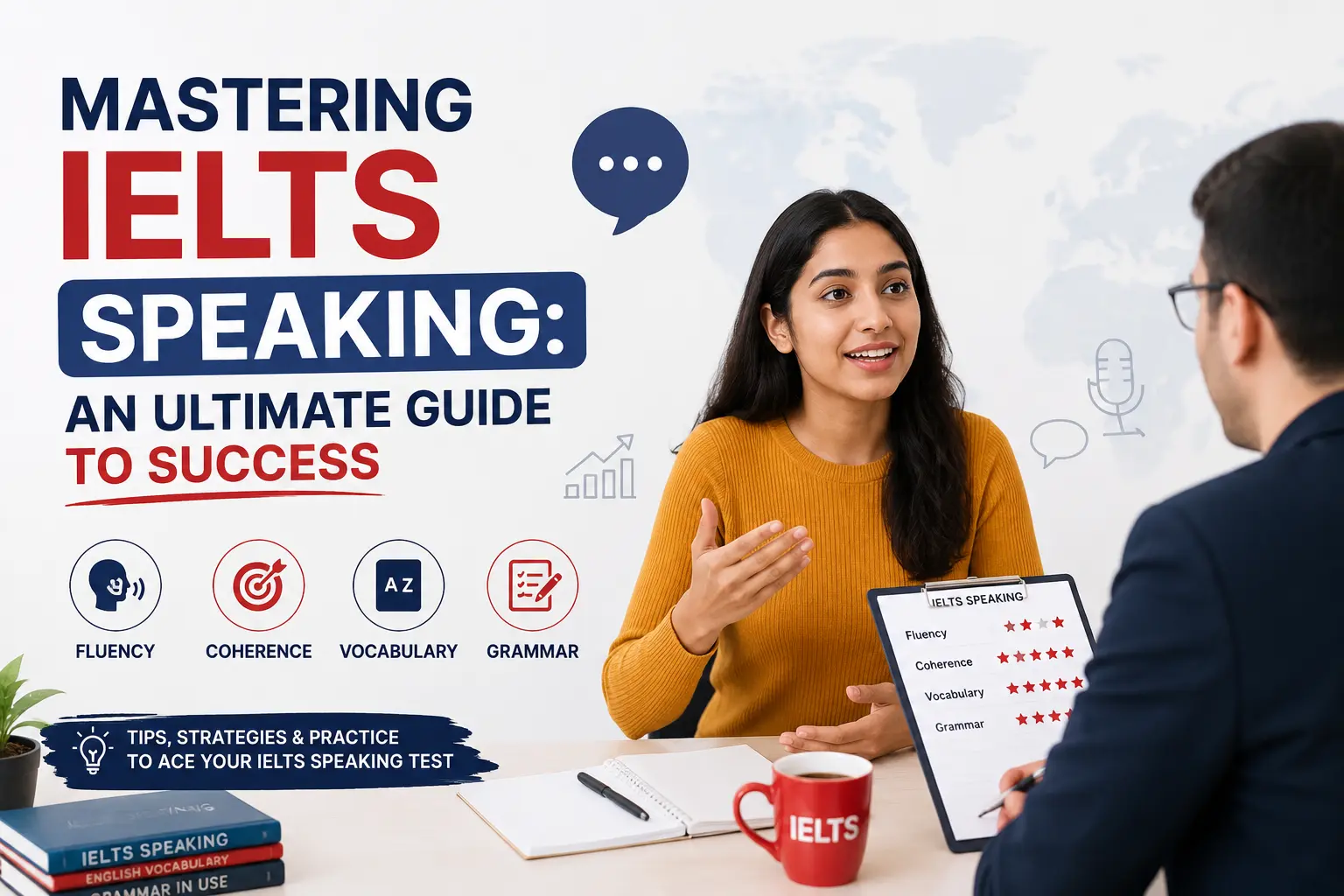
If you are gearing up to take the IELTS exam, mastering the speaking section is very important for overall success. Here we will guide you through important tips and strategies that will help you confidently navigate the IELTS Speaking test.
The IELTS Speaking test contains three parts, each serving a specific purpose. Familiarize yourself with the format:
Knowing what to expect in each section will help to reduce nervousness and improve your performance.
Practice makes a man perfect, which stands true for the IELTS Speaking test. Engage in regular speaking practice with a study partner or through online platforms. Record yourself to identify areas of improvement, such as pronunciation, fluency, and vocabulary usage.
Enhance your vocabulary to express ideas more precisely. Work on incorporating a variety of words into your responses, showcasing your ability to describe thoughts effectively. Reading extensively and noting down unfamiliar words will contribute to your vocabulary growth.
Clear pronunciation is essential for effective communication. Practice pronouncing challenging words, and consider using online resources or language exchange programs to receive feedback. Focus on intonation and stress patterns to sound more natural and confident.
Efficient time management is required to succeed in the IELTS Speaking test. Practice responding to questions within the allocated time for each section. This will help you develop the ability to organize your thoughts quickly and present them coherently.
IELTS speaking topics frequently revolve around everyday experiences, personal opinions, and global issues. Stay updated on current events and practice discussing various topics. This will enable you to respond confidently to a wide range of questions during the test.
Constructive feedback is invaluable in your journey to mastering IELTS Speaking. Share your practice sessions with teachers, language exchange partners, or online communities. Feedback will help you identify strengths and weaknesses and refine your speaking skills.
Remember that communication involves more than just words. Be attentive to your body language, facial expressions, and gestures. Maintain eye contact and use suitable gestures to enhance your overall communication skills.
On the day of the test, nervousness is natural, but maintaining calm is crucial. Take deep breaths, listen carefully to questions, and respond with confidence. Remember that the examiner is there to assess your language skills, not to threaten you.
Achieving proficiency in the IELTS Speaking test necessitates commitment, consistent practice, and a strategic methodology. Familiarise yourself with the format, engage in regular practice, enhance your vocabulary, and actively seek constructive feedback to ensure thorough preparation for showcasing your language skills on the test day.
Join us at Focus Education for a Free Demo session if you are eager to excel in the IELTS and master the skills required.