
Mastering Your Story: The Magic of the Statement of Purpose

Mastering Your Story: The Magic of the Statement of Purpose In the world of higher education, when students start their journey in studies, there is a very important thing they need – it is called the Statement of Purpose (SOP) or Personal Statement. SOP is short but important. It helps decide how someone’s education and career will go. In this blog, we will talk about the Statement of Purpose, its parts, and why it is so important when applying to schools. Understanding the Statement of Purpose A Statement of Purpose is a written statement that serves as a personal introduction, illuminating the aspirations, goals, and motivations of an applicant seeking admission to an academic institution or a program of study. It is a platform for the applicant to communicate their unique identity, experiences, and vision to the admissions committee. The SOP is not merely a list of achievements, but rather a narrative that ties together an applicant’s past, present, and future in a coherent and compelling manner. Components of an Effective Statement of Purpose A well-crafted Statement of Purpose typically includes the following elements: Introduction: A captivating opening that provides an insight into the applicant’s background and initial motivations. Educational Journey: A chronological account of the applicant’s academic pursuits, highlighting key achievements, projects, and experiences that have shaped their interests. Relevance: A clear demonstration of how the chosen program aligns with the applicant’s aspirations and how it bridges the gap between their current skill set and their desired future endeavours. Research: If applicable, detailing any research interests or contributions the applicant intends to make during their academic tenure. Experiences: Insight into extracurricular activities, internships, work experiences, or volunteer engagements that have influenced the applicant’s growth and perspective. Future Goals: A coherent outline of the applicant’s long-term goals and how the pursued program will contribute to their realization. Personal Perspective: An authentic reflection of the applicant’s values, beliefs, and the unique attributes they bring to the academic community. The Significance of a Statement of Purpose The importance of a well-crafted Statement of Purpose cannot be overstated. Here is why it matters: Showcasing Individuality In a sea of applications, the SOP is an opportunity to stand out by sharing a personal story and perspective that sets an applicant apart from others. Demonstrating Commitment Admissions committees seek candidates who are genuinely passionate and committed to their chosen field. The SOP allows applicants to showcase their dedication. Assessing Communication Skills Effective communication is a skill sought after in every profession. A strong SOP reflects an applicant’s ability to convey thoughts coherently and persuasively. Aligning Objectives The SOP provides a platform to explain how the program aligns with an applicant’s aspirations, proving the candidate has done their research and understands the program’s offerings. Holistic Perspective Admissions committees desire a holistic view of an applicant. The SOP provides insight into an individual’s personality, experiences, and values beyond academic achievements. Window to Diversity For international applicants coming from diverse backgrounds, the SOP is a way to share unique experiences and perspectives that enrich the academic environment. Lasting Impression A compelling SOP can leave a lasting impression on the admissions committee, potentially tipping the scales in favour of the applicant during the selection process. In conclusion, a Statement of Purpose is more than just a document; it is an opportunity to narrate one’s journey, aspirations, and dreams. Crafted with care and thoughtfulness, a strong SOP can open doors to transformative educational experiences and launch an individual on a path towards achieving their ambitions. As applicants put their fingers on the keyboard, they are not just writing a document but scripting the next chapter of their academic adventure. If you are still worried or need help writing your Statement of Purpose, our team of international education experts is here for you. They can guide you in creating a strong SOP that will improve your chances of getting into the school you want. Feel free to visit us at Focus Education Global Pvt. Ltd. for a free counselling session. We will discuss everything in detail and help you out.
Benefits of Studying Business Course in the USA

Benefits of Studying Business Course in the USA Benefits of Studying Business Course in the USA Starting a study abroad journey is a big and exciting choice for any student that can change their life. Thinking globally and exploring opportunities that can truly uplift your educational experience is essential when considering the options. One such path that offers immense promise is studying business in the United States of America. Here we will explore the myriad benefits of choosing the USA as your destination for business education. 1. World-Class Universities and Programs: USA is renowned for its world-class universities and top-tier business programs. From prestigious Ivy League institutions to innovative State Universities, you will find diverse options catering to various interests and career aspirations. The rigorous academic standards and cutting-edge curriculum ensure that you receive a high-quality education that is respected worldwide. 2. Global Networking Opportunities: Studying business in the USA opens doors to a vast network of connections that can shape your future career. You’ll have the chance to interact with fellow students from all corners of the globe, providing a unique opportunity to build a global network of friends and professionals. Additionally, many universities have strong ties with industry leaders, offering internships, workshops, and networking events that can kickstart your career. 3. Exposure to Cultural Enrichment: USA is a melting pot of cultures, making it an ideal destination for international students. Immersing yourself in this diverse environment will broaden your horizons and enhance your cultural awareness and global perspective. This exposure to different viewpoints and backgrounds is invaluable, especially in the ever-globalizing field of business. 4. Innovative and Practical Learning: Business education in the USA goes beyond textbooks and lectures. Many programs emphasize practical, hands-on learning experiences, including case studies, group projects, and internships. These opportunities allow you to apply theoretical knowledge to real-world scenarios, preparing you for the challenges of the business world. 5. Access to Leading Industry Experts: Being in the USA, you’re in proximity to some of the world’s most influential companies and organizations. Many universities collaborate closely with industry experts and guest lecturers who provide insights and mentorship. This exposure can significantly boost your understanding of the latest trends and best practices in the business world. 6. English Language Proficiency: For non-native English speakers, studying in an English-speaking country like the USA is a fantastic way to improve language skills. Effective communication in English is a valuable asset in the global business arena, and immersion in an English-speaking environment can help you master this essential skill. 7. Career Opportunities One of the primary reasons students choose the USA for business education is the promising career prospects it offers. A degree from a US institution carries weight worldwide and can open doors to exciting job opportunities across the globe. Many international students find themselves working for multinational corporations, and startups, or even launching their entrepreneurial ventures. 8. Extracurricular Activities Beyond academics, the USA offers a rich cultural experience. You can explore its history, arts, sports, and entertainment during your student journey. Campuses often organize a variety of extracurricular activities, clubs, and events that allow you to pursue your interests and passions outside the classroom. Top Universities for Business Courses in the USA Serial Number University Links 1 Arizona State University https://www.asu.edu/ 2 The University of Texas at Arlington https://www.uta.edu/ 3 New York University https://www.nyu.edu/ 4 Northwestern University https://www.northwestern.edu/ 5 University of Southern California https://www.usc.edu/ 6 University of Illinois, Chicago https://www.uic.edu/ 7 Rochester Institute of Technology https://www.rit.edu/ 8 New Jersey Institute of Technology https://www.njit.edu/ 9 Adelphi University https://www.adelphi.edu/ 10 Long Island University https://www.liu.edu/ 11 Hofstra University https://www.hofstra.edu/ 12 New York Institute of Technology https://www.nyit.edu/ 13 Berkeley College https://berkeleycollege.edu/index.html 14 State University of New York https://www.suny.edu/ 15 California State University https://www.calstate.edu/ 16 California Baptist University https://calbaptist.edu/ 17 University of California https://www.universityofcalifornia.edu/ 18 University of Arizona https://www.arizona.edu/ 19 Texas State University https://www.txst.edu/ 20 Texas A & M University of Corpus Christi https://www.tamucc.edu/ 21 Dallas Baptist University https://www.dbu.edu/ 22 University of Bridgeport, Connecticut https://www.bridgeport.edu/ 23 University of New Haven https://www.newhaven.edu/index.php 24 Thomas Jefferson University https://www.jefferson.edu/ 25 University of Scranton https://www.scranton.edu/ 26 University of Massachusetts https://www.umass.edu/ 27 Suffolk University https://www.suffolk.edu/ 28 University of Colorado, Denver https://www.ucdenver.edu/ 29 Seattle University https://www.seattleu.edu/ 30 DePaul University https://www.depaul.edu/Pages/default.aspx In Conclusion Studying business courses in the USA is not just an educational choice; it’s a transformative experience that can shape your personal and professional life. The benefits are manifold from top-tier academics to global networking opportunities and exposure to diverse cultures. If you are ready to uplift your student journey and set yourself on a path to global success, consider USA your business education destination. Your journey starts here at Focus Education Global Pvt. Ltd., and the possibilities are endless. So, why wait? The USA is calling, and your future in business awaits. We hope this provides a comprehensive overview of the benefits of studying business in the USA and encourage students to consider this exciting educational opportunity.
UK Student Visa Application Fee Adjustments: A Guide for Applicants

UK Student Visa Application Fee Adjustments: A Guide for Applicants UK Student Visa Application Fee Adjustments: A Guide for Applicants For students with aspirations of studying in the United Kingdom, there is an update to keep in mind. The revision in UK Student Visa fees commenced on 4th October 2023, this change is minor when compared to the overall cost involved on a journey to pursue higher education in the UK. In this blog, we will explore the details of these fee adjustments. What are the underlying causes of the fee adjustment? The United Kingdom, much like several other nations, periodically evaluates and modifies its visa fee framework. The primary objective of this adjustment is to ensure the sustainability of the immigration system, all the while delivering exceptional services to visa applicants. These fees play a crucial role in financing the resources essential for application processing and maintaining the infrastructure that supports the UK’s student visa system. Key Changes in Student Visa Fees: Tier 4 Student Visa: The Tier 4 Student Visa, which enables students to pursue full-time courses in the UK, is impacted by this fee adjustment. Previously, the application fee was £363, and the new fee is £490. Tier 4 Student Visa: Previously the application fee was £250 and the revised fee is £500. Tier 4 Student Visa – Super Priority Visa Service: Formerly the application fee was £956 and the revised fee is £1000. How Does this Affect Prospective Students? Financial Planning: When considering your financial preparations for studying in the UK, it is crucial to factor in the adjusted visa fees. Be sure to allocate sufficient funds to cover not only your tuition and living expenses but also the expenses associated with the visa application process. Seek Expert Advice: For customized advice and guidance on visa applications, it is suggested to consult with experts like us. We can deliver you with the most up-to-date information and assist you with the application process. Explore Financial Support: To address these minor adjusted expenses, we recommend considering scholarship opportunities and financial aid possibilities. Many UK universities offer scholarships to international students based on academic accomplishments and other qualifications. This can greatly alleviate the financial challenges associated with the revised visa fees. If you require guidance on how to explore these scholarship options, please don’t hesitate to reach out to us at Focus Education. We are here to provide you with the necessary assistance. In Conclusion Studying in the United Kingdom provides a truly enriching academic experience, though accompanied by specific financial responsibilities. It is of great importance for prospective students to stay informed, and meticulously plan their finances. By adopting a proactive and well-prepared approach, you can ensure a smooth and successful start to your educational journey in the UK. If you are embarking on your UK student visa journey, we extend a warm invitation to explore the services offered at Focus Education Global Pvt. Ltd., where we provide complimentary counselling to support you.
Canada Takes Proactive Steps to Safeguard International Students Against Fraud
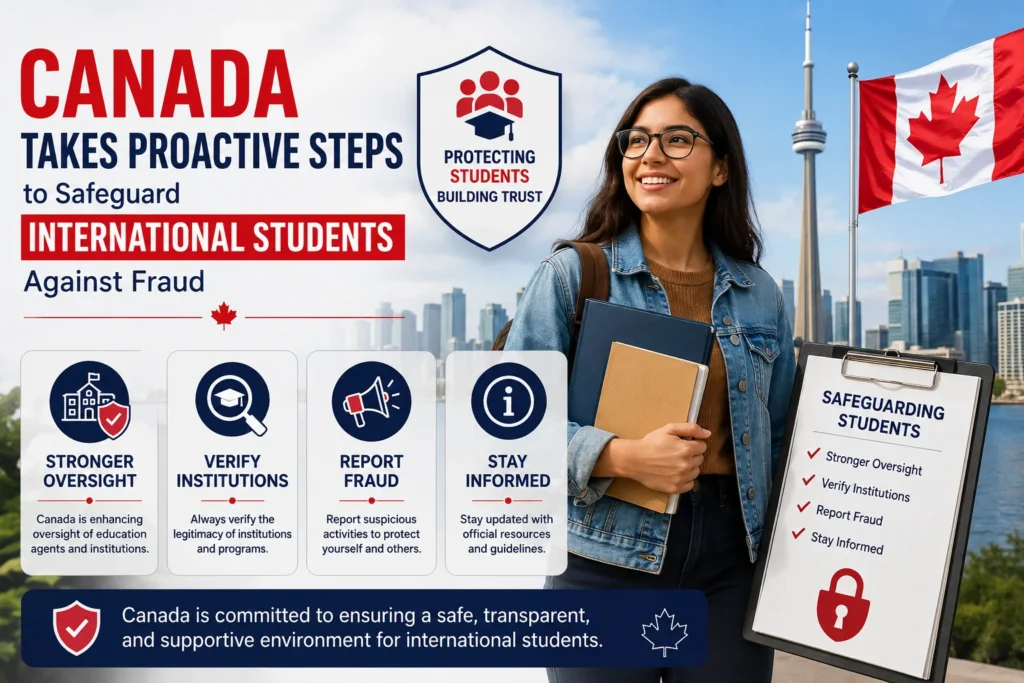
Canada Takes Proactive Steps to Safeguard International Students Against Fraud Canada Takes Proactive Steps to Safeguard International Students Against Fraud In recent years, the world has seen a noteworthy increase in the number of international students pursuing higher education in abroad countries. This global movement has brought about both opportunities and challenges, prompting host nations to make necessary changes to their International Student Programs. The aim is to protect and improve the experiences of international students, who play a vital role in inspiring their host countries’ academic and cultural landscape. The international student community is more diverse than ever, representing various cultures, languages, and backgrounds. The contributions of these students in research, innovation, and cultural exchange are invaluable. However, their well-being and safety have become important concerns that have encouraged changes to the International Student Program in many nations. On 27th Oct 2023, The Honourable Marc Miller, Minister of Immigration, Refugees and Citizenship, revealed a comprehensive plan to enhance Canada’s International Student Program. This initiative fortifies the program’s integrity and safeguards authentic international students from fraudulent activities. The proposed measures encompass the following key actions: Beginning December 1, 2023, designated learning institutions (DLIs) for post-secondary education will need to verify each applicant’s acceptance letter directly with IRCC. This strengthened process aims to prevent letter of acceptance fraud, protect prospective students, and prevent issues experienced by some due to fraud investigations. It guarantees that study permits are issued exclusively on the basis of authentic acceptance letters. For the fall 2024 semester, IRCC will present a “recognized institution” framework for post-secondary DLIs that meet high standards in services and support for international students. These DLIs will enjoy advantages such as advanced study permit processing for their prospective students. In the near future, IRCC will assess and reform the Post-Graduation Work Permit Program criteria to align it more successfully with the Canadian job market and regional and Francophone immigration objectives. These changes in International Student Program demonstrate Canada’s dedication to creating a safe, enriching environment for international students. Prioritizing safety, legal protection, financial aid, and well-being, countries attract talent and foster global connections & intercultural understanding. In an increasingly interconnected world, these adjustments are not only practical but also a moral imperative. By ensuring the safety and support of international students, we empower them to excel academically and play a pivotal role in shaping a more connected and enhanced global community. If you are considering studying in Canada and wish to gain a deeper understanding of these modifications, we invite you to visit us at Focus Education Pvt. Ltd.
Navigating Backlogs: Can They Derail Your Study Abroad Dreams?
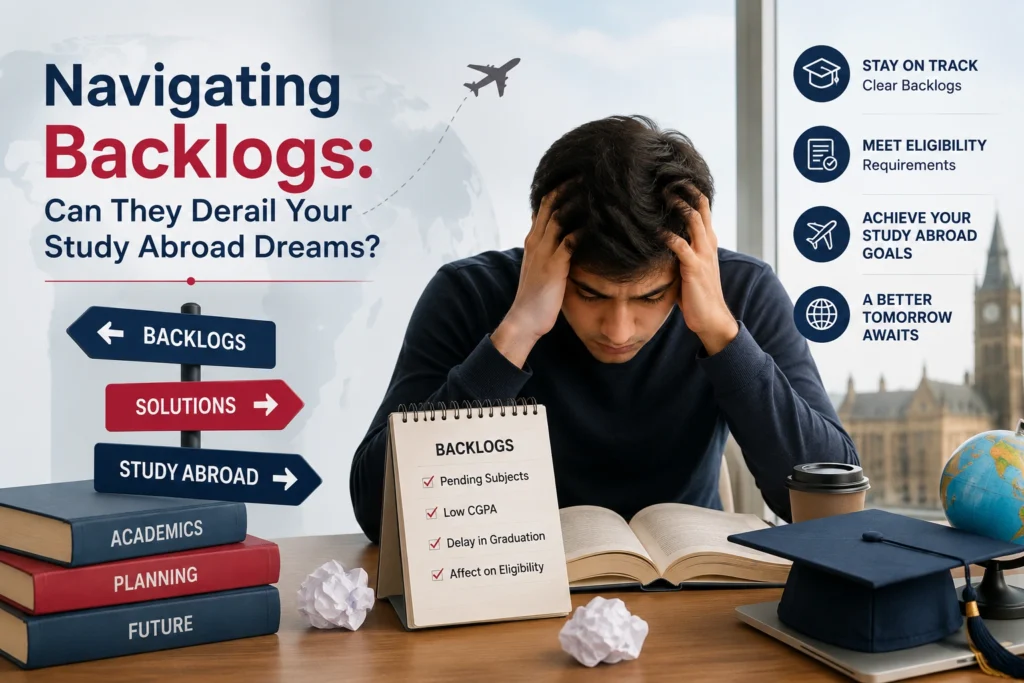
Navigating Backlogs: Can They Derail Your Study Abroad Dreams? Navigating Backlogs: Can They Derail Your Study Abroad Dreams? When students have a record of unfinished or failed courses in their academic record within the stipulated time frame then it is considered as a backlog and it can pose challenges, especially when considering studying abroad. However, it is does not mean that it can completely ruin students study abroad ambitions. Firstly Firstly, some universities might be more lenient with minor backlogs, especially if they are not directly related to your major or if you’ve shown improvement, but you need to understand the impact of the backlog on your academic progression. Secondly Secondly, you should focus on clearing these backlogs as soon as possible because some universities will also check the number of attempts you have taken to clear that backlog, and that will show your proactive approach to resolving these issues. Thirdly Thirdly, some universities might consider your overall profile but you should be transparent about the backlogs in your application, explain the circumstances, and show what steps you have taken to improve and clear the backlogs. Along with this to make your profile stronger you should show significant strengths in other areas as well. Fourthly Fourthly, you need to concentrate on other aspects of making your profile strong which might offset the impact of backlogs like standardized test scores, letters of recommendation, relevant work experience, or extracurricular activities. Apart from this, you should consider universities or programs that might be more accommodating as some of the institutions have different policies regarding academic history. And most importantly And most importantly, it is crucial to research and communicate effectively with admission offices as every institution has its own admission criteria and policies and some institutions also offer bridge courses or remedial programs that can help you cover backlogs issues or bridge knowledge gaps. Therefore, if you consider all the aspects, some universities may appreciate your effort taken to rectify academic setbacks, especially if accompanied by improved performance and a clear plan for future success. So, remember if the backlogs can present obstacles, they can often be overcome with determination and a planned approach. Visit for more such information at Focus Education Pvt. Ltd.
Major Things To Consider Before Studying Aboard
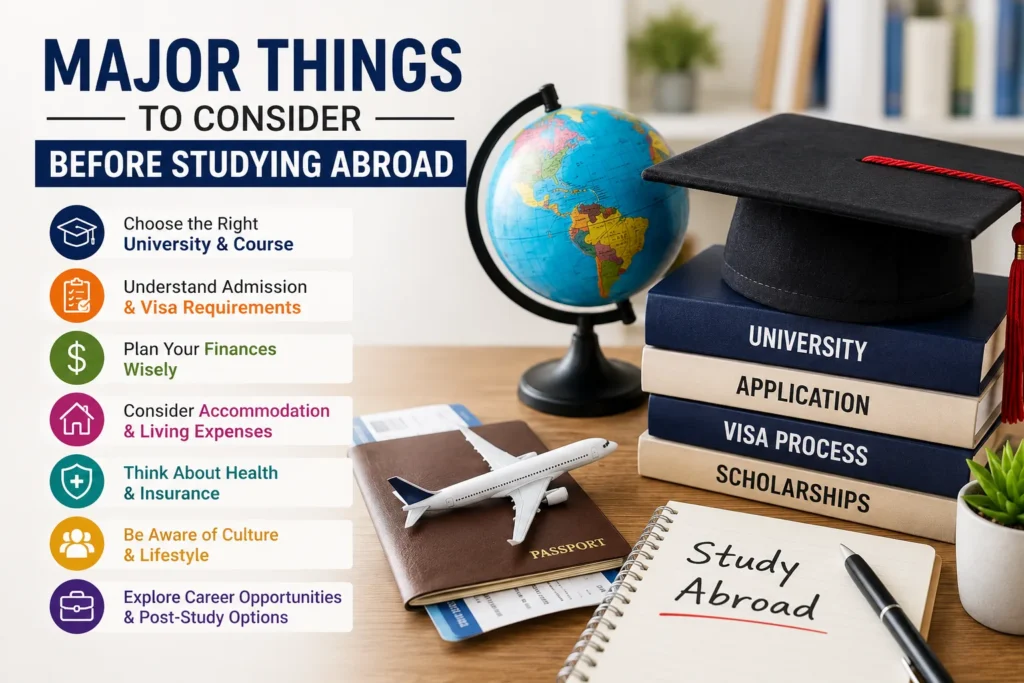
Major Things To Consider Before Studying Aboard Major Things To Consider Before Studying Abroad Dreaming to study abroad comes with a big to-do list. Right from arranging finances to planning an itinerary, you have to do everything by yourself. It is exciting Right? But on the other hand, it can be tiring too. So, to make the whole process smoother one needs to work smart and tough. Thus, when the proper plan is placed it becomes pocket-friendly too. Here are some of the things that should be considered when planning to study overseas and for further guidance, we Focus Education Pvt. Ltd. are here to help you out at every step of your journey. 1. Choosing the Right University and Right Course: The first step of studying abroad is to define your interests. If you are aware of what you want to achieve it will be easier for you to choose the country that is providing advanced education in your desired field. Suppose you wish to study business, then you need to shortlist some top universities that provide the best business courses in the world. After that, depending on your qualifications, you can choose a degree or a diploma course accordingly. 2. Planning a Budget: Once done with the course for which you want to apply, the next thing should be to jot down the expenses from application fees to return to your nation. The things will be easier for you to select the most compatible university that fits your budget. In this case, you need to recognize the monetary circumstances that can occur during your course alongside allocating a certain budget in case of emergencies occur. 3. Document Lining: It is a great thing if you already have a passport. If you don’t have one, you need to apply for it right now. The faster you process your passport the faster you can apply for a visa. And if own a passport, do check for the validity date to make sure that it will last until the end of your course. Apart from this, there are some other documents that one needs to align that may vary in every nation. Following is the common list of documents: Student Visa Passport Application form University transcripts Scholarship document to study abroad. (if applicable) Financial proofs Language proficiency test Medical test reports Photographs 4. Knowlege the Currency: It is also one of the important factors that should be kept in mind while planning the budget. As the financial markets keep on fluctuating so it can also affect the budget. Many applicants plan their daily expenses on the same exchange rates they have checked months ago. It can either be the case when you are traveling from or traveling to a country with an uneven economy. 5. Logistics Plannings: Planning is the major thing that should be considered to secure fight tickets and to make sure that one reaches the destination a few days before the beginning of the semester. It is just as one can explore the surroundings and settle own. Most of the universities provide on-campus accommodations but it doesn’t so one needs to explore them before reaching the destination country. 6. Look for new updates: Being updated with the current affairs of your study-abroad country is a must. We all know that the entire world is going through dramatic changes. So, it is necessary to be updated about any news that can affect your study plans. It will help you to plan better and avoid unwanted situations when you know the news of the country you are planning to travel. 7. Health check-ups: In some countries like the UK, it is mandatory to test for tuberculosis and to submit X-rays, to provide health reports before will arrives there. While the pandemic situation is on, testing Covid testing is an additional report to travel across borders. 8. Cellular plans: As our whole life is somehow linked with the phone, as it includes maps, tickets, contacts, and various applications that are required when you arrive airport. So, you should make sure to get your SIM cards changed and suitable as you are traveling to that country. Also, cross-check whether the cellular company provides suitable international plans or not, if not you can buy one the moment you reach the port. 9. Know the Emergency Contact Number: As emergencies never ring before they arrive. It will be quite difficult for you, especially when you are in a foreign land. So, it is necessary to note down the emergency number of the travel country. Moreover, you should also know the emergency number of the university you will be studying with. Never rely on the devices, note it down in your notepad, where you have written your other details, and also share it with your near ones. 10. Prepare your Baggage: Woo-hoo, it’s shopping time! You should consider the changing climate, seasons, and clothing styles of the country you are planning to travel to. Try not to overload your bags, carry as little as you can. Don’t miss the chance to buy clothes in your destination country. Look for some popular markets that will fulfil your requirements. Thus, ‘Prepare yourself mentally and enjoy the new phase of the journey!’ As the goodbyes are tough, they are a necessary step in this journey. Just imagine the excitement that you have is yet to come! Expect the unexpected! Be ready to adapt to the new things coming your way as they will undoubtedly enrich your understanding. Hence, we Focus Education Pvt. Ltd. hope these tips will help you to have the most immersive experience possible!
Importance of the WES Evaluation for Studies in USA
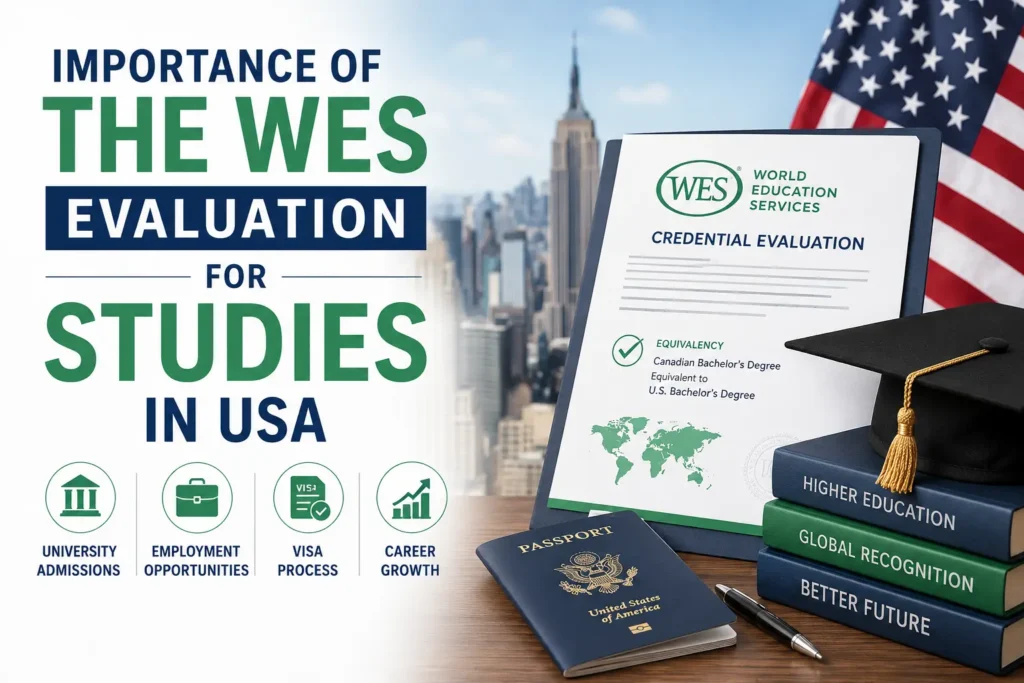
Importance of the WES Evaluation for Studies in USA Importance of the WES Evaluation for Studies in USA A WES evaluation is your passport to education and employment. Whether you’re continuing your education, seeking professional licensing, or applying for employment in the United States, the WES evaluation ensures that your international academic credentials are recognized. The WES evaluation converts educational credentials from any country in the world into their U.S. equivalents. It details each certificate, diploma, or degree you’ve earned and states its academic equivalency in the United States. WES evaluations are widely accepted and often specifically requested by academic institutions, licensing boards, employers, and government agencies throughout the U.S. These are the key aspects of the WES evaluation and its impact on your application: Role of WES Evaluation: Credential Assessment: WES evaluates your academic credentials to determine their equivalence in the U.S. education system. This is crucial because U.S. universities need to understand the context of your academic background. Translation of Grades: WES converts your grades into the U.S. GPA system, typically on a 4.0 scale. This helps universities assess your academic performance in a format they are familiar with. Standardization: WES evaluations help standardize international credentials, making it easier for admissions committees to compare your qualifications with those of other applicants. Verification: WES also verifies the authenticity of your academic documents, which can enhance your credibility as an applicant. Impact on Acceptance and Scholarships Improved Acceptance Chances: While a WES evaluation itself does not guarantee better acceptance, a clear and favourable evaluation can enhance your application. It allows admissions committees to accurately assess your academic qualifications, which is especially beneficial if your grading system differs significantly from the U.S. system. Scholarship Consideration: Some universities may consider your academic performance, as reflected in your WES evaluation when awarding scholarships. A strong GPA, converted from a 10-point scale, can make you a more competitive candidate for merit-based scholarships. Program Requirements: Some programs may specifically require a WES evaluation as part of their application process. Meeting these requirements is essential for your application to be considered. Types of WES evaluation Document-by-Document: This evaluation provides a summary of your academic background, including your name, your university’s name, the year you received your degree, and your major field of study. It also provides the U.S. and Canadian equivalents for each of your credentials. This evaluation is sufficient for employment or immigration purposes. Course-by-Course: In addition to the details in the Document-by-Document evaluation, this evaluation includes a list of all post-secondary courses you’ve taken and their equivalent grades in the U.S. and Canada. Universities, colleges, and professional licensing boards require the Course-by-Course evaluation because it contains the detailed information necessary for academic and professional assessments. CPA Evaluation: This evaluation is designed for candidates taking the Certified Public Accountant (CPA) examinations and is particularly helpful in determining the U.S. equivalency of their academic credentials. Procedure for WES Evaluation: Online Application: The application procedure is simple to follow. A candidate must visit the official WES website and select “Evaluations for USA.” There are two evaluation types: WES ICAP and WES Basic. However, for long-term advantage, repetitive usage, and document storage at WES, it is strongly advisable to choose WES ICAP. This option offers the following advantages: Storage of verified transcripts and documents Electronic delivery of evaluations to universities A list of all courses completed at the post-secondary level S. semester credit and grade equivalents for each course S. grade point average (GPA) on a 4.0 scale Designates the level (upper or lower) of each undergraduate courseAfter selecting the evaluation service, the candidate is required to provide basic identity information (as per their passport) along with education credential details.Candidates should submit details of their highest completed education credential (e.g., Master of Commerce, Master of Science, or Master of Engineering). Payment of Assessment Fees: Once the application is filled out, the candidate must pay USD 225 for the WES ICAP evaluation. In addition, delivery charges for the official report copy apply, ranging from USD 90 to 100, and are charged together with the assessment fees.Therefore, the total assessment charges come to approximately USD 315. Sending of Official Educational Documents: After submitting the application and payment, the candidate will receive a unique WES reference number. This reference number must be provided to the last attended university or institution, where the candidate completed their most recent education. The institution will then send the verified official documents (including the official transcript, certified copies of grade cards, and the degree certificate) either electronically or by physically sealing them in an envelope for manual submission to WES USA. WES does not accept documents submitted by students, agents, or any third parties. Only the educational institution can submit the documents directly to WES. Verification of Official Educational Documents: Once WES receives the official documents—either by email from the university or via a sealed envelope from the courier—the assessment process begins. The university may be contacted to verify the student’s grades and confirm the authenticity of the documents. Evaluation Report Generation: Upon completion of document verification and grade assessment (in equivalence to the U.S. or Canadian grading system), the evaluation report is generated. This report will indicate the equivalent GPA, credential level, and how the documents were received from the attended educational institution. The report is sent to the recipients you’ve listed (such as any universities). Additionally, one hard copy of the report will be sent to your registered address. The completed assessment is securely stored by WES and remains valid for five years from the date of issuance. It can be accessed and used an unlimited number of times for sending copies directly to universities, employers, or organizations seeking validation of your education. Therefore, in your journey of pursuing studies in the USA or Canada, we at Focus Education are eager and happy to provide comprehensive assistance with the associated documentation.
Difference Between a Diploma and a Degree in Canada
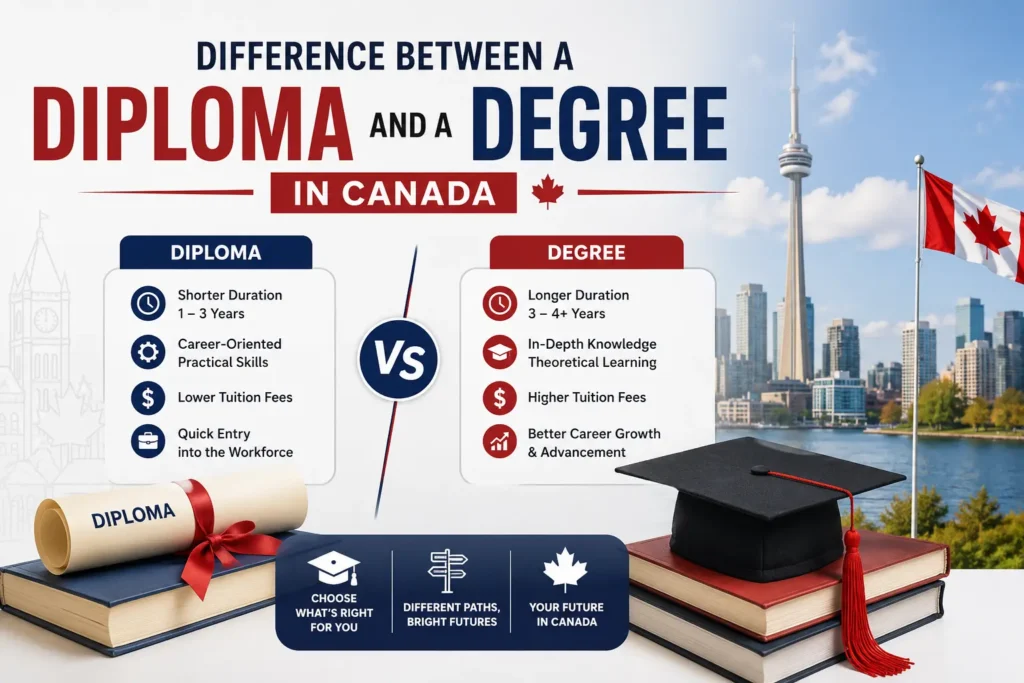
Difference Between a Diploma and a Degree in Canada Difference Between a Diploma and a Degree in Canada In Canada, pursuing higher education is an important aspect of many people’s lives, and it often starts with deciding whether to go for a diploma or a degree. This decision may have a major impact on one’s academic experience as a whole, implicit earnings, and job possibilities. Depending on your goals for your education and your pretexts, you should decide between a diploma and a degree. Knowing those distinctions will assist you in selecting the best option for your future. Let’s briefly discuss the key characteristics between the two choices in the following paragraphs. What is a Diploma? Among the diverse choices, Diplomas have stood out as a pathway that offers a unique blend of practical skills and focused knowledge. A Diploma is more than just a certificate of completion, it is a gateway to a specialized domain of learning designed to equip with hands-on skills and targeted expertise. What is a Degree? In the maze of educational choices, the search for a degree stands as a monumental milestone for many students across the world. A degree is not just a certificate, it is a demonstration of academic achievements, a sign of dedication to learning, and a key that unlocks doors to many opportunities. Whether it’s a bachelor’s or master’s degree, both level of education represents a unique journey that prepares an individual for the complexities of the professional world. Difference between Diploma and Degree: It’s a crucial decision when comes to choosing between a diploma and a degree in this vast landscape of Canadian Education as both paths offer unique advantages and cater to distinct career goals. This blog aims to shed light on the key differences between diplomas and degrees in Canada, that will help to choose your educational journey. 1. Duration and Intensity: Typically, Diploma programs are shorter in duration compared to degrees as they usually span 1 to 3 years which provides a more focused and practical approach to learning. On the other hand, degree programs are more extensive and require a commitment of three to four years and they deliver the sights of the theoretical concepts and often include a wider range of courses. 2. Academic Focus: Generally, Diplomas are acknowledged for their hands-on, applied approach to learning as they are designed to prepare students with specific skills and knowledge relevant to a particular field or industry. While degrees offer a more theoretical and comprehensive understanding of a subject they include a mix of core courses, electives, and opportunities for specialization in a chosen major. 3. Career Opportunities: Diplomas are well-suited for individuals seeking direct entry into the workforce as diploma programs are inclined towards practical skills development, making graduates immediately employable in their chosen fields. Whereas, a degree is often considered to be a more adaptable qualification that opens the doors to a broader range of career opportunities. 4. Post-study Work Visa: One of the major concerns of Indian students is the time span of a post-study work visa as a longer work visa can translate to getting more time to search for the right job and getting more time to establish students professionally. Pursuing a one-year course will enable you to get a year of work visa while pursuing a course of 2 or more will enable you to work up to three years on a work visa. 5. Cost Considerations: Most often diploma programs are cost-effective in terms of tuition fees and shorter duration of study which makes it an attractive option for those looking to enter the workforce sooner. Conversely, a degree can be a more significant financial investment due to longer study duration and potentially higher tuition fees. In conclusion, choosing between a diploma and a degree in Canada involves evaluating the benefits of practical skills acquisition against a broader academic foundation. Ultimately, the decision should align with your career goals, preferences, and financial considerations. Whether opting for a diploma or a degree, the Canadian education system offers diverse and enriching opportunities for students to embark on successful career paths. Research on your own can be a backbreaking task and you may also feel further confused. But do not to worry as Focus Education Pvt. Ltd. with experienced international education experts will guide you to find the perfect academic career for you. It will be a privilege to guide you in a way that ensures you a qualification that will help you to start a rewarding career.
Mastering the IELTS: Effective Study Techniques and Strategies
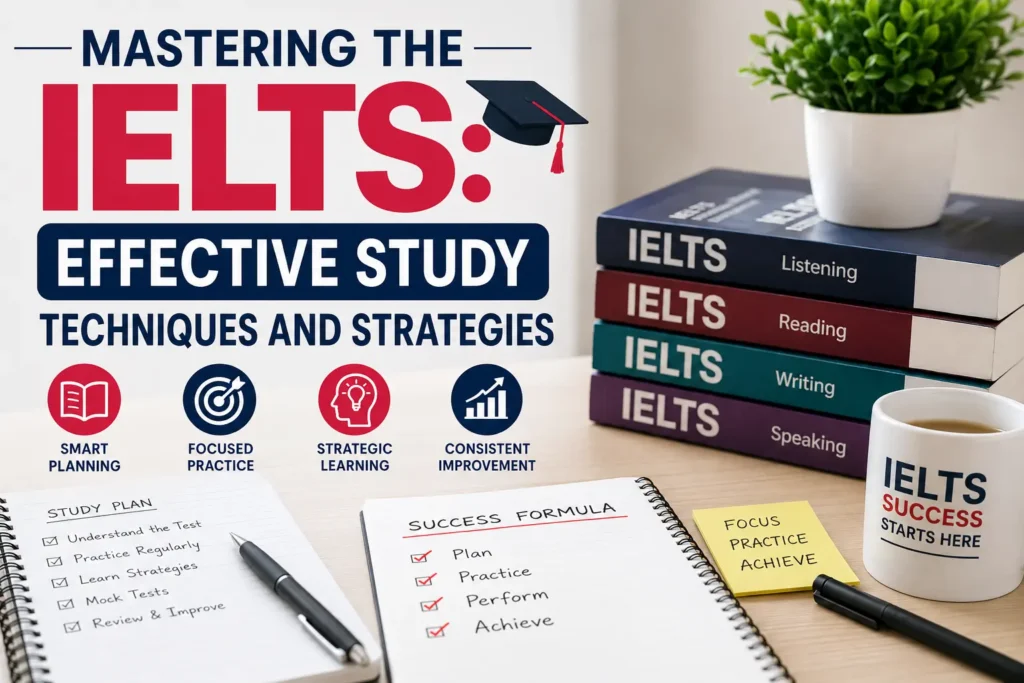
Mastering the IELTS: Effective Study Techniques and Strategies Mastering the IELTS: Effective Study Techniques and Strategies The International English Language Testing System (IELTS) is a major gateway for individuals aspiring to study, work, or immigrate to English-speaking countries. Achieving a high score requires a strong command of English, effective study techniques and strategic preparation. Here, we’ll explore some key strategies and tips to help you navigate the IELTS successfully. 1. Understand the Test Format: Before commencing your preparation, acquaint yourself with the examination structure. The IELTS comprises four segments, namely listening, reading, writing, and speaking. Understanding the structure of each section is critical to efficient preparation. 2. Develop Strong Language Skills: Since the IELTS evaluates your English language proficiency, focus on enhancing your listening, reading, writing, and speaking skills. Engage in daily activities such as reading English newspapers, listening to podcasts, and practising speaking with native speakers or fellow test-takers. 3. Practice Regularly: Constant practice is key to success. Dedicate time each day for IELTS practice, focusing on each section. Use official practice materials and sample tests to simulate exam conditions. This will improve your skills and familiarise you with the test environment. 4. Enhance Time Management: Time is the heart of the IELTS. Cultivate efficient time management by engaging in practice sessions under timed conditions. Assign specific time frames for each section during your practice sessions to ensure you can complete the test within the given time limits. 5. Master Reading and Listening Skills: For the Reading and Listening sections, practice skimming and scanning techniques to quickly locate information. Develop the ability to identify key points, main ideas, and supporting details. Enhance your reading speed while maintaining a strong grasp of comprehension. 6. Improve Writing Skills: The Writing section involves tasks that assess your ability to express ideas clearly and logically. Practice different types of essays and letters, paying attention to organization, grammar, and vocabulary. Seek feedback from teachers to hone your writing skills. 7. Polish Speaking Skills: The Speaking segment assesses your proficiency in verbal communication. Practice speaking English regularly with friends, language exchange partners, or teachers. Record yourself to identify areas for improvement, such as pronunciation, fluency, and coherence. 8. Expand Your Vocabulary: A rich vocabulary enhances your performance across all sections of the IELTS. Make a habit of learning new words daily and using them in your practice sessions. This will not only improve your writing and speaking but also aid in understanding complex passages. 9. Take Mock Tests: Simulate exam conditions by taking full-length mock tests. This will help you build stamina and familiarize yourself with the pressure of the actual exam. Analyse your performance, identify weaknesses, and focus on improving those areas in subsequent practice sessions. 10. Seek Professional Guidance: Explore the option of enrolling in IELTS preparation courses or securing the services of a tutor. Professional guidance can provide personalized feedback, targeted strategies, and valuable insights to help you reach your target score. Achieving mastery in the IELTS demands a blend of language ability, strategic eagerness, and firm practice. Grasping the test structure, refining your language skills, and deploying effective study methods can significantly boost your likelihood of success. Keep in mind that thorough preparation is the key player to confidence on exam day, so initiate your journey early and maintain a steadfast commitment to your objectives. For comprehensive coverage of these essential points, join us at Focus Education and experience a FREE Demo.
Common IELTS Writing Mistakes and How to Avoid Them
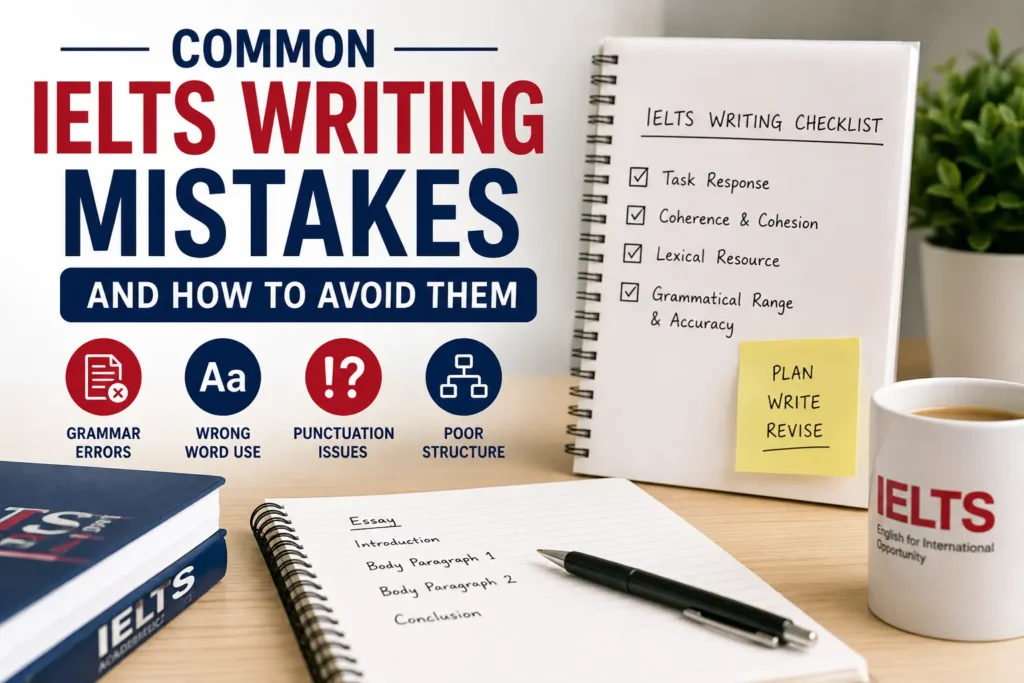
Common IELTS Writing Mistakes and How to Avoid Them Common IELTS Writing Mistakes and How to Avoid Them The International English Language Testing System (IELTS) is a widely recognized English proficiency exam that assesses the language skills of individuals looking to study, work, or migrate to English-speaking countries. One of the key components of the IELTS exam is the writing section, which often poses challenges for test-takers. Do not worry as you are at the right place; here we will explore common IELTS writing mistakes and provide valuable insights on avoiding them. 1. Lake of Task Response: One common mistake in IELTS writing is not fully addressing the task requirements. Some test-takers may differ from the given prompt or fail to cover all aspects of the question. To avoid this, carefully analyse the task, underline keywords, and ensure your response directly addresses each element of the prompt. 2. Neglecting Consistency and Continuity: Effective communication is crucial in IELTS writing. Some candidates struggle with organizing their ideas coherently, leading to a lack of clarity in their essays. To overcome this, use consistent devices such as linking words and transitional phrases to connect sentences and paragraphs logically. This improves the overall flow of your essay. 3. Ignoring Word Count: IELTS has specific word count requirements for each writing task. Exceeding or falling short of the prescribed word limit can result in a lower band score. Always pay attention to the word count, and practice writing within the specified range to develop a sense of how much content you can include in your response. 4. Overlooking Grammar and Vocabulary: Grammatical errors and limited vocabulary can significantly impact your writing score. Regularly practice grammar exercises and expand your vocabulary to express ideas more precisely. Be cautious about using complex structures; it’s better to showcase accuracy with simple sentences than to risk grammatical mistakes in overly complex ones. 5. Insufficient Proofreading: Many candidates neglect the importance of proofreading their essays before submission. Typos, spelling errors, and grammatical mistakes can easily be ignored if you don’t take the time to review your work. Assign a few minutes at the end of the exam to carefully proofread your essay and make necessary corrections. 6. Failure to Manage Time Effectively: Time management is vital in the IELTS writing section. Some candidates spend too much time on one task, leaving insufficient time for the other. Practice writing essays within the allotted time frames during your preparation to improve your ability to manage time effectively during the actual exam. Avoiding common IELTS writing mistakes requires thorough preparation, attention to detail, and constant practice. Addressing these issues head-on can enhance your writing skills and increase your chances of achieving a higher band score in the IELTS exam. Remember to stay focused on the task, maintain clarity and coherence, adhere to word limits, and prioritise grammar and vocabulary to succeed in the writing component of the IELTS test. Remember, at Focus Education, we ensure comprehensive coverage of these key points to help you achieve a commendable band score in your IELTS. Don’t hesitate – take advantage of our Free Demo for IELTS today!