Demystifying the US Student Visa Application Process for Indian Students
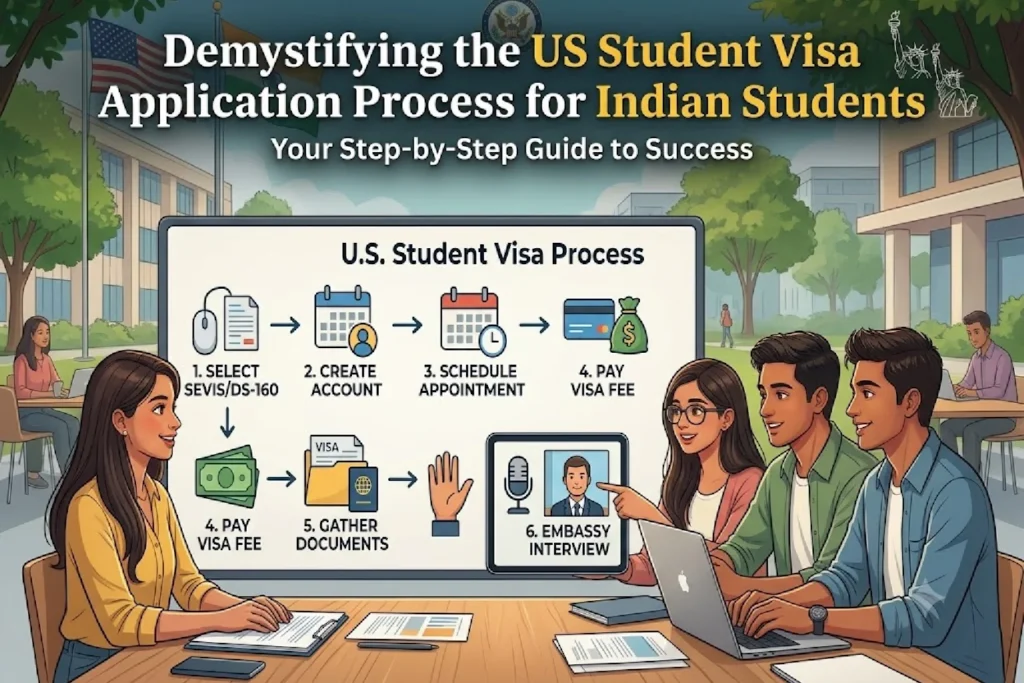
Demystifying the US Student Visa Application Process for Indian Students Demystifying the US Student Visa Application Process for Indian Students Are you an Indian student dreaming of travelling to lively cities like New York, studying at famous schools like Harvard, or working in places like Silicon Valley? The United States has lots of likelihoods and a lively culture waiting for you. But before you can go on your American journey, you must understand the tricky world of US student visa. Over here we will explain how to apply for it, and give you important tips for success. Study in USA: The United States is globally renowned for its prestigious universities and diverse academic offerings, making it a top choice for international students seeking quality education and vibrant cultural experiences. From renowned Ivy League institutions to a myriad of specialized colleges, the US Higher Education System provides a plethora of opportunities for academic growth and exploration. Additionally, the country’s rich cultural tapestry enhances the student experience, offering opportunities for cross-cultural exchange and personal development outside the classroom. Whether it’s studying in the USA or engaging in extracurricular activities, students in the US are immersed in a dynamic environment that fosters both academic excellence and cultural enrichment. Student Visa Application Process: To start the process of applying for a student visa (known as the F1 visa), the first step is gaining admission to a university/college in the United States certified by the Student and Exchange Visitor Program (SEVP). This certification ensures that the institution meets certain standards for hosting international students. Once you’ve been accepted to SEVP-certified universities, you’ll receive a Form I-20 from that institution. This form is a vital document for your visa application, as it confirms your acceptance and outlines key details of your intended academic program, such as the start date, duration, and estimated costs. Essentially, securing admission to a SEVP-certified institution and obtaining the Form I-20 are the initial steps in the journey toward obtaining an F1 visa to study in the US. Apply for a US Student Visa: Once you have your Form I-20 from the SEVP-certified university you’ve been accepted to, it’s time to apply for the F1 visa at the US Embassy or Consulate in India. This process requires a few important steps. Firstly, you’ll need to complete the DS-160 online application form. This form asks for detailed information about yourself, your educational background, and your plans while in the US. After you’ve filled out the DS-160, you’ll need to schedule an interview appointment at the Embassy. Finally, you’ll need to pay the visa application fee. This fee is paid electronically through a designated payment system. Once you’ve completed these steps and attended your visa interview, a consular officer will review your application and determine whether you’re eligible for the F1 visa to pursue your studies in the US. Student Visa USA Cost: Budgeting for the costs of obtaining a US student visa is crucial as there are several expenses involved. Firstly, there’s the visa application fee, which is paid when submitting the DS-160 online application. Additionally, there’s the SEVIS fee, which is a mandatory fee paid to the Student and Exchange Visitor Information System (SEVIS) to maintain accurate information on international students. This fee must be paid before attending the visa interview. Apart from these mandatory fees, there may be additional expenses related to travel to the embassy or consulate for the visa interview, such as transportation and accommodation costs. Moreover, there might be expenses associated with gathering required documentation, such as obtaining transcripts or medical reports. It’s important to account for all these expenses when planning to apply for a US student visa to ensure a smooth and hassle-free process. F1 Visa Processing Time: The processing time for an F1 visa, which allows international students to study in the US, can fluctuate due to several factors. One crucial factor is the time of year you apply, as certain periods may see higher volumes of visa applications. Additionally, the workload of the embassy or consulate where you apply can impact processing times. To avoid any potential delays, it’s wise to submit your visa application well in advance of your intended program start date. By doing so, you provide ample time for any unexpected delays in the processing of your application. Planning ahead and applying early can help ensure that you receive your visa in time to begin your studies as scheduled, giving you peace of mind and minimizing stress during the visa application process. Process for US Student Visa: During your visa interview, it’s crucial to demonstrate your genuine intent to study in the USA by showing your commitment to your academic program and explaining how it fits your educational and career goals. You should also discuss your ties to your home country, like family or job prospects, to prove your intention to return after your studies. Additionally, you’ll need to provide evidence of your financial ability to cover tuition fees and living expenses in the US, which may include bank statements or sponsorship letters. The officer will evaluate your eligibility for the F1 visa based on this information, and you should be prepared to provide any requested documents promptly to increase your chances of success. Being well-prepared and organized is key to a successful visa interview. About Form I-20: Form I-20 is an important document issued by universities/colleges authorized by the Student and Exchange Visitor Program (SEVP) in the US. It acts as proof of acceptance into a specific academic program and provides essential details like the program’s start date, duration, and estimated costs. This information helps both students and immigration authorities understand when students are allowed to enter the US, how long they can stay, and whether they have enough financial support for their studies. Essentially, Form I-20 serves as a gateway for international students to pursue their academic goals in the US. It not only confirms their acceptance into a program but also ensures they meet the requirements for
Accommodation in Ireland

Accommodation in Ireland Accommodation in Ireland Looking to pursue higher studies and navigating the process of finding student accommodation in Ireland can be quite challenging. Securing suitable housing is often one of the most daunting tasks for students studying in Ireland. However, one of the notable advantages of studying in Ireland is its relatively low cost of living. If you are seeking on-campus student accommodation, it’s imperative to apply as early as possible to secure a spot at your desired university. If you are feeling concerned about Accommodation in Ireland, you have landed on the right page. This blog serves as your comprehensive guide to finding student accommodation in Ireland. Take a look! Student Accommodation in Ireland: Here is a basic overview of accommodation in Ireland for Indian Students: Room Type Price/Month On-Campus without food 800-1000 Euro approx. On-Campus with food 1000-1200 Euro approx. Off-campus, own apartment 800-1200 Euro approx. Off-campus, shared apartment 500-600 Euro approx. In Ireland, student accommodation typically falls into four categories: On-campus housing Long-term student hostels Living with a host family (known as digs or homestay) Private rental properties. Certainly, here’s a detailed look at each type of student accommodation in Ireland: 1. On-Campus Accommodation: On-campus accommodation is highly sought after among students in Ireland, although a bit costly. Typically, these accommodations consist of apartments housing 4 to 8 students, each with their own private bedroom while sharing communal spaces like the kitchen, living room, and bathroom. Rent is typically paid monthly, with a deposit required at the beginning of each semester. Upon departure, students can expect a refund of their security deposit. However, additional charges may apply for heating utilities, which are sometimes billed separately. Some student residences set limits on utility usage, and any excess charges may be deducted from the security deposit. 2. Private Off-Campus Student Accommodation: Private off-campus student accommodation serves as a viable alternative for students unable to secure on-campus housing. These accommodations often offer similar services and amenities to on-campus options. Some colleges even collaborate directly with off-campus providers when on-campus spaces are limited. However, private off-campus accommodation tends to come at a higher cost compared to on-campus options. In recent years, there has been a rise in luxurious accommodation offerings, with rents soaring as high as €10,000 for a 9-month lease. 3. Long-term Student Hostels: Long-term student hostels offer a flexible accommodation option, though with limited availability. Sharing the hostel with fellow students, residents can access communal living areas, kitchens, and private bedrooms upon payment of monthly rent. Included in the rent are amenities such as breakfast and utility bills, providing convenience and ease for students. 4. Living with a Host Family (known as digs or homestay): This option allows you to reside as a paying guest within an Irish family, offering a private room conducive to studying. It’s particularly popular among students enrolled in short courses, as well as those pursuing further and higher education. In Ireland, this arrangement is referred to as “living in digs,” while in other countries, it’s commonly known as “homestay.” “Digs” typically include both morning and evening meals, with students responsible for purchasing their own midday meal on campus or elsewhere. Additionally, there are no additional charges for utilities such as heating and lighting, and laundry services are often included. 5. Private rental properties: Private rented accommodation offers various options, including bedsits, flats/apartments, or sharing a house. Sharing accommodation is typically more cost-effective. Bedsit: A single-room unit with basic cooking facilities, a bed, and some furnishings. Bathroom facilities are shared with other occupants of the building. Flat/Apartment: Provides a kitchen, living room, bathroom, and one or more bedrooms. Costs vary based on size and quality; a compact one-bedroom may be pricier than a bedsit, while a larger apartment commands higher rent. House or Apartment Share: Often the most economical choice as bills are split among multiple occupants. Sharing a room further reduces living expenses. This option has become increasingly popular due to housing shortages. In all cases, rent is typically paid monthly and in advance, with a security deposit equivalent to one month’s rent required at the beginning of the lease. This deposit is refunded upon departure if no damage has occurred. Leases usually run for 9 or 12 months, and breaking the lease without notice or failing to meet lease terms may result in forfeiture of the security deposit. When seeking accommodation in Ireland, International students have a range of housing choices available to them depending on the cities they have decided to reside in. It’s crucial to carefully consider factors like safety, convenience, and basic amenities when selecting student accommodation. Remember to prioritize your needs and preferences. Please feel free to interact with Focus Education by leaving a message!
Myth Busters : Studying In Canada As An International Student

Myth Busters : Studying In Canada As An International Student Myth Busters: Studying in Canada as an International Student Are you considering studying abroad in Canada? As an international student, you may have heard various myths and misconceptions about life and education in Canada. But fear not! Today, we’re here to debunk some of the most common myths and set the record straight. Myth #1: Toronto is the capital of Canada: While Toronto is a bustling metropolis and a financial hub, the capital of Canada is actually Ottawa, located in the province of Ontario. So, if you’re planning to visit the nation’s capital, make sure you head to Ottawa! Myth #2: Canada is too cold to live in: Yes, Canada is known for its harsh winters, but the climate greatly varies depending on where you are in the country. From the mild temperatures of the West Coast to the snowy winters of Toronto and Montreal, Canada offers a diverse range of climates. So, don’t let the cold scare you off – there’s a perfect Canadian city for everyone! Myth #3: Finding a job to support yourself while studying is difficult: International students study in Canada have the opportunity to work both on and off campus while enrolled in a Canadian institution. While it may not cover all of your expenses, part-time work can help offset the cost of living and provide valuable work experience. Just make sure to budget wisely and manage your time effectively. Myth #4: Need to learn French: While French is one of Canada’s official languages, proficiency in the language is not required for entry into the country. English is widely spoken and understood across Canada, particularly in cities like Toronto, Vancouver, Calgary, Winnipeg. Unless you plan to visit Quebec or pursue a French-language program, you can get by just fine with English. Myth #5: The procedure of obtaining a student visa for Canada is difficult and complicated: While the visa application process may seem daunting, it’s not as difficult as you might think. With the right guidance from a reliable study abroad consultant like Focus Education, you can navigate the process successfully. From filling out application forms to compiling required paperwork, assistance is available every step of the way. Myth #6: Universities in Canada are not well-known worldwide: Canada is home to some of the top universities in the world, with a reputation for academic excellence and research innovation. The institutions are highly regarded internationally. With 19 universities listed in the QS World University Rankings for 2024, Canada’s reputation in higher education speaks for itself. Myth #7: For overseas students, Canada does not have any employment accessible: Canada’s strong economy offers plenty of job opportunities for international students, even those without prior experience or fluency in English. Many employers are open to hiring recent graduates, and having a Canadian degree can enhance your employability both in Canada and abroad. Plus, with entry-level positions available across various industries, there are plenty of opportunities to gain valuable work experience during your studies. Studying in Canada as an international student is a rewarding experience, but it’s essential to separate fact from fiction. By debunking these myths, we hope to help you make informed decisions and ensure that your educational journey in Canada is both smooth and enjoyable. So, pack your bags, embrace the adventure, and get ready to embark on the experience of a lifetime in the Great White North! In conclusion, debunking myths about studying in Canada reveals a wealth of opportunities for international students. With Focus Education’s expert guidance, navigating visa processes becomes manageable. Canada’s top universities, diverse cities, and welcoming atmosphere await those eager to embark on this enriching educational journey. Do visit Focus Education to streamline your Canadian experience, ensuring a smooth transition and maximizing your potential in Canada.
The Ultimate Guide to Choosing the Right University in the USA for Indian Students
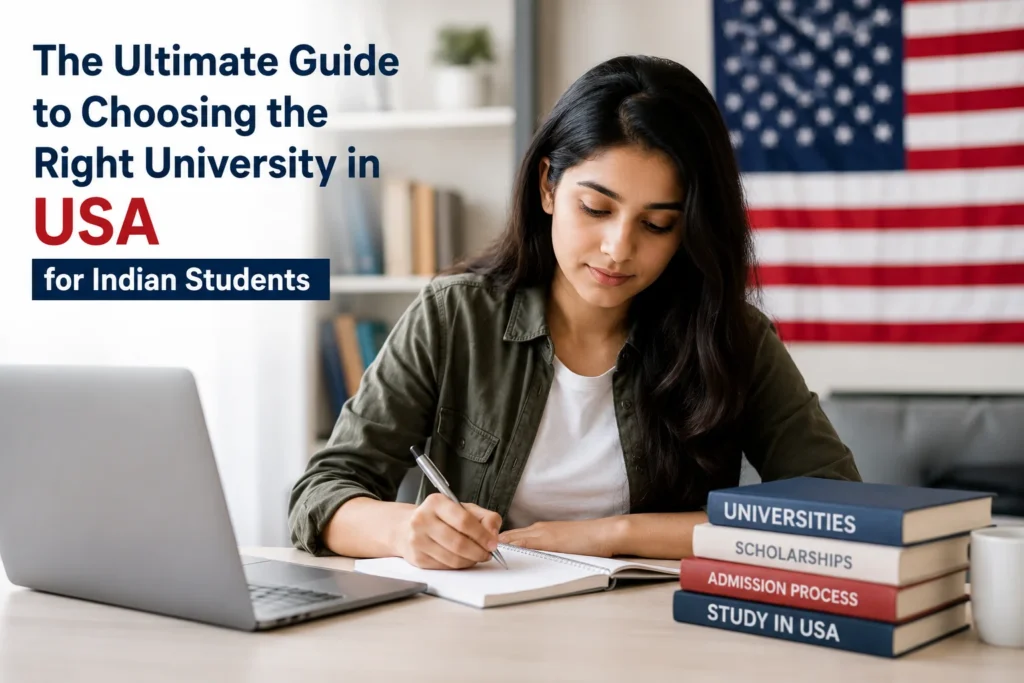
The Ultimate Guide to Choosing the Right University in the USA for Indian Students The Ultimate Guide to Choosing the Right University in the USA for Indian Students Do you intend to study in the United States as an Indian student? Get ready for an amazing experience! US universities are famous for their top-quality education and lots of opportunities. Whether you’re into science, business, or something else, there’s a perfect fit for you. Plus, studying in the USA means meeting people worldwide and making connections for your future. So, let’s pursue and discover the endless possibilities that await you as you prepare to study in the USA! Factors to Consider: Academic Focus: When you’re thinking about which university to go to in the USA, it’s important to pick one that offers the subjects you’re interested in. This way, you’ll enjoy learning about what you love. You can find out about the different university programs by checking their websites, using college search websites, and exploring on academic forums. These resources can help you figure out US university majors for Indian Students. Location and Campus Life: The location and campus environment of a university can significantly impact your overall experience. Factors like climate, urban versus rural settings, and the presence of a large Indian student community are crucial considerations. Many Indian students seek universities with a substantial Indian population for a sense of community and support. Researching campus life and student organizations can be facilitated through online platforms, social media groups, and student forums, offering insights into US Universities with large Indian student populations. Cost and Financial Aid: Cost and financial aid are key factors to weigh when selecting a university. Considering tuition fees, living expenses, and scholarship opportunities is essential. Numerous scholarships are available specifically for Indian students studying in the USA, including merit-based scholarships, need-based aid, and government-sponsored programs. Exploring financial aid options can be facilitated through university websites, scholarship databases, and educational consultants, aiding in identifying scholarships for Indian students in the USA. Accreditation and Ranking: Accreditation and university rankings provide insights into the quality and reputation of academic institutions. Ensuring accreditation guarantees a university meets established standards of excellence. University rankings offer valuable information about a university’s standing and performance. Understanding the difference between national and regional rankings and interpreting them in the context of your academic goals is essential. Utilize resources such as university websites, ranking publications, and educational consultants to assess accreditation and rankings when selecting top-ranked universities in the USA for Indian students. Additional Considerations for Indian Students: When considering studying in the USA, Indian students need to weigh additional factors beyond academics, such as visa requirements, career opportunities, and alumni networks. Understanding the visa process is crucial, and many universities offer support to international students navigating the complexities of obtaining student visas. Furthermore, a strong alumni network and robust career services can significantly enhance the student experience and pave the way for future success in both the USA and India. Let’s explore these important considerations further to ensure a well-rounded decision-making process for Indian students aspiring to study in the USA. Visa Requirements and Support: When planning to study in the USA, navigating the visa process can be daunting. However, resources and organisations like Focus Education specialize in guiding students through every step, from application to visa processing. Now, you might wonder how exactly Focus Education can assist you in this journey. Here are the steps where we can provide support to secure your USA visa. Initial Consultation Documentation Application Assistance Interview Preparation Follow-up Support Visa Guidance Post Visa Assistance Overall, Focus Education aims to make the visa process as smooth and stress-free as possible, allowing you to focus on preparing for your studies and making the most of your educational experience in the USA. Career Opportunities and Alumni Network: A strong alumni network and career services can greatly benefit International Students Studying in the USA. Many universities offer extensive career support, including job placement assistance, resume workshops, and networking events. Alumni connections can be invaluable for future job prospects, both in the USA and back in India. Leveraging alumni networks can open doors to internships, job opportunities, and mentorship, enhancing the overall student experience and preparing graduates for success in their careers. Research Tools and Resources: Indian students have a plethora of resources available to aid them in researching US universities. Among these, Focus Education Global Pvt. Ltd. stands out as an accessible and reliable option, offering expert guidance for those seeking to pursue their careers in the USA. Furthermore, platforms like Quora and Reddit host numerous student testimonials, offering firsthand perspectives on the experiences of Indian students at various universities. These diverse resources collectively empower Indian students to make informed decisions when selecting universities in the USA. Conclusion & Taking the Next Step In conclusion, choosing the right US university involves several key steps: researching academic programs and majors, considering location and campus life, evaluating cost and financial aid options, assessing accreditation and rankings, understanding visa requirements and support services, exploring career opportunities and alumni networks, and resources like Focus Education Global Pvt. Ltd. play a pivotal role in providing personalized guidance throughout the decision-making process. To move forward, we encourage readers to create a shortlist of universities based on their priorities, focusing on factors like academic fit, campus environment, and potential career opportunities. For personalized guidance and support in this process, consider reaching out to Focus Education for a free consultation on choosing US universities. Let’s take the next step together toward your exciting academic journey in the USA!
5 Reasons Why You Should Choose the USA for Your Higher Education
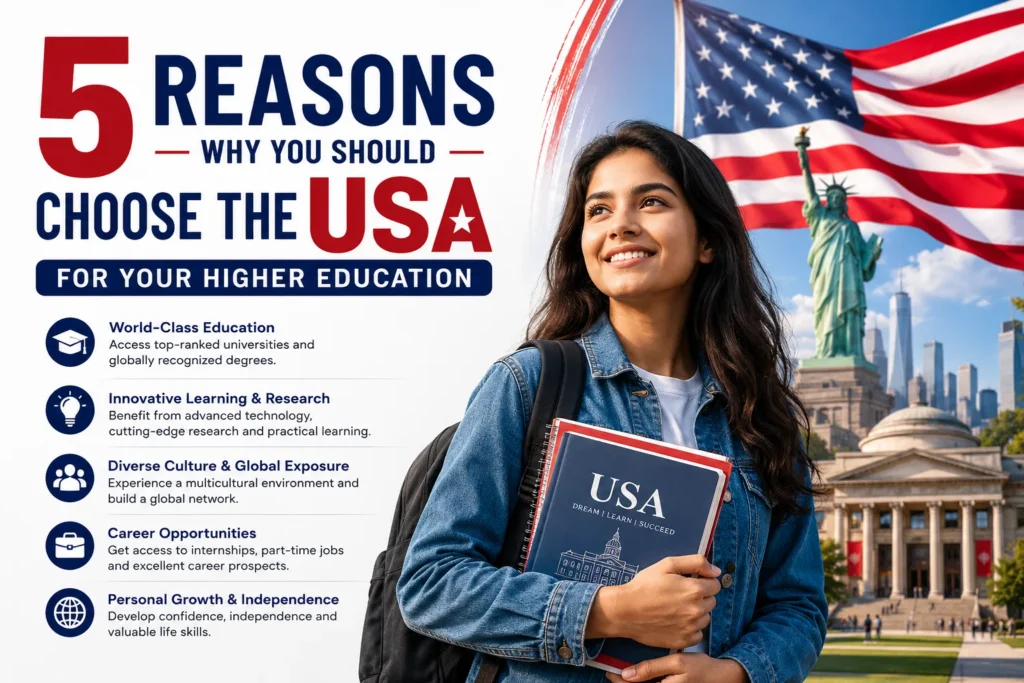
5 Reasons Why You Should Choose the USA for Your Higher Education 5 Reasons to Why Study in USA: Are you considering studying abroad? Look no further than the USA! Well-known for its top universities and diverse academic opportunities, studying in the USA can be the key to unlocking your educational and professional potential. Let’s delve into five compelling reasons why the USA should be your destination of choice for abroad study. Reason no 1: Academic Excellence When it comes to top universities in the USA, excellence is the standard. These institutions, such as Harvard and MIT, consistently rank among the best globally, offering unmatched access to world-class faculties, cutting-edge facilities, and a diverse range of programs. With their rich histories and commitment to innovation, they serve as hubs of groundbreaking research and academic distinction, shaping the future leaders of tomorrow and leaving an indelible mark on the global educational landscape. Reason 2: Flexible Learning Environment In the dynamic educational landscape, flexible Learning Programs of the USA reign supreme as universities offer a plethora of learning styles ranging from lectures and seminars to independent research projects, empowering students to customise their educational journey according to their unique preferences and aspirations. This variety of options extends beyond the classroom, permeating every aspect of the university experience, allowing students to engage in interdisciplinary studies, collaborative projects, and experiential learning opportunities both on and off-campus. By embracing this holistic approach, students not only cultivate intellectual curiosity and critical thinking skills but also develop the adaptability and resilience needed to thrive in an ever-changing world, ensuring an enriching and personalized educational experience. Reason 3: Cultural Diversity Immerse yourself in the vibrant multicultural environment of Culturally Diverse Universities in the USA, where students from all corners of the globe come together to foster diversity and cross-cultural exchange. Learning alongside international classmates broadens perspectives, promotes empathy, and equip students with the global mindset necessary for success in today’s interconnected world. Beyond academic settings, campus life offers myriad opportunities for engagement, from cultural festivals to international student organizations, enriching experiences that transcend traditional boundaries and cultivate lifelong friendships and professional networks across continents. Through embracing diversity and promoting cross-cultural understanding, Culturally Diverse Universities in the USA empower students to become global citizens ready to navigate the complexities of our interconnected world with confidence and empathy. Reason 4: Vibrant Campus Life Immerse yourself in the vibrant tapestry of Vibrant Campus Life in USA Universities and discover an abundance of opportunities to enrich your college experience. Beyond the academic realm, universities across the country buzz with excitement, offering a display of extracurricular activities, student clubs, and organizations to suit every interest and passion. Whether you’re drawn to competitive sports, artistic endeavours, or community service initiatives, there’s something for everyone to engage in and explore. From cheering on your team at spirited sporting events to honing your talents in theatre productions or musical ensembles, the possibilities are endless. These extracurricular pursuits not only provide a welcome break from academic rigours but also foster personal growth, leadership skills, and a sense of belonging within the campus community. Moreover, they serve as avenues for forging lasting friendships and connections that extend far beyond graduation, creating memories that will be cherished for years to come. Reason 5: Career Benefits of Studying in the USA Earning a degree from a US university is not just a milestone in education; it’s a gateway to a vast array of career opportunities both domestically and internationally. Employers around the world hold US-educated graduates in high regard due to the rigorous academic standards and diverse perspectives they bring to the table, exemplifying the Career Benefits of Studying in USA. A US education teaches not only subject-specific knowledge but also critical thinking, problem-solving, and communication skills essential for thriving in today’s global workforce. Furthermore, study in the USA provides access to comprehensive career development resources, including internships, mentorship programs, and job placement services. These resources not only help students explore their career interests and aspirations but also provide valuable networking opportunities with industry professionals. Whether pursuing opportunities in their home country or venturing abroad, graduates of US universities are well-equipped to navigate the competitive job market and achieve success in their chosen fields. Conclusion: Step into a world of academic excellence, vibrant campus life, and promising career prospects by pursuing higher education in the USA. With its diverse learning environment and unparalleled opportunities, the USA beckons students to embark on an enriching educational journey. Whether you’re drawn to cutting-edge research, dynamic classroom experiences, or vibrant extracurricular activities, the USA offers a multitude of pathways to success. At Focus Education Global Pvt. Ltd., we specialize in simplifying the admissions process and facilitating the transition for international students. Let us guide you through the steps to obtaining a USA student visa, paving the way for a seamless transition into this exciting new phase of your career. Contact us today to discover how we can help you achieve your educational aspirations in the land of opportunity. “`
US Student Visa Interview Tips : How to Ace Your Interview
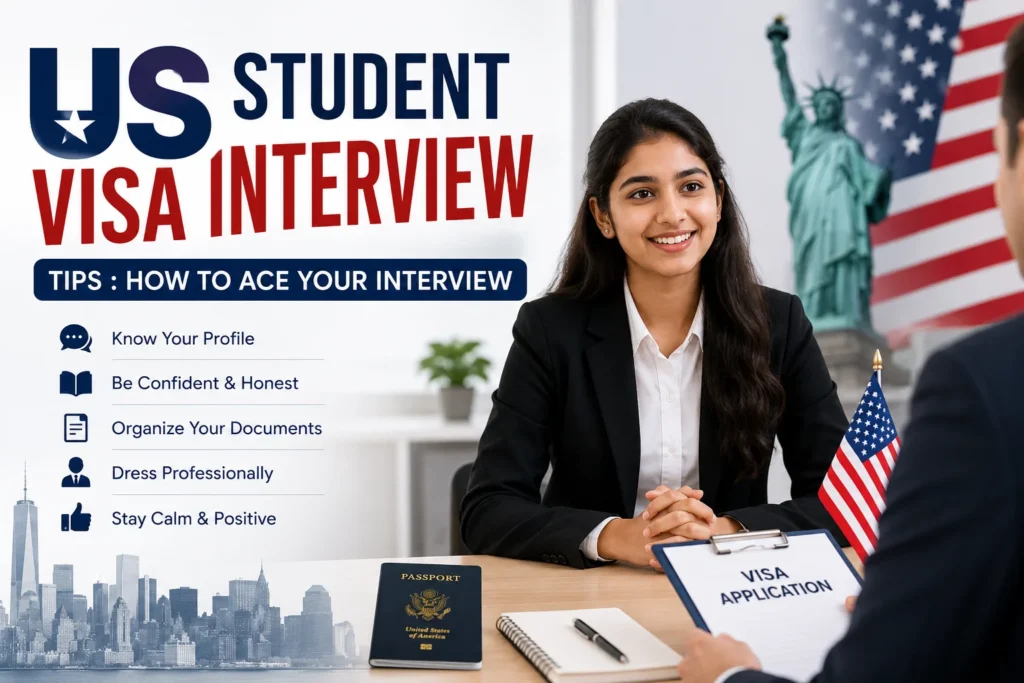
US Student Visa Interview Tips : How to Ace Your Interview US Student Visa Interview Tips: How to Ace Your Interview Securing a US student visa is crucial for international students aspiring to study in the United States. The US student visa interview is a pivotal step that can be both daunting and anxious. However, you can successfully navigate this process with thorough preparation and confidence. Pre-Interview Preparation: Research the University: Before your US student visa interview, conducting thorough US university research is essential. Familiarise yourself with the faculty, academic programs, campus facilities, and any unique features that attracts you to the institution. Utilise resources such as university websites, alumni networks, and student forums to gain valuable insights into what the university offers. Gather Required Documents: Prepare all necessary US student visa documents in advance to avoid last-minute stress. These typically include your acceptance letter, academic transcripts, proof of financial support, and other documents specified by the embassy. Detailed information can be found on the official embassy website. Practice Your Interview Skills: Practice is essential for mastering your US student visa interview. Be prepared for questions about your study plans, funding sources, and future goals. Conduct mock interviews with peers or mentors to refine your responses and increase your confidence. Although it may seem daunting, Focus Education is here to support you every step of the way. Our experts are available to assist you in preparing for your interview. During the Interview: First Impressions Matter: To make a positive impression during your US student visa interview, prioritize professionalism in your appearance and demeanour. Choose business attire or formal clothing that demonstrates your seriousness and respect for the interview process. Ensure your outfit is well-maintained and fits properly to convey a polished appearance. Arriving promptly is crucial to showcase your reliability and dedication. Aim to be at least 15 minutes early to your interview to account for any unforeseen delays. This punctuality not only demonstrates respect for the interviewer’s time but also underscores your eagerness for the opportunity. During the interview itself, maintain a positive attitude and engage actively with the interviewer. Smile warmly, sit upright with good posture, and maintain consistent eye contact to convey confidence and sincerity in your responses. These small yet impactful details can greatly enhance your chances of leaving a favourable impression during your US student visa interview. Speak Confidently: During your US student visa interview, effective communication is the most important factor. Speak confidently and clearly, avoiding hesitations and filler words that can detract from your message. Practice pronouncing your words to ensure your responses are coherent and easily understood. Confidence in communication stems from thorough preparation, so rehearse potential questions and clear your answers thoughtfully. To enhance clarity, prepare by practising speaking slowly and deliberately; especially if English is not your first language. Focus on maintaining a natural flow of speech while paying attention to pronunciation and intonation. During the interview, maintain composure and take brief pauses to gather your thoughts before responding. Engage actively with the interviewer by listening attentively and addressing questions directly. Demonstrating strong communication skills will bolster your chances of a successful US student visa interview. Be Honest and Direct: During the US student visa interview, honesty serves as the foundation for a successful interaction. It’s crucial to answer all questions truthfully and directly, ensuring clarity and transparency in your responses. Being honest means you should be ready to talk about any parts of your application or background that might need explaining. If there are any concerns, it’s important to address them directly during the interview. This approach can strengthen your case and reassure the interviewer. By staying open and truthful throughout, you show your dedication to following visa rules and achieving your educational goals in the United States with honesty and sincerity. Common Interview Questions and Answers: Why Do You Want to Study in the USA? Sample Answer: I am eager to pursue my studies in the USA because of its renowned educational opportunities, particularly in [your field of study]. The university’s esteemed reputation in this area perfectly aligns with my academic and career ambitions. How Will You Finance Your Studies? Sample Answer: I have secured funding through personal savings, and a [mention any loans or sponsorships]. I have accurately planned my finances to ensure I can sustain myself throughout my academic journey.” What Are Your Plans After Graduation? Sample Answer: After completing my studies, I intend to return to my home country furnished with valuable skills and knowledge gained from my education in the USA. My goal is to contribute to [mention specific goals or industries], utilizing my international experience. The questions above are just a few examples of what you might encounter during your US student visa interview. For comprehensive guidelines and thorough preparation, consider enrolling at Focus Education. We provide detailed assistance at every step to help you secure your US student visa successfully. Preparing for your interview requires confidence and thorough preparation. Stay calm, be well-prepared, and project confidence throughout the process. By following these tips and practising beforehand, you can significantly enhance your chances of a successful outcome. For personalized guidance or assistance with your visa application, feel free to contact Focus Education for further support.
COST OF LIVING IN IRELAND

COST OF LIVING IN IRELAND COST OF LIVING IN IRELAND Ireland stands as a desirable destination for students aspiring for higher education, owing to its prestigious universities, robust employment opportunities, and flexible part-time job options. As prospective applicants consider enrolling in Ireland’s top-tier institutions, it becomes imperative to meticulously assess various factors before making a decision. Foremost among these considerations is understanding the financial implications of living and studying in Ireland. Overlooking this aspect could potentially undermine the entire educational endeavour. Therefore, prospective students are advised to thoroughly evaluate the cost of living and studying in Ireland as an integral part of their decision-making process. By gaining clarity on these financial aspects upfront, students can make choices and better prepare for their educational journey in Ireland. The cost of living in Ireland is subject to variability based on factors such as location, lifestyle choices, and personal preferences. As a general observation, Ireland is often regarded as one of the pricier countries in Europe in terms of living expenses. Housing: A significant portion of these expenses is attributed to housing costs, particularly in major urban centers such as Dublin, Cork, and Galway. Rental prices for apartments in central locations within these cities tend to be notably high, posing a considerable financial challenge for residents, including students. While living outside of urban hubs may offer slightly more affordable rental options, the overall expense remains significant. Consequently, housing expenses constitute a substantial component of the total cost of living in Ireland, necessitating careful budgeting and financial planning, especially for students and other individuals on a fixed budget. CITY-WISE ACCOMMODATION COST IN IRELAND MONTHLY EXPENSE IN IRELAND (Approx.) City Monthly Expense Dublin 1,000 – 1,300 EUR Cork 900 – 1,100 EUR Galway 800 – 1,000 EUR Maynooth 800 – 1,000 EUR Limerick 800 – 1,000 EUR Athlone 700 – 900 EUR Letterkenny 700 – 900 EUR Utilities: Utilities, encompassing electricity, heating, water, and internet services, represent essential monthly expenditures for residents in Ireland. These costs, vital for maintaining a comfortable standard of living, are subject to variability based on individual usage patterns and the chosen service providers. Electricity and heating bills, in particular, can fluctuate depending on factors such as seasonal variations in weather and personal preferences regarding temperature control. Similarly, water bills are influenced by consumption levels and any additional services availed. Additionally, internet bills constitute a crucial expense in today’s digitally interconnected world, with costs varying based on the chosen internet service provider and the selected subscription plan. Given the indispensability of these utilities in modern life, residents in Ireland must allocate a portion of their budget to cover these recurring expenses, thereby ensuring a seamless and comfortable living experience. Transportation: Transportation in Ireland offers various options, including buses, trains, and private vehicles, efficiently connecting cities and towns and providing residents with convenient travel. While public transit networks are well-developed, owning a car comes with additional expenses like fuel and maintenance. Despite its compact size, Ireland boasts a comprehensive transportation infrastructure, supplemented by private operators, allowing easy movement nationwide. Affordability is crucial, especially for students who often choose cost-effective options like cycling or walking. By aligning transportation choices with budget and lifestyle, residents can navigate Ireland’s transportation landscape while optimizing convenience and affordability.Irish Rail offers rail services that make traveling between cities and to many of the main towns comfortable and stress-free. Dublin Bus, the DART (Dublin Area Rapid Transit) suburban train system, and the tram – LUAS – whose name in Irish means “speed”—are the three main ways to move about the city. One option for affordable transportation in Ireland is the Student Travelcard, the largest national student ID and discount card in Ireland. It offers special savings of up to 40% off on Irish Rail. Food: Food in Ireland is cheaper compared to many other European countries. If living in a private apartment, one has to buy own meals, which can add up. But if on campus, one can save money because food is usually included. Generally, people spend about 150 to 200 euros per month on food. Eating at a restaurant for lunch can cost anywhere from 15 to 50 euros, which can be pricey. It’s better to cook at home if one wants to save money and can use grocery store cards to save even more. Asking locals for food recommendations is a good idea. Make a menu, and a shopping list, and buy what need from the right stores. While eating out is fun sometimes, cooking at home is the cheapest way to save money. Healthcare: If one is from a country outside of the EU and studying in Ireland, won’t get free medical care if they are not on campus. This means if one needs to go to the hospital, one has to pay a lot of money unless having private health insurance. It’s really important to have good insurance because hospital bills can be expensive. One has to show proof of this insurance when applying for a student visa, so make sure one has it sorted out beforehand. It’s a good idea to get private medical insurance because then one can choose which hospital and doctor they want to go to, giving more control over their healthcare. Here are some tips to help you spend less money while living in Ireland: Use Student Discounts: Always carry your student ID with you. You can get discounts at restaurants, grocery stores, cinemas, gyms, and more just by showing your student ID. This can really help lower your expenses. Save on Phone Costs: Mobile phone charges can be high, especially for international calls. Consider using a prepaid phone where you buy credit in advance. This way, you can control how much you spend on phone calls. Get Tax Back: If you’re not from the EU or EEA, you might be able to get some of the tax back on items you buy in Ireland, especially big purchases from department stores. You can get this refund at the
Ace Your US Visa Application : Expert Tips for Indian Students
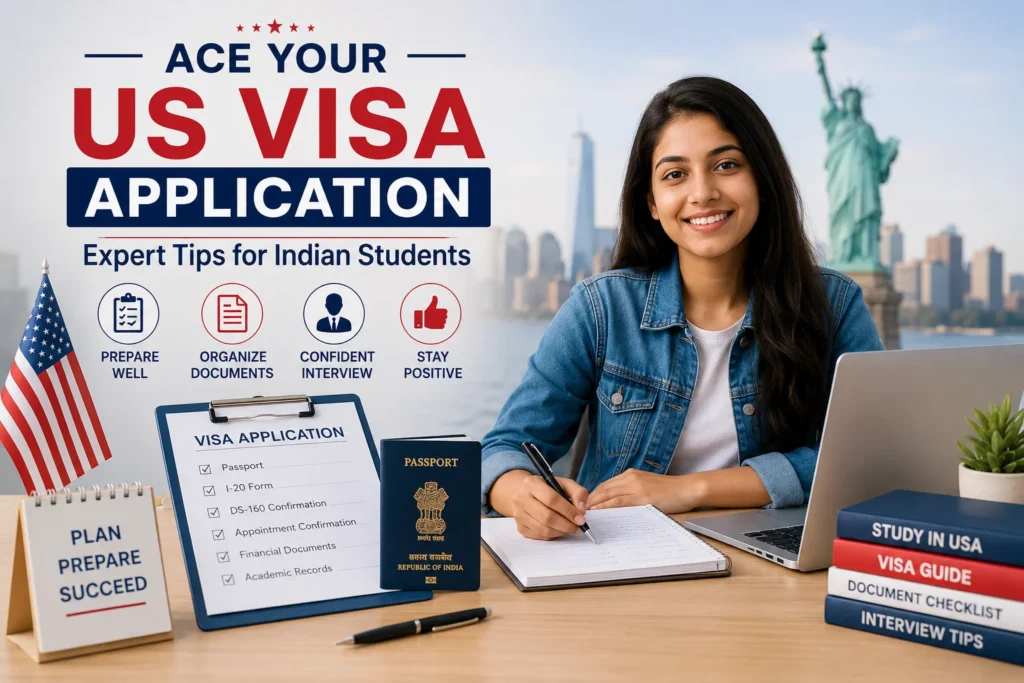
Ace Your US Visa Application : Expert Tips for Indian Students Ace Your US Visa Application : Expert Tips for Indian Students Studying in the USA offers Indian students a supreme opportunity to engage with a world-class educational system and embrace a diverse cultural landscape. The American higher education system is renowned for its focus on academic excellence, innovative research, and practical experience, providing a wide range of programs and specializations. This academic environment is accompanied by exposure to diverse cultural perspectives, as students interact with peers from various backgrounds and participate in multicultural events. Such experiences not only enhance personal growth but also develop adaptability and communication skills, which are highly valued in a globalized world. Securing a US Student Visa for Indian Students is a critical step in this journey, as it legally authorizes students to enter and stay in the United States for their studies. The visa process involves obtaining I- 20 (an acceptance letter from a SEVP-certified institution), completing the DS-160 form, paying the visa application fee, and attending a visa interview at the US Embassy. Successfully navigating this process validates a student’s ability to fund their education, their intent to follow the visa regulations, and their commitment to return home after their studies. Thus, thorough preparation for the US Student Visa for Indian Students is essential for unlocking educational and professional opportunities in the US. Understanding the US Student Visa Process: Types of Student Visas: When applying for a US student visa, it’s essential to know which visa category fits your educational goals. There are two primary US Student Visa Types for Indian Students: F-1 Visa: This is the most common visa for students pursuing academic studies. To be eligible, you must be enrolled in a full-time program at an SEVP-approved institution. M-1 Visa: This visa is for students seeking vocational or non-academic training. It is suitable for those enrolled in technical or non-academic programs. For detailed information on visa types and eligibility, refer to official resources like the US Department of State. Key Application Documents: To apply for a US student visa, you must prepare and submit several critical documents. Essential US Student Visa Documents for Indian Students include: Form I-20: Issued by your US institution, confirming your admission and program details. SEVIS Fee Receipt: Proof of payment for the SEVIS fee, which supports the Student and Exchange Visitor Information System. Transcripts: Academic records from your previous institutions. Financial Documents: Evidence of sufficient funds to cover tuition and living expenses, such as bank statements. Keeping track of application deadlines and ensuring all documents meet the US Embassy’s specific requirements can seem daunting. However, there’s no need to worry – FOCUS EDUCATION is here to assist you every step of the way, helping you achieve a successful student visa for the USA. The Online Application (DS-160): Completing the US Student Visa Application Form DS-160 accurately is crucial. Here are some tips: Gather Information: Collect all necessary details before starting the form, including personal, travel, and background information. Proofread: Carefully review your entries for accuracy before submission. Save Frequently: Regularly save your progress to avoid losing information due to session timeouts. Strengthening Your Application: Demonstrate Strong Academic Ties: A Strong Academic Background is vital for your application. Showcase your academic achievements with: Transcripts: Detailed records of your past academic performance. Standardized Test Scores: Scores from tests like the IELTS, SAT, GRE, or TOEFL. If you have any academic gaps or concerns, address them clearly in your application to provide context and demonstrate your readiness for study in the US. Financial Proof and Affordability: Proving you can afford your education and living expenses is crucial. The US Student Visa Financial Proof for Indian Students should include: Bank Statements: Recent statements showing adequate funds. Scholarships: Documentation of any scholarships or financial aid received. Sponsor Documents: If someone is sponsoring your education, include their financial information and a letter of support. Clear Study Plan and Future Goals: A well-articulated US Student Visa Study Plan helps strengthen your application. Outline your: Academic Goals: Explain why you chose your program and university. Career Aspirations: Detail your future career plans and how studying in the US fits into these plans. Tailor your study plan to align with your chosen university and program to show genuine interest and commitment. Preparing for the Visa Interview: Research and Practice Common Questions: During your visa interview, you may face questions about your study plans, funding, and future intentions. Common US Student Visa Interview Questions for Indian Students include: Why did you choose this university and program? How will you finance your studies and living expenses? What are your career goals after completing your studies? To enhance your performance during the interview, practice answering these questions clearly and confidently. For additional US student visa interview tips, review common questions and responses. You can also enrol with Focus Education, where our experts will provide thorough guidance. Present Yourself Professionally: Your appearance and demeanour during the interview can make a significant impact. Adhere to these US Student Visa Interview Dress Code tips: Dress Professionally: Opt for business attire to create a positive impression. Arrive on Time: Being punctual shows respect for the interviewer’s time. Maintain a Positive Attitude: Approach the interview with confidence and a friendly demeanour. Obtaining a US student visa demands careful preparation and attention to detail. By following these steps closely, you can significantly improve your chances of a successful application. For personalized support, consider consulting with a US student visa expert at Focus Education. Contact us today for a free consultation and start your educational journey with confidence and clarity!
Unlocking Your American Dream : A Guide to Studying In The USA & Securing Your Visa
Unlocking Your American Dream : A Guide to Studying In The USA & Securing Your Visa Unlocking Your American Dream : A Guide to Studying In The USA & Securing Your Visa Getting out your textbooks and studying for exams is just one part of the thrilling academic adventure that awaits you in the land of opportunity when you study in the USA. Before you can enter the lecture halls and coffee shops of your dream American university, you must overcome a significant challenge i.e., obtaining a US student visa. Those who desire knowledge need not be afraid! Focus Education is your one-stop solution for navigating the visa maze with confidence. We will explain the different types of visas, the application process, and insider tips to help you get the appropriate visa stamp and fulfil your dream of studying in the USA. Part 1: Unlocking the American Education Dream Benefits of Studying in the USA: Studying in the USA offers numerous advantages that can significantly impact your academic and professional journey. Here are some key benefits of studying in the USA: High-Quality Education: The USA is home to some of the world’s top-ranked universities, known for their studious academic standards and innovative research. Diverse Academic Programs: From engineering to the arts, American universities provide a wide range of programs to suit every interest and career goal. Career Opportunities: A degree from a US institution can open doors to global job markets and internships, enhancing your career possibilities. Cultural Experiences: Studying in the USA exposes you to a rich tapestry of cultures, fostering personal growth and broadening your worldview. Choosing the Right University: When it comes to choosing a US university, making the right choice is crucial for your academic success. Here are some tips to help you in your search: Research Universities: Explore universities that offer your desired program and assess their strengths in that area. Consider Location: Think about the campus environment, climate, and proximity to cities or industries related to your field of study. Appraise Campus Life: Look into extracurricular activities, student organizations, and overall campus culture to find a good fit. For research universities, utilize online databases and rankings to gather consistent information. The Application Process: Understanding the US university application process is essential to your success. Here is a general overview of the steps involved: Standardized Tests: Many universities require tests like the SAT, ACT, GMAT or GRE, depending on your level of study (however there are plenty of universities to apply without them). Transcripts: Prepare your academic transcripts to demonstrate your educational background. Essays: Write compelling personal statements or essays that reflect your passion and goals. Make sure to research the specific requirements for your chosen universities, as they may vary. Part 2: Securing Your US Student Visa Understanding Visa Types: To study in the USA, you need to be aware of the various US student visa types. Here are the main options: F-1 Visa: This is the most common visa for academic students enrolled in a full-time program. M-1 Visa: This visa is intended for students in vocational or non-academic programs. Always consult official resources, such as the US Department of State, for detailed visa information and eligibility requirements. Gathering Required Documents: When applying for a US student visa, you will need to prepare several essential US student visa documents: I-20 Form: Issued by your university, this form confirms your admission. I-901 SEVIS: Fill and pay for Student & Exchange visitor information System form Financial Statements: Evidence of your ability to pay for tuition and living expenses. Passport: Ensure it is valid for the duration of your study in the USA. Be mindful of deadlines for gathering and submitting these documents to avoid delays in your application. The Visa Interview: The US student visa interview is a crucial part of the application process. Here are some important tips: Research Your University: Familiarize yourself with your university’s programs and offerings to demonstrate genuine interest. Practice Common Questions: Prepare answers to typical interview questions, such as your study plans and future goals. Dress Professionally: Present yourself well to make a positive impression. Additionally, approach the interview with confidence and honesty to increase your chances of success. For more targeted advice, check out our US student visa interview tips Conclusion: In summary, studying in the USA involves several key steps, from selecting the right university to securing your visa. By understanding the application process and gathering the necessary documents, you can set yourself up for success. Now is the time to act! Start researching universities and initiate the US university application process to make your dream a reality. For further guidance or assistance with your visa application, do not hesitate to contact us at Focus Education. Your American dream is within reach!
Understanding How Your IELTS Band Score Is Calculated : A Comprehensive Guide
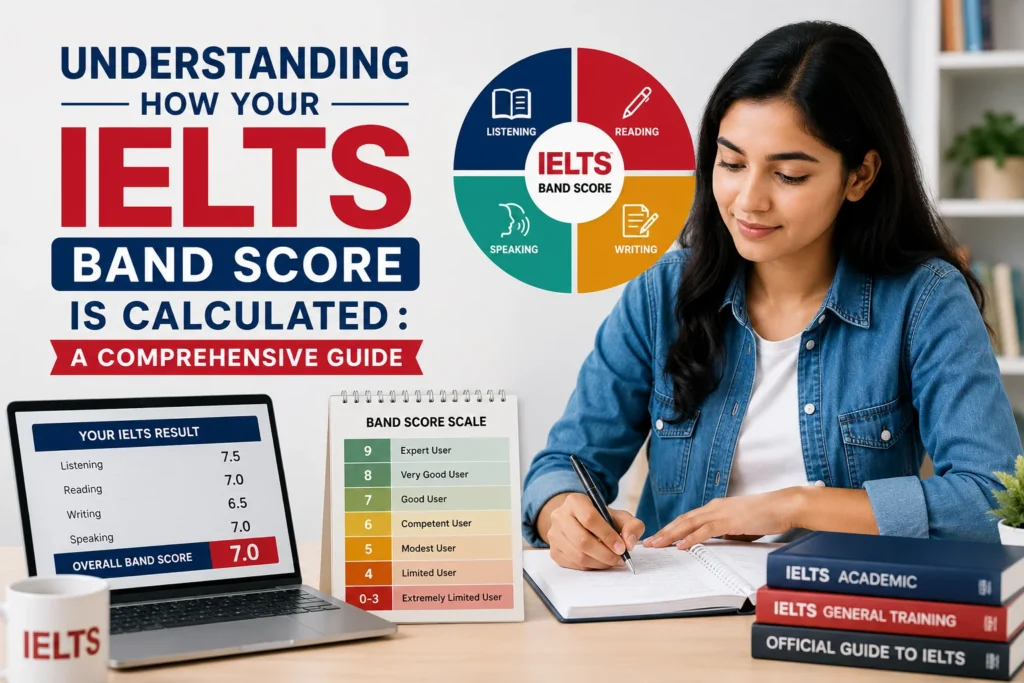
Understanding How Your IELTS Band Score Is Calculated : A Comprehensive Guide Understanding How Your IELTS Band Score Is Calculated : A Comprehensive Guide Preparing for the IELTS exam? It is crucial to understand how your band score is calculated. This score reflects your English proficiency and affects your academic and professional future. Here is a clear explanation of how your IELTS band score is determined and how you can improve it through preparation methods. How IELTS Band Score is Calculated The IELTS test is split into four sections: listening, reading, writing, and speaking. Each section is scored out of 9, and your overall band score averages these four scores. 1. Listening In the IELTS listening test, you will answer 40 questions based on a series of recordings. Each correct answer is worth one point which is then converted to a band score. Regular practice with IELTS listening exercises will help you get used to various accents and improve your listening skills. 2. Reading The IELTS reading test consists of 40 questions to evaluate your reading comprehension. You will read passages and answer questions based on them. Practice with reading comprehension exercises and quality study material to enhance your performance. 3. Writing In the IELTS writing test, you need to complete two tasks. Task 1 typically involves describing a graph or diagram, while Task 2 requires you to write an essay. Your essays are assessed on these criteria: task achievement, coherence and cohesion, lexical resource, and grammatical range. Improve your writing skills by practicing and getting feedback from a tutor or attending classes. 4. IELTS Speaking The IELTS speaking test is a face-to-face interview with an examiner that assesses your ability to communicate effectively in English through a structured conversation. Regular speaking practice with a tutor or in practice sessions can significantly boost your performance. How to Improve Your IELTS Band Score Improving your IELTS score requires a focused preparation strategy. Here are some tips 1. Enroll in IELTS Classes Enrolling in IELTS classes offers structured learning and expert guidance. Look for IELTS coaching centers that provide courses tailored to various proficiency levels. If the process feels overwhelming, do not worry—join us at Focus Education, where we are dedicated to helping you achieve your desired band score. 2. Use IELTS Study Material Invest in quality IELTS study material and a comprehensive IELTS study guide. This will give you a solid foundation and help you understand the test format better. At Focus Education, we offer up-to-date resources to support your preparation effectively. 3. Practice with IELTS Mock Tests IELTS mock tests and IELTS practice tests are invaluable for gauging your readiness. They simulate real exam conditions and help you identify areas needing improvement. At Focus Education, we conduct weekly mock tests to enhance your readiness. 4. Explore IELTS Online Courses For flexible learning, consider IELTS online courses. These can offer IELTS coaching with flexible schedule options and a variety of resources to fit your needs. 5. Seek Personalized Coaching One-on-one IELTS coaching provides targeted feedback and strategies. Look for IELTS coaching with feedback to address specific weaknesses. 6. Follow Effective IELTS Exam Tips Adopting IELTS exam tips and techniques from experienced trainers enhances your test -taking skills and boosts confidence. For more details you can read this blog IELTS Exam Day Tips and Strategies. 7. Consider Intensive Preparation For a high band score of 7+, an intensive IELTS preparation course will be beneficial. These courses are designed to focus on advanced strategies and practice. At Focus Education, our IELTS coaching is customized to help you achieve your target score through expert guidance and personalized support. Top Resources for IELTS Preparation IELTS Practice Tests: Crucial for evaluating your current level and monitoring your progress. IELTS Tutors: Professionals who offer personalized guidance and support tailored to your needs. IELTS Coaching Centres: Institutions that provide structured learning and expert instruction. IELTS Online Courses: Flexible learning options that allow you to study at your own pace. At Focus Education, we offer all these resources and more. Our IELTS practice tests are designed to provide in-depth practice. Our experienced IELTS tutors offer personalized feedback, and our coaching centres provide structured, expert-led instruction. Whether you are seeking IELTS academic coaching or general training, Focus Education is here to help you achieve your academic goals. Good luck with your IELTS preparation!