
The Benefits of One-on-One IELTS Coaching
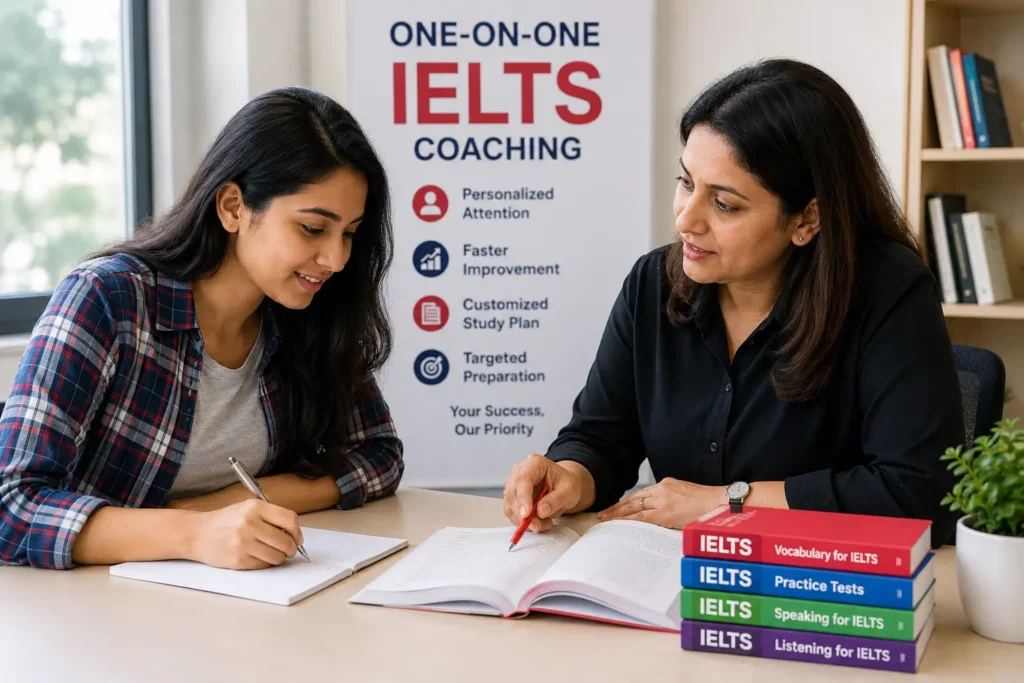
The Benefits of One-on-One IELTS Coaching Preparing for the IELTS (International English Language Testing System) can be a daunting task, whether your goal is to study abroad, migrate, or meet other personal objectives. While there are various methods for IELTS preparation, one-on-one IELTS coaching has emerged as a highly effective option. Here is a detailed look at why personalized coaching can be a game-changer for your IELTS training. 1. Tailored Learning Experience One of the main advantages of one-on-one IELTS coaching is the customized learning experience it offers. Unlike group IELTS classes where the curriculum caters to a broad audience, one-on-one coaching allows for a personalized approach. Your IELTS tutor can evaluate your strengths & weaknesses and tailor the IELTS study material to focus on areas which need improvement. This ensures you’re making the most of your study time and addressing specific challenges you face. 2. Flexible Scheduling Life can be busy, and finding time for study is often a challenge. One-on-one IELTS coaching provides the flexibility to schedule sessions at times that work best for you. Whether you’re balancing work, studies, or personal commitments, having the ability to arrange IELTS practice sessions around your schedule can significantly reduce stress and make preparation more manageable. 3. Focused Attention In group settings, it’s easy to get lost in the crowd, and individual queries might not always receive prompt attention. One-on-one coaching ensures that you receive undivided attention from your instructor. This means you can ask questions, seek clarification, and get immediate feedback without competing for the coach’s attention. 4. Increased Motivation and Accountability Working closely with a coach can boost your motivation and help you stay accountable. Regular sessions and progress tracking help maintain a consistent study routine. Your coach can offer encouragement, set achievable goals, and celebrate milestones, which can be incredibly motivating throughout the often-rigorous IELTS preparation process. 5. Enhanced Speaking Practice The Speaking component of the IELTS test can be particularly nerve-wracking. One-on-one coaching offers ample opportunity for IELTS speaking practice in a low-pressure environment. Your coach can simulate test conditions, provide constructive feedback, and help you refine your speaking skills, enhancing your confidence and performance on test day. 6. Customized Study Materials Every student has different learning preferences and needs. One-on-one coaching allows your instructor to provide IELTS study material and resources specifically chosen to align with your learning style. Whether through IELTS practice tests, interactive exercises, or targeted vocabulary drills, the materials you use can be tailored to optimize your learning. 7. In-Depth Understanding of Test Strategies IELTS preparation involves not only English proficiency but also an understanding of the test format and strategies. A personal coach can offer insights into effective test-taking strategies, time management techniques, and how to approach different types of questions. This strategic knowledge can significantly enhance your IELTS band score improvement. 8. Feedback and Improvement Immediate and detailed feedback is crucial for effective learning. In a one-on-one setting, you receive prompt feedback on your performance, whether in writing tasks, speaking exercises, or IELTS mock tests. This continuous loop of feedback and improvement helps you refine your skills and build confidence. 9. Addressing Specific Concerns Each student has unique challenges and concerns. One-on-one coaching provides a platform to address specific issues you might have, whether it’s struggling with a particular section of the test, managing test anxiety, or needing assistance with IELTS writing skills. Your coach can provide focused strategies and solutions tailored to your needs. 10. Building a Strong Relationship A good one-on-one coach builds a supportive and trusting relationship with their students. This relationship can make the learning process more enjoyable and less intimidating. Your coach becomes a mentor, guiding you not only through IELTS preparation but also in achieving your broader goals. Conclusion While there are many methods for IELTS preparation, one-on-one coaching offers a highly personalized and effective approach. The tailored instruction, flexible scheduling, and focused attention you receive can significantly enhance your preparation experience and improve your chances of achieving your desired IELTS band score. At Focus Education, we understand the importance of a customized approach to IELTS preparation. Our experienced coaches offer one-on-one sessions designed to address your unique needs and goals. With our tailored instruction and dedicated support, you can navigate the complexities of the IELTS test with confidence and clarity. If you’re serious about excelling in the IELTS, investing in Focus Education’s one-on-one coaching could be the decisive step toward achieving your goals and unlocking new opportunities for your future.
Essential Apps and Websites For International Students in Ireland

Essential Apps and Websites For International Students in Ireland Navigating life as an international student in Ireland can be both exciting and challenging. To help you make the most of your experience, here’s a comprehensive guide to the top apps and websites that will simplify your daily life, enhance your academic journey, and help you integrate into Irish society. 1. Academic Resources: Google Scholar A valuable tool for accessing scholarly articles, theses, and research papers. Whether you’re working on a research project or looking to deepen your understanding of a subject, Google Scholar is a must-have for academic success. Grammarly Ensure your writing is clear and error-free with Grammarly. It provides real-time grammar and style suggestions, making it an indispensable tool for drafting essays, reports, and correspondence. Overleaf For students involved in collaborative writing or working with LaTeX, Overleaf offers a cloud-based platform that simplifies the process of document preparation and editing. 2. Transportation: Transport for Ireland (TFI) TFI’s app provides real-time updates on public transport schedules, route planning, and travel information across buses, trains, and trams. It’s an essential tool for getting around efficiently. Google Maps A global favourite for navigation, Google Maps helps you find your way around cities, locate public transport stops, and discover nearby services. BleeperBike If you’re in Dublin and looking for an eco-friendly way to travel, BleeperBike allows you to rent bikes easily and explore the city at your own pace. 3. Student Life and Support: Student Leap Card This card offers discounts on public transport, and a variety of retail outlets and services across Ireland. It’s a great way to save money as a student. MyUni Check if your university has a dedicated app like MyUni. These apps often provide important updates, course information, and campus news tailored specifically for students. International Student Barometer (ISB) The ISB surveys provide valuable feedback on international students’ experiences. Engage with these to access support and improvements tailored to your needs. 4. Accommodation: Daft.ie One of Ireland’s largest property websites, Daft.ie is perfect for finding rental accommodation in various cities and towns. Rent.ie Another excellent resource for rental listings, Rent.ie offers a range of options from shared houses to apartments. Campus Accommodation Websites Many universities offer on-campus housing or affiliated accommodation options. Check your university’s website for specific details and availability. 5. Social and Cultural: Meetup Find local groups and events that match your interests. Meetup is a fantastic way to meet new people, practice your English, and engage in social activities. Eventbrite Discover a wide range of events happening in your area, from concerts and workshops to lectures and social gatherings. Culture Ireland Explore cultural events, festivals, and exhibitions happening throughout the country. Culture Ireland is your gateway to experiencing Irish culture. 6. Finance: Revolut Manage your finances with ease, especially if you’re dealing with multiple currencies. Revolut offers budgeting tools, international transfers, and financial insights. N26 This mobile bank provides convenient banking solutions with features tailored for students and international users, including easy account management and low fees. 7. Healthcare: HSE (Health Service Executive) Access information about Ireland’s healthcare services, find local clinics, and understand your health entitlements through the HSE’s website. MyGov.ie For accessing various government services, including health-related information, MyGov.ie is a key resource. 8. Food and Groceries: Just Eat Order food from a wide range of local restaurants with Just Eat. It’s perfect for those nights when you’re too busy to cook. Deliveroo Another popular food delivery service, Deliveroo, offers a variety of dining options right to your door. SuperValu Find local grocery stores and get the essentials for your daily needs. SuperValu offers a convenient way to shop for groceries across Ireland. 9. Weather: Met Éireann Stay updated on the latest weather forecasts with Met Éireann, Ireland’s official weather service. It provides accurate and up-to-date weather information. Yr.no For detailed weather forecasts, Yr.no is a reliable app that helps you plan your day and stay prepared for changing conditions. 10. Work Opportunities: LinkedIn Build your professional network, find internships, and explore job opportunities with LinkedIn. It’s a crucial tool for career development and connecting with potential employers. Indeed Search for part-time jobs, internships, and full-time positions. Indeed, aggregates job listings from various sources, making it easier to find work that fits your schedule. Glassdoor: Glassdoor provides job listings along with company reviews, salary reports, and interview experiences shared by current and former employees. Monster: Monster is a job search website that offers job listings, resume posting, and career advice. ZipRecruiter: ZipRecruiter allows you to search for jobs, post your resume, and receive job recommendations based on your profile. SimplyHired: SimplyHired aggregates job listings from various sources and provides salary information and job trends. CareerBuilder: CareerBuilder offers job search features, resume building, and career resources. IrishJobs.ie: A dedicated job search platform for Ireland, IrishJobs.ie offers a range of employment opportunities and resources tailored to the Irish job market. Strategies for Effective Job Searching Customize Your Resume and Cover Letter: Tailor your resume and cover letter for each job application. Highlight relevant skills and experience that match the job description. Use Keywords: Incorporate keywords from job descriptions into your resume and LinkedIn profile to improve your visibility to recruiters and applicant tracking systems (ATS). Network Actively: Reach out to industry professionals, attend networking events, and join relevant online communities. Networking can often lead to job opportunities that are not advertised publicly. Leverage Job Alerts: Set up job alerts on multiple platforms to receive notifications about new job postings that match your interests and qualifications. Research Companies: Use resources like Glassdoor and LinkedIn to research companies and understand their culture, values, and employee reviews. This will help you tailor your applications and prepare for interviews. Prepare for Interviews: Review common interview questions, research the company, and practice your responses. Use resources from Glassdoor to get insights into specific interview processes. Track Your Applications: Keep a spreadsheet or use a project management tool to track the jobs you’ve applied for, the status of your
Money Matters In Europe As An International Students

Money Matters In Europe As An International Students European Union comprises of 27 nations, where 20 countries are having Euro as an official currency in daily usage, whereas other nations such as Poland, Bulgaria, Hungary, Romania, Sweden, Czech Republic as well as Denmark use their own currencies. This results into varying financial landscape over the Europe, may leading to difficulties and confusion for many international students. However, there are number of steps and tips which can be followed to ensure the minimal integration efforts into European environment, especially financial practices: 1.Understanding Local Currency It would be evident that respective countries would have their currencies in utilization, where before travelling, it is advisable to learn more about the slangs used in transactions in locality as well as payment methods. Moreover, one can monitor the exchange rates for saving the maximum amount in transaction and currency conversion charges. For this, it is advisable to refer the European Central Bank’s daily exchange rates for ensuring the savings in exchange rates. 2.Reviewing the Local Banking System According to the country of destination, refer the banking solutions being offered by the respective banks and financial institutions which may suit to your needs as a student. Also, refer to the requirements to open the account as well as charges and benefits offered as a student for the account segment. Opening of the Bank Account Opening a student bank account in Europe is more than just a convenience, it is the essential requirement for international students, as it is challenging to manage their finances in a foreign country without a local bank account. There are number of reasons why a bank account is inevitable to have, being a student: i) Management of Daily Expenses It becomes much simpler to manage the financial transactions with a local bank account, whether you would be paying for groceries, rental or bills. If it is carried out from the account of your home country, it would result into hefty cross-currency transaction charges, resulting into unnecessary expenses. ii) Receiving Scholarship and Payments Possessing a local bank account is essential to receive the scholarship, grant or inward remittances from your family and friends. Many universities and funding organizations requires local account for the payment of fees via direct debits. iii) Building Credit History Developing the credit in a new country will help you in future, particularly if you intend to stay after the studies completion. A local bank account is often the first step in building that credit history, which could help you get loans or rent an apartment. iv) Signing Up for Subscriptions In many European countries, certain services and subscriptions require a local bank account. For example, you’ll need a Dutch bank account (IBAN) to sign up for a mobile phone subscription or other local services in the Netherlands. Accessing these essential services can be troublesome, if not impossible, without a local bank account. Having a student bank account in Europe simplifies your day-to-day financial management. Additionally, it provides access to opportunities and services to make your life overseas easier. 3.Student Banking Myths Going through the process of opening a student bank account in a foreign country can be tricky, especially with so much conflicting information around you. To help you feel more confident, there are number of cloudy myths which requires apt answers. Myth 1: Requiring Physical Branch Visit. Reality: One of the most persistent myths is that you must visit a physical bank branch in person to open an account, which isn’t true. Many European banks, especially mobile banks like bunq, allow you to open a new account online. You can complete the entire process from the comfort of your home, whether you’re already in the country or still preparing to move. This convenience means you can have everything set up and ready before you land, saving you time and hassle during your transition. There are number of banks and digital banking services providers in Europe as below: Bunq It is one of the renowned Dutch online banks, providing freedom in banking all over the Europe. The bank’s mobile apps are feature rich and offer full-fledged services across the Europe, such as splitting bills, sending payments and budgeting for the students and instant free transfers across the bank accounts in Europe. Monese Monese offers the competitive currency rates for the students to send and receive the money across the Europe and home country. Monese Classic Card offers the best option in terms of ATM withdrawals and online transactions as well as having minimal transaction fees for transfers, making it convenient and affordable for the student. Myth 2: Requiring a Tax ID Number Reality: Another common misconception is that you can only open a bank account if you provide a tax ID number at the time of account opening. Many banks, including bunq, allow you to open a bunq account first and then submit the tax number within 90 days. This feature greatly benefits new students who may not have a TIN yet. It allows you to open an account quickly and easily using your phone, ID, and a brief verification process. No paperwork, visa, or residence permit is needed to set up your account. Myth 3: Limited Acceptance of Mobile Banks Reality: Some students worry that mobile banks will not be accepted by their university or government offices, particularly for tuition payments, rent, or visa applications. However, this is not the case. Mobile banks are fully recognized and accepted by universities, housing agencies, and government offices across Europe. These banks provide you with all the necessary banking features, including an IBAN, that you would expect from a traditional bank, ensuring you can meet all your financial obligations without issue. 4.Country-Specific Guides Banking requirements and processes can vary from country to country within Europe. To help you navigate these differences, there are guides for the most popular destinations for international students: The Netherlands, Germany, France, Spain, and Ireland. If you’re heading to a different European country, there is a
Things To Be Considered For Successful Application At USA’s Universities

Things To Be Considered For Successful Application At USA’s Universities Every year, there are increasing number of international applications being received at the respective universities especially in USA. Majority of the applicants apply for the programs of engineering, science and management fields which are competitive in nature, requires preciseness in not only documents being submitted while applying for the program, but also the number of factors which are enlightened here for students’ reference: 1. Being an Early Bird The thumb rule is to start the application for the particular term at the earliest without waiting for any deadlines. Application submission can be time consuming and requires an amount of effort for completion, where rushing it at the last moment would result into errors. For this, start referring the deadlines for the particular term and program which you want to apply, where at times it has been observed that few universities unfavorably do not evaluate the submissions received near to the closing date for the application. Not only this, but many competitive programs get filled on priority upon receiving the number of applications on first-come first-serve basis, where being late to submit the application, would only result into getting waitlisted or denial in acceptance. Moreover, if a candidate wants to go for under-graduate or graduate programs, he would not have to wait for final grades as the universities does offer conditional acceptance on the grounds of predicted grades and relevant aspects in your application. 2. Have the right number of universities Conventionally thinking and sticking to only one university for the application would not be a fruitful practice, as to increase the chances of being accepted, it is worth applying to minimum two to three universities for improving the chances of gaining the acceptance. On the other hand, being skeptical and applying to lots of universities would not only create more burden of work in terms of completing the application, but also the increase in application expenditure as many universities do charge application fees ranging from USD 30 to 100. Hence, a well-planned approach would be to choose five to seven universities as below: i). Two universities which are in top rankings but may ask you to stretch your budget, there would be no harm in aiming high and applying for 2 such options. ii). Two to three targeted universities, where realistically the acceptance can be secured. iii). Two safe-ground universities, where it would be quite certain that you will receive the acceptance and as a last-resort you would not be feeling demotivated to decide over this universities for attending it. Ensure that you apply to universities where you will be feeling happy at the heart, motivated enough to pursue your desire program. 3. The Magic Wand of Personal Statement There is no doubt that applications usually require the academic documents at first, but each university in USA does refer to the personal statement written by the student himself, outlining his career progression, ambitions, interests, co-curricular activities, and achievements and how his exposure as an individual has led him to pursue respective program at the university where he would be applying for the particular term. As the word “Magic Wand” says it, where the apt explanation would make the application outcome turning into your favor. Copied or randomly written statement may lead to the undesirable impression over the assessing faculties and may lead to decline of the admission application. 4. Importance of Work Experience There is no doubt that in today’s environment, work experience serves as a benchmark for the candidate in any field where it helps prove that a person would have exposed to real-time working and field-related scenarios, making him more competent and trouble-solving orientation. In some cases, many universities prefer evaluating the overall profile of a student, where even if a candidate is lacking in GPA and having number of backlogs, but having extensive experience in-relevance with the field of study would allow a candidate to secure the acceptance regardless of lower GPA. Also, some of the Graduate Programs such as Master of Business Administration or Master of Engineering requires few years of relevant experience, as a part of application process and assessment. 5. Submission of Mandatory and Additional Documents It is one of the important aspects of the application procedure, where upon filling the application form, the required documents are usually displayed by means of a checklist. Documents in electronic format like PDF files of academic marksheets, transcripts, degree certificates as well as letter of recommendation along with additional documents such as employer’s reference letter, trainings and internships awards. Also, many universities do send a verification request on submitted letter of recommendation to the referee in their email, where they are required to submit the reference form. If referees fail to do it, then the application remains incomplete. Hence, it is very important to ensure that your referees respond to the reference checks sent by the universities to ensure your application is being assessed promptly. 6. Follow the right application pathways There are numerous ways to submit applications to the institutions; however, the most efficient and time-saving way is to consult an education advisor like Focus Education who can assist in this aspect as we have experienced staff who are well-versed with the process. At times, there are number of universities which use centralized application system instead of their individual application platforms, but this can be tricky and create confusion hence consult us and we will guide you the best. 7. Funds in the right place As an international student applicant, it would be evident to ensure the availability of funds to afford the tuition fees for the program duration as well as requiring the living expenses funds maintained in Savings Account / Fixed Deposit in the individual account or parents’ savings account. Especially, when it comes to USA’s universities application, it does require funds statement during the assessment and issuance of the acceptance. Also, ensure to calculate the range of annual tuition fees of the
How To Build A Strong Academic Network During Your Study In The UK

How To Build A Strong Academic Network During Your Study In The UK Studying in the UK is a once-in-a-lifetime chance that provides access to top-notch institutions, a lively student community, and a diversified academic environment. Developing a strong educational network is one of the most beneficial things you can do during your stay in the UK. This network can help you with your academic endeavours, professional goals, and personal growth. Here’s how to develop an extensive educational network while studying in the United Kingdom. 1. Leverage University Resources Your university is a treasure trove of networking opportunities. Start by: Attending University Events: Universities often host lectures, seminars, workshops, and networking events. Attend these regularly to meet professors, guest speakers, and fellow students. Joining Academic Societies: Many universities have subject-specific societies and clubs. Join these to connect with peers who share your academic interests. Engaging with Your Tutors: Your academic tutors are not just there for guidance on your studies. They can introduce you to other academics and students in your field. 2. Engage with Professors and Lecturers Building relationships with your professors and lecturers can be incredibly beneficial: Participate Actively in Classes: Engage in discussions, ask questions, and show genuine interest in the subject matter. This visibility can make you memorable to your instructors. Seek Research Opportunities: Express interest in your professors’ research. Many among them are looking for research assistants or collaborators, which can be a great way to deepen your academic relationships and gain experience. Attend Office Hours: Utilize office hours to discuss topics of interest or seek advice. Personal interactions can lead to stronger connections and recommendations. 3. Join or Form Study Groups Study groups are a great way to build academic relationships: Form or Join Study Groups: Collaborate with peers on assignments and exam preparation. This fosters a sense of community and can lead to lasting academic friendships. Participate in Group Projects: Engaging in group projects helps you work closely with others, enhancing your collaborative skills and expanding your network. 4. Get Involved in Research and Conferences Engaging with research and academic conferences can significantly expand your network: Present Your Work: If you can present your research at conferences or seminars, take it. This exposure can help you connect with other researchers and academics in your field. Attend Conferences: Even if you’re not presenting, attending conferences allows you to meet experts and peers. Don’t be shy about introducing yourself and discussing your interests. 5. Utilize Social Media and Professional Networks In the digital age, social media and professional networks play a crucial role: LinkedIn: Create and maintain a professional LinkedIn profile. Connect with classmates, professors, and professionals in your field. Join relevant groups and participate in discussions. Academic Networks: Platforms like ResearchGate or Academia.edu are valuable for connecting with researchers and staying updated on academic developments. Twitter: Follow academics and institutions related to your field. Engaging with their content and participating in academic discussions can help you stay connected and informed. 6. Participate in Extracurricular Activities Extracurricular activities can provide additional networking opportunities: Volunteer: Getting involved in university volunteering activities or local community projects can help you meet people outside your immediate academic circle. Join Student Unions or Committees: Being part of a student union or committee can broaden your network and provide leadership experience. 7. Seek Mentorship Finding a mentor can be a transformative experience: Identify Potential Mentors: Look for faculty members, senior students, or professionals who have expertise in areas you’re interested in. Approach them for guidance and advice. Build a Relationship: Regularly engage with your mentor, seek feedback, and express your goals. A good mentor can provide invaluable insights and connections. 8. Attend Alumni Events Alumni networks can be a powerful resource: Participate in Alumni Events: Many universities host events for alumni. Attend these events to connect with graduates who may offer career advice and opportunities. Engage with Alumni Networks: Many universities have active alumni networks on social media and other platforms. Join these groups to stay connected and informed. Conclusion Building a strong academic network during your studies in the UK is vital for both your personal and professional growth. By leveraging university resources, engaging with professors, joining study groups, and utilizing social media, you can create a network that supports your academic and career goals. If you’re ready to embark on your educational journey in the UK, now is the time to take the next step. At Focus Education, we are here to guide you through the UK student visa application process and beyond. Our consultancy specializes in assisting students with every aspect of their study plans. Enrol today at Focus Education and let us support you in making your UK study experience as successful and rewarding as possible. Contact us now to start your journey and transform your academic aspirations into reality. Visit our website or reach out to us directly to learn more about how we can help you get started on your path to studying in the UK. Your future awaits—let Focus Education be your partner in achieving your goals.
Adapting To Canadian Culture : A Guide For International Students

Adapting To Canadian Culture : A Guide For International Students Adapting To Canadian Culture : A Guide For International Students Welcome to Canada, a land known for its stunning landscapes, diverse communities, and welcoming spirit. As an international student, adjusting to a new country can be both exciting and challenging. From navigating the weather to understanding social norms, here is a comprehensive guide to help you seamlessly adapt to Canadian culture and make the most of your experience. Navigating life as an international student in Canada is a thrilling journey filled with new experiences and opportunities. From mastering the local etiquette and adapting to the weather, to finding the best spots for relaxation and socializing, every step counts in making the most of your time here. At Focus Education, we understand that moving to a new country and adjusting to a new culture can be both exciting and overwhelming. That is why we provide you with the expert tips and personalized support you need to thrive in your Canadian experience. Embarking on Your Canadian Adventure? Let Us Guide You! 1. Embrace the Politeness One of the first things you will notice about Canadians is their politeness. It is not uncommon for Canadians to say “sorry” even when it is not necessary. This cultural trait reflects a broader value of respect and consideration. When you interact with others, remember to use “please,” “thank you,” and “sorry” when appropriate. This will help you blend in and build positive relationships with those around you. 2. Understand the Importance of Personal Space Canadians value their personal space. When engaging in conversation or standing in line, avoid standing too close to others. This consideration extends to physical proximity and personal boundaries. Respecting these norms will help you feel more comfortable and avoid unintentional misunderstandings. 3. Navigate the Weather Wisely Canada is known for its diverse climate, which can range from scorching summers to frigid winters. Depending on where you are studying, prepare for varying weather conditions. Invest in a good winter coat, boots, and layers if you are in a colder region. Conversely, if you are in a warmer area, be ready for hot summers. Understanding the weather will help you dress appropriately and stay comfortable year-round. 4. Explore the Multicultural Landscape Canada is a mosaic of cultures and traditions. You will find communities from all over the world, each contributing to the rich cultural tapestry of the country. Take the opportunity to explore different cultural festivals, try international cuisines, and participate in local events. This will not only enhance your experience but also broaden your understanding of global cultures. 5. Adjust to Academic Expectations Canadian classrooms often encourage active participation and discussion. Be prepared for interactive learning environments where your input and engagement are valued. Do not hesitate to ask questions and contribute to discussions. This participatory approach might be different from what you are used to, but it is a key part of the Canadian academic experience. 6. Get Familiar with Local Transportation Public transportation varies by city. In larger cities like Toronto and Vancouver, you will find comprehensive transit systems, including buses, trains, and subways. In smaller towns, you may need to rely on other forms of transportation. Familiarize yourself with local transit options and schedules to navigate your new environment efficiently. 7. Health and Safety First Canada’s healthcare system is publicly funded, but as an international student, ensure you have adequate health insurance coverage. Many universities offer health plans, but you might also need additional private coverage. Familiarize yourself with local emergency services (dial 911) and keep your health information up-to-date. 8. Integrate with an Open Mind Adapting to a new culture involves learning and embracing local customs and traditions. Keep an open mind and be patient with yourself as you navigate these changes. If you find yourself struggling, reach out to campus resources like international student services or student associations. They can provide support and help you connect with others. 9. Balance Academics and Social Life While focusing on your studies is crucial, balancing academic responsibilities with social activities is equally important. Engage in student clubs, attend social events, and make time for relaxation and fun. Building a network and having a well-rounded experience will enhance both your academic and personal life. 10. Seek Support When Needed If you encounter challenges, whether related to culture shock, academic pressure, or personal issues, do not hesitate to seek support. Universities often have counselling services, peer support programs, and mentorship opportunities. Using these resources can help you manage stress and adapt more smoothly. 11. Respect for Indigenous Cultures Canada has a rich Indigenous heritage. Take time to learn about the First Nations, Métis, and Inuit cultures, histories, and contributions. Participate in cultural events or educational sessions at your institution to deepen your understanding. Want to know more about how to blend in with Canadian culture, manage your academics, or explore your new surroundings? We are here to help! Whether you need practical advice, insights on local customs, or just someone to guide you through your adjustment process, our team at Focus Education is committed to supporting you every step of the way. For more valuable tips and tailored assistance, contact us at Focus Education. Let us be your trusted resource as you embark on this exciting chapter of your life. Let us make your Canadian adventure unforgettable!
How To Prepare For IELTS If English Is Not Your First Language
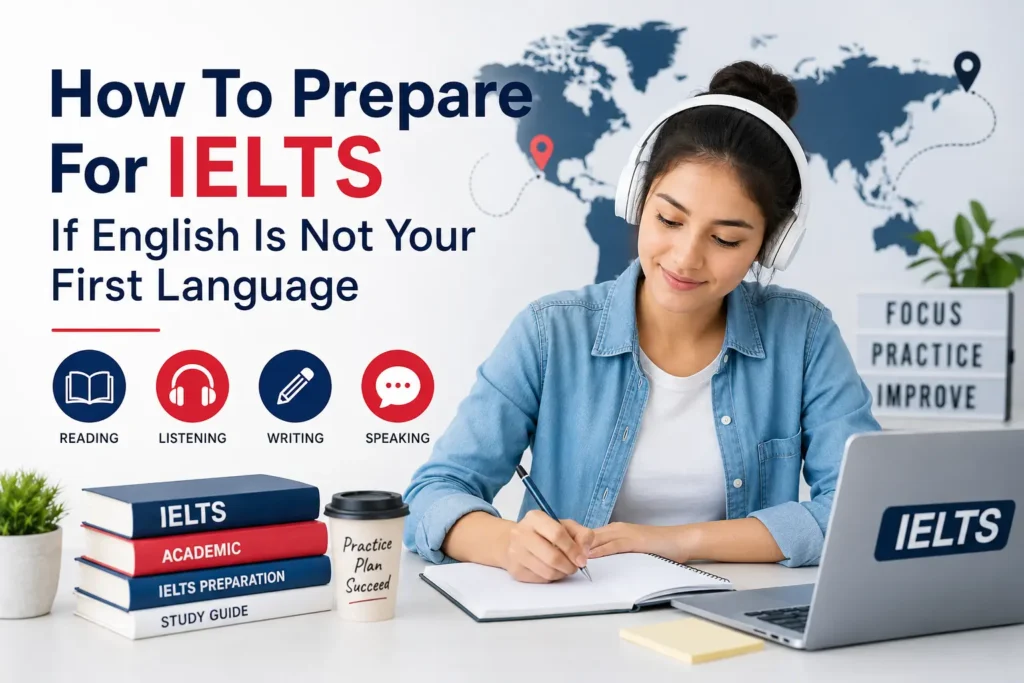
How To Prepare For IELTS If English Is Not Your First Language Embarking on the journey to ace the IELTS (International English Language Testing System) can feel daunting, especially if English isn’t your first language. Yet, just as a baby instinctively learns to communicate by absorbing and adapting to the languages around them, you too can master English through thoughtful practice and strategic preparation. With the right mindset and targeted efforts, you can transform your English skills and achieve the high score you are aiming for. This guide outlines effective strategies and provides actionable tips to help you prepare for IELTS if English is not your first language. Understanding the IELTS Exam Structure: Before diving into preparation, it is crucial to understand the format of the IELTS exam. There are four key components you will be tested on: Listening (40 questions): This section is divided into four parts, with audio recordings of conversations, monologues, and dialogues. Focus on improving your listening comprehension. Reading (40 questions): You will encounter three reading passages in the academic module. These passages can range from descriptive to analytical, requiring skills in skimming and scanning for key information. Writing (2 tasks): Task 1 (Academic): Requires describing a graph, chart, or diagram. Task 2: Involves writing an essay in response to a prompt, testing your ability to present a well-structured argument. Speaking (3 parts) A face-to-face interview that involves fluency, pronunciation, coherence, and ability to engage in conversation. Why is IELTS Difficult for Non-Native English Speaking? If English is not your first language, you may face some common challenges during the IELTS exam, including: Understanding Native Accents: The listening section features speakers from different English-speaking countries, making it tricky for some non-native speakers. Grammar Proficiency: Grammar mistakes can reduce clarity in both Writing and Speaking sections. Limited Vocabulary: A restricted vocabulary can negatively affect your Reading, Writing and Speaking scores. But do not worry! These challenges can be overcome with the right strategies. Top Tips to prepare for IELTS when English isn’t your First Language 1.Set Realistic Goals and Plan Your Schedule: Set clear and realistic goals based on your target score. For example, if your target is 7.0 and you are currently at 6.0, you will need to dedicate significant time to each section. Avoid cramming at the last minute and allow time for spaced repetition, which ensures better retention. Having a clear study plan is essential. Based on your target score, break down your preparation into manageable sections: Listening: Dedicate time each day to improve your comprehension by listening to English podcasts, audiobooks, or watching English-language shows. Reading: Practice reading academic articles, newspapers, and reports to get familiar with formal texts. Writing: Focus on both tasks, paying special attention to structure, coherence, and grammar. Speaking: Engage in daily conversations with English speakers or use language exchange platforms to practice. 2.Improve your Vocabulary and Grammer: Enhancing your overall proficiency is a key to IELTS success. An expansion of vocabulary is crucial for IELTS success. You can design accordingly: Structured Learning Plan: Set measurable goals, such as learning 10 new words daily. This continuous improvement will enhance vocabulary and comprehension. Daily Practice: Dedicate time to practice each module a day as reading, writing, speaking and listening. Engage in conversations, read some text, and work on grammar. Watch English Movies and TV shows: This helps with understanding accents, natural pronunciation and colloquial language. Listen to English Podcasts and Music: Engaging with these resources improves listening comprehension in a relaxed manner. Focus on Context: Understanding how words are used in different contexts can improve writing and speaking sections. Practice Grammar: Study from reputable grammar books or apps to improve sentence structure and avoid common mistakes. 3.Practice Regularly with Mock Tests: Taking mock IELTS tests is one of the best ways to get a feel for the actual exam. Time yourself to simulate exam conditions and analyze your performance. This will help identify areas for improvement and track your progress. 4.Work on Writing Essays and Reports: Writing is often the most challenging part for non-native speakers. To excel: Practice different types of essays – Focus on opinion, discussion, and problem-solving and use feedback to improve. Understand Graphs and Charts – Familiarize yourself with these for the academic module. Edit your work – Review your essays for grammar, punctuation, and coherence. 5.Enhance your Listening Skills and Speaking Skills: For the Listening section, expose yourself to a wide range of English accents, including British, American, Australian, and Canadian. Use online resources like BBC News, TED Talks and Podcasts to practice different speaking styles and improve comprehension. Speaking might be quite difficult for many. To excel: Engage in Conversation: Join English-speaking communities or use language exchange platforms to practice daily conversations. Practice with Transcripts: Listen to podcasts and follow along with transcripts to improve listening comprehension and vocabulary simultaneously. Mimic Native Pronunciation: Listen to how native speakers pronounce words and try to imitate their intonation and accent. Overcoming Common Challenges faced: 1.Dealing with Accents in Listening: If understanding different English accents is a hurdle, immerse yourself in content from a variety of English-speaking regions. Platforms like YouTube, Netflix and Spotify provide excellent resources to get used to diverse accents. 2.Strengthening Grammar for Writing and Speaking: Non-native speakers often make common grammar mistakes, especially with verb tenses and prepositions. Improve your grammar by: Grammar Exercises: Use some study grammar books or apps. Daily writing Practice: Write essays, emails, or short stories to enhance sentence structure. 3.Building Confidence in Speaking: The Speaking section can be intimidating. To build confidence: Practice common IELTS Topics: Topics like family, hobbies, education, and travel are often used in the test. Record and evaluate yourself: Listening to your speech helps in identifying areas for improvement in fluency and pronunciation. Expand your active vocabulary: The more words you know, the easier it becomes to express ideas effectively. Additional Strategies for Learners: If you are a non-native English speaker, you consider the following strategies: Explore IELTS Sample Questions: Practice with sample
Saving Money On Living In Europe As An International Student

Saving Money On Living In Europe As An International Student Saving Money Tips for International Students ‘Saving’ and ‘students’ are two words that do not generally make their way into the same sentence, however this changes when it comes to international students. There are number of measures which can be implemented in daily life to ensure the reduced living expenses comprising of food, accommodation, commuting and study related expenses. 1. Prefer the second-hand textbooks Although, nowadays, majority of the content related to curriculum is being made available in digital format where students usually access it via tablet or laptop; however, textbooks still being at core of the curriculum. Many modules require the extensive content access which are usually not available digitally for which students are in need to have such textbooks. For this, there are number of options which can help save over the purchase, where firstly to find such books in the college or university library or even at number of public libraries, can be borrowed for number of weeks at a nominal cost or security deposit. If needed, only buy the most important books, and even then, you will be able to find cheap second- hand copies online or through your university. Sell them on when you are finished with them to recoup some of the costs. 2. Travel Cards It is evident that student life comes with a freedom to explore the places, allowing to be a traveler but not at the cost of disturbing the finances. For this, in Europe, there are number of providers which offers travel card packages to cover the daily commuting costs as well as travelling to tourist places from one country to another in Schengen area. These cards allow a holder to use any mode of transport such as subways, buses, trains or even flights at a discounted rate, helping save a significant amount of money on monthly basis. 3. Living off-campus. It may require some calculative approach but living near the campus in shared accommodation would help save money significantly. After the tuition fees, housing is one of the significant portions of expenses, where it may be more convenient for international students to live on campus, living off campus provides the opportunity to save a chunk of cash. You may consider splitting your time between on and off campus housing. This could allow you to adjust to life in your new country while living on-campus for a while and then to live in an apartment or house for the rest of your studies. Please keep in mind that it is more affordable to have roommates to cut the cost of living, whether that be on campus or off campus. At present, one of the most emerging options observed in Europe is to acquire homestay, where student gets the exposure of local culture and language by living with the local landlord and their families, which also helps them save time in terms of cooking food and other chores as the homestay options usually includes the one-time meal and other utility charges, helping save not only lot of time but also the costs of groceries. 4. Smart Grocery Shopping Food expenditure is unequivocally unavoidable, as being an international student and in hustle of studies and local errands, compromising on food quality can lead to health issues eventually resulting into poor study performance and energy levels. However, it is also required to ensure the costs of food and raw groceries remains minimal without compromising over the required quantity as well as quality. For this, whenever possible, plan the food preparations in advance with your housemates if you are living in a shared accommodation; however, if you are living separately, ensure to prepare the meal plans for the week in advance. Either way, you will be able to do a cost-effective ‘big shop’ at the start of each week and avoid the need for too many expensive takeaways, working on your culinary skills at the same time. You will also be saving money by making your own packed lunches rather than buying a sandwich or going to a coffee shop every day. 5. Second-Hand Store Shopping Second-hand stores can be excellent places to supply yourself while maintaining a bit of frugality. If you can find one, second-hand stores can often sell ladies’, men’s and children’s clothing, books, toys, ornaments, kitchenware, videos, music, computer games, furnishings and other assorted goods at a far discounted rate. Some also sell furniture and electrical appliances, and others are more specialist, like ones that specially sell books, bridal wear, or music. 6. Festive Sale Keeping an eye for seasonal sales and stock clearance is a great way to save money. When looking for a bargain, timing and information is everything. The prime sale seasons can differ from country to country, though there are often big sales after Christmas and in the New Year in most places. There are also increasing numbers of big sales online, such as Prime Day offered by Amazon. Above all, the all-important question when it comes to buying stuff- do you really need it? It might look cool or seem really interesting, but more often than not, purchasing something which is of no use is just a waste of money. A good test is to leave it for a month. After that, ask yourself if you are you still interested? If so, then get it for yourself and enjoy. 7. Seize the Student Discounts It is important to keep in mind that there may be some extra cash in simply being an international student. Many businesses in your town may provide special rates and discounts if you present your student ID card before purchasing. If you do not see a sign stating a business offers a student discount, make sure you ask as you may be able to save a substantial amount off on entertainment, food, coffee and more. There are also additional discount cards you can purchase like the ISIC card that can
Study in The USA Without IELTS
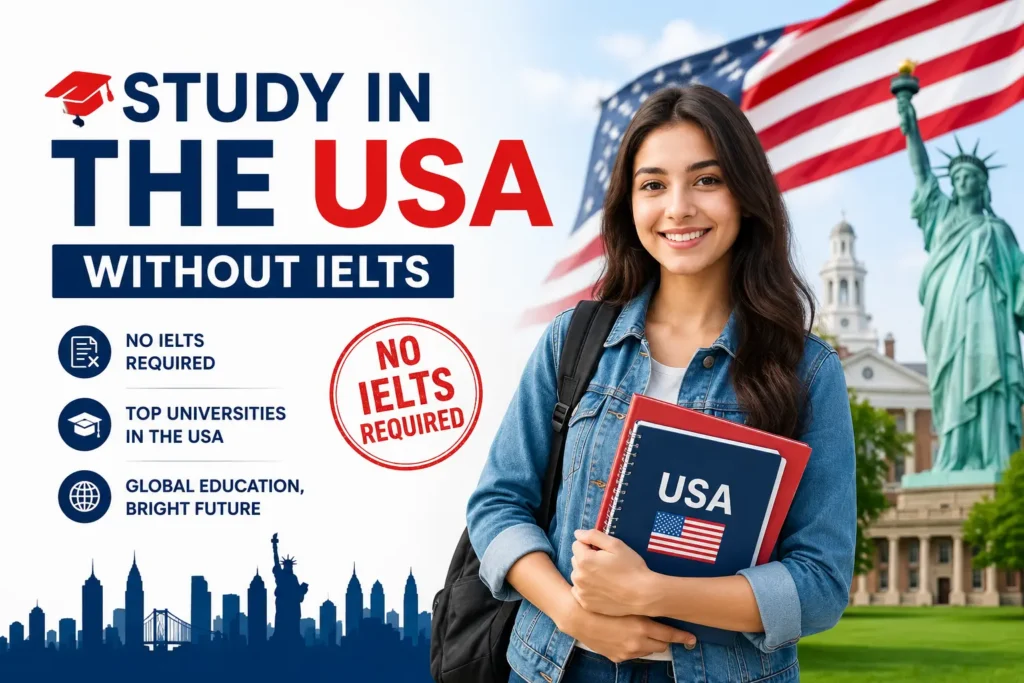
Study in The USA Without IELTS Study in USA without IELTS ? Studying in the United States is a dream for many international students seeking high-quality education and a rich multicultural experience. While the IELTS (International English Language Testing System) is a widely accepted measure of English proficiency, it is not the only option available. Many U.S. universities accept alternative English proficiency tests such as TOEFL (Test of English as a Foreign Language), Duolingo English Test, and PTE (Pearson Test of English). By clearing one of these alternative exams and meeting specific university requirements, you can apply for a U.S. study visa without taking the IELTS. English proficiency is a crucial criterion for admission to universities in the United States, which are renowned for their globally recognized degrees and academic excellence. This blog explores the various English proficiency tests accepted by U.S. institutions and guides how to study in the USA without taking the IELTS. How to study in the USA without IELTS? While the IELTS score holds significance for admission to study in the USA, alternative options exist for those considering studying in the USA without IELTS. For many international students aiming for top-tier education in the USA, the IELTS is not the only path to demonstrate English proficiency. Alternatives such as TOEFL, Duolingo, and PTE offer different formats and benefits that might better suit your needs and preferences. Each test has its unique features, making them viable options depending on your situation and the requirements of your chosen universities. Alternatives to IELTS For Admission into US Universities 1. Duolingo: The Duolingo English Test has rapidly gained popularity as an accessible alternative to traditional English proficiency tests like IELTS. The Duolingo English Test is an online test that evaluates your English skills through a range of interactive tasks. It assesses Reading, Writing, Listening, and Speaking abilities in a format that’s both convenient and user-friendly. The test is adaptive, meaning the difficulty adjusts based on your responses. 2. PTE: The Pearson Test of English (PTE) is another prominent alternative to IELTS for proving English proficiency. PTE is a computer-based English language test that assesses your Reading, Writing, Listening, and Speaking skills. It uses an integrated format, meaning that you may complete tasks that combine multiple skills. 3. TOFEL: The TOEFL has long been a staple test in measuring English proficiency for academic purposes. TOEFL is an English language test that evaluates your ability to use and understand English in an academic setting. It measures four key skills: Reading, Listening, Speaking, and Writing, and is widely accepted by universities in the USA. Process Steps to Study in the USA Without IELTS Research Your Options: Start by checking for universities and their English language requirements. Refer to their admissions requirements and see what other alternatives to IELTS are possible. You can acquire detailed information from the ultimate websites of universities, admissions offices or councillors. If this sounds too much, fear not — Do enrol with Focus Education and our professionals will simplify every step for you. Prepare Alternative Test Scores: If you choose to take the TOEFL, Duolingo, or any other accepted test, ensure you prepare thoroughly. Each test has its own format and requirements, so familiarize yourself with the test structure and practice accordingly. Apply to Multiple Universities Applying to multiple universities can increase your chances of acceptance. Some institutions might have different requirements or be more flexible in their assessment of English proficiency. Consult with Educational Consultants Consult with educational consultants to receive valuable guidance and support throughout the admissions process. These experts can help you identify universities that accept alternative proofs of English proficiency and assist with application procedures. At Focus Education, we offer personalized support to make your journey smoother and more efficient, ensuring you find the best options and complete your applications with confidence Prepare Your Application Ensure that your application is complete and well-prepared. This includes writing a strong personal statement, obtaining letters of recommendation, and meeting all other application requirements. Studying in the USA without IELTS 2025 is possible though needs right preparation and knowledge. By exploring alternative tests, leveraging previous education, or completing English language programs, you can meet the English proficiency requirements set by US universities. The key is to research your options, prepare thoroughly, and apply strategically. With Focus Education’s expert guidance, your dream of studying in the United States can become a reality, even without IELTS. Embrace the opportunities available, and let us help you navigate the process to make your educational aspirations come true.
Ultimate Guide : Top Courses For Indian Students In The UK

Ultimate Guide : Top Courses For Indian Students In The UK Top Courses For Indian Students In The UK Studying in the UK is a premier choice for Indian students seeking high-quality education across a range of disciplines. Renowned for its academic excellence and cultural diversity, the UK offers a wealth of opportunities. This ultimate guide explores the top courses that Indian students are pursuing in the UK, providing insights into what makes these programs attractive and essential considerations for choosing the right course. Business and Management Courses: Why Choose This Path: UK business schools are eminent globally for their innovative teaching methods and extensive industry networks. Business and Management degrees equip students with the leadership and strategic skills needed to excel in a competitive international market. Top Courses to Consider: MBA (Master of Business Administration): Gain advanced knowledge in business management, leadership, and strategic decision-making. MSc in Management: Focuses on core management principles and practices for aspiring managers. MSc in Finance: Delve into financial markets, investment strategies, and risk management. MSc in Marketing: Learn modern marketing techniques and consumer behaviour analysis. Engineering Courses: Why It’s Popular: The UK is renowned for its advanced engineering programs, providing students with top-notch research facilities and a curriculum that balances theoretical knowledge with practical skills. Top Courses to Consider: MSc in Mechanical Engineering: Explore thermodynamics, machine design, and advanced mechanical systems. MSc in Civil Engineering: Focus on infrastructure development, sustainability, and project management. MSc in Electrical and Electronics Engineering: Study circuit design, communications, and electrical systems. MSc in Aerospace Engineering: Specializes in aircraft and spacecraft design and technology. Computer Science and IT Courses: Why It’s Trending: With the rise of digital technologies, UK universities offer cutting- edge Computer Science and IT programs that prepare students for the tech industry’s evolving needs. Top Courses to Consider: MSc in Computer Science: Provides a comprehensive understanding of computing and software development. MSc in Data Science: Focuses on data analysis, machine learning, and big data technologies. MSc in Artificial Intelligence: Study AI theories, applications, and ethical implications. MSc in Cyber Security: Learn to protect systems and data from cyber threats. Healthcare Courses: Why It’s a Top Choice: The UK’s medical schools offer rigorous training and extensive clinical experience, making them ideal for students pursuing careers in healthcare. Top Courses to Consider: MSc in Public Health: Focuses on health policies, epidemiology, and global health challenges. MSc in Clinical Research: Develop skills in conducting and analyzing clinical studies. MSc in Healthcare Management: Covers the administration and management of healthcare services. MSc Pharmacology: Provides in-depth knowledge of drug actions, interactions, and therapeutic uses, crucial for careers in pharmaceuticals and clinical research. Law Courses: Why It’s Popular: UK legal education is highly respected worldwide, providing deep insights into various legal systems and practical skills needed for legal practice. Top Courses to Consider: LLB (Bachelor of Laws): Comprehensive understanding of legal systems and practices. LLM (Master of Laws): Advanced study in specialized areas of law. MSc in Law and Finance: Combines legal studies with financial analysis. MSc in International Business Law: Focuses on global legal issues and international trade laws. Arts and Humanities Courses: Why It’s a Great Fit: The UK’s vibrant arts scene and cultural heritage make it a prime location for studying arts and humanities, offering creative practice and critical analysis opportunities. Top Courses to Consider: MA in Fine Arts: Advanced study in artistic practices and theories. MA in History of Art: In-depth exploration of art history and criticism. MA in Creative Writing: Develop writing skills across various genres. MA in Cultural Heritage Studies: Learn about the preservation and management of cultural heritage. Social Sciences Courses: Why It’s Beneficial: Social Sciences programs in the UK provide insights into societal issues and prepare students for roles in research, policy-making, and advocacy. Top Courses to Consider: MSc in Sociology: Study societal structures, relationships, and social issues. MSc in International Relations: Explore global political systems and diplomacy. MSc in Political Science: Gain insights into political theories and practices. MSc in Urban Studies: Focus on urban development and planning. Additional Factors to Consider: Program Content and Specializations: Ensure the course matches your career goals. Review modules, specializations, and practical components. Accreditation and Recognition: Opt for accredited programs to enhance the value of your degree. Career Support and Opportunities: Investigate career services, internships, job placements, and networking options. Student Life and Extracurriculars: Consider support services, extracurricular activities, and campus facilities. Location and Lifestyle: Evaluate the impact of the location on your lifestyle, including living costs, climate, and cultural activities. Scholarships and Financial Aid: Look for scholarships and financial aid options to manage your study expenses. Conclusion: Selecting the right course in the UK involves evaluating various factors beyond institutional reputation. With a wide range of high-quality programs available, Indian students can find courses that align with their academic interests and career ambitions. By assessing course content, industry connections, and overall student experience, you can make a well-informed decision for a successful journey of study abroad in the UK. For tailored guidance on admissions, scholarship opportunities, and program details, reach out to us at Focus Education Pvt Ltd. Our dedicated team is committed to providing you with the expertise and support necessary to excel in your academic endeavours. We are here to assist you in navigating the complexities of the educational landscape, ensuring that you are well-prepared to achieve success in both your studies and your future career. Wishing you the very best as you embark on this important journey!