
Biometric Residence Permit for the United Kingdom

The Importance of Grammar in IELTS Writing Biometric Residence Permit Guide 2024 In alignment with prevailing UK regulations, specific foreign nationals currently rely on a biometric residence permit (BRP) as tangible proof of their immigration status within the country. However, reflecting the ongoing digital transformation in the immigration system initiated by the UK government, there is a planned phasing-out of BRPs. Commencing from January 1, 2025, the Home Office will discontinue the issuance of BRPs, and visa holders will transition depending on their digital status through the eVisa platform. (Source: Biometric Residence Permit in UK) In the changing world of global affairs, rules about moving to other countries are always getting updated. One important thing to know if you want to live in the UK is the Biometric Residence Permit (BRP). It’s a key part of the process for people who want to stay in the UK for a long time. What are Biometrics? Biometrics refers to the measurement and statistical analysis of people’s unique physical and behavioral characteristics. In the context of immigration, biometric data typically includes fingerprints, facial recognition, and, in some cases, iris scans. These biometric identifiers are used to establish and verify individual identities with a high degree of accuracy. What is a Biometric Residence Permit (BRP)? A Biometric Residence Permit (BRP) is a secure identification card containing an individual’s biometric information. It serves as evidence of their right to reside in the UK and includes details such as the individual’s name, date and place of birth, immigration status, and a photograph. Who Needs a BRP? You receive a BRP if you: Apply for a stay in the UK exceeding 6 months Extend your visa beyond 6 months Seek to settle in the UK Transfer your visa to a new passport Apply for specific home Office travel documents However, if you utilized the UK Immigration: ID Check app for your application to remain in the UK, you won’t receive a BRP. In such cases, you can only verify your immigration status online. How Do I Apply for a BRP? You’ll automatically receive a biometric residence permit (BRP) if your visa or immigration application is approved or if you’re replacing an older document. During your application process, you’ll need to provide biometric information like fingerprints, a digital photo, and a signature. This takes about 5-10 minutes and doesn’t involve ink. Children under 16 must be with a parent or guardian, and those under 5 don’t need to give fingerprints. The Home Office will inform you if you need to provide biometrics during your application, and you can do this at designated service points. How Long Are BRPs Valid For? The validity of a Biometric Residence Permit varies depending on the type of visa. Generally, BRPs are valid for the duration of the individual’s stay in the UK. However, the expiration date may differ based on the visa category. Individuals must be aware of their BRP’s validity and take appropriate action to renew it if needed. As of 2024, understanding the Biometric Residence Permit Process is essential for those navigating the complexities of UK immigration. By grasping the significance of biometrics, the purpose of the BRP, its necessity, differentiation from the BRC, the application process, and the validity period, individuals can streamline their journey toward securing legal residency in the United Kingdom. Always check the latest guidelines and updates from the UK government to ensure compliance with the most recent regulations. For comprehensive assistance with all your educational and visa consultancy needs, look no further than Focus Education Global Pvt. Ltd. As a leading educational and visa consultancy service in India, with our head office in the United Kingdom, we have garnered immense client satisfaction since 2012. Thousands of students from various countries have benefited from our services, whether they aim to pursue higher education in the UK with or without IELTS. With years of professional experience, we are committed to guiding aspiring students towards fulfilling their international education goals. Contact us at Focus Education Global Pvt. Ltd to make the best out of your international education experience. If you are planning to study in the UK with or without IELTS, it would be our pleasure to assist you in every possible way.
Exploring the Top U.S. States for Academic Excellence
Exploring the Top U.S. States for Academic Excellence Exploring the Top U.S. States for Academic Excellence Undertaking an educational journey in the United States is a desirable dream for many international students seeking a world-class academic experience. In the 2022/23 year, Forbes reported stunning data that more than 100,000 student visas were issued in the Top United States(US) for Academic Excellence. Among the plethora of options available, several states shine prominently for their commitment to educational excellence. Let us explore into the Educational assets of New York, California, New Jersey, Arizona, and Texas. These states not only offer great education but also a lot of fun activities besides classes that make them special. Educational Capitals Uncovered New York – The Melting Pot of Opportunities Renowned for its diversity and dynamism, New York provides a vibrant educational environment for international students. It is home to esteemed institutions such as Rochester Institute of Technology, NYIT (New York Institute of Technology), New York Film Academy, and Long Island University. The city offers a melting pot of academic and cultural opportunities. Its cosmopolitan atmosphere ensures exposure to a wide range of perspectives, making it an ideal destination for globally enriched education. With numerous museums, theatres, and cultural events, students can supplement their academic experiences with a rich tapestry of extracurricular activities. California: The Entertainment Hub with Academic Prowess California, a state synonymous with innovation, is not only known for its stunning landscapes but also as a hub for educational excellence. Los Angeles stands out as the entertainment capital with a strong academic presence. Institutions like the San Jose State University, University of California Los Angeles (UCLA) and the University of Southern California (USC) offer world-class education. The state’s fusion of academic rigour and vibrant cultural scenes make it a tempting destination for international students seeking a unique blend of learning and entertainment. New Jersey: Bridging Academic Excellence and Urban Charm Nestled between New York and Pennsylvania, New Jersey offers a compelling choice for international students. The state is home to globally recognized institutions like Princeton University, Rutgers University, Rowan University, New Jersey Institute of Technology (NJIT). Jersey City, in particular, stands out. Combining urban charm with proximity to major academic hubs, Jersey City provides a unique educational experience. Its diverse community and close ties to the business world make it an attractive option for those seeking a well-rounded academic journey. Arizona: A Desert Oasis of Learning Known for its breathtaking landscapes and warm climate, Arizona is also a haven for educational excellence. Institutions like Arizona State University (ASU), the University of Arizona, and Northern Arizona University offer diverse programs and research opportunities. The state’s affordability, coupled with a commitment to innovation, especially in technology and sustainability, makes it an ideal choice for those looking to engage in cutting-edge research. Texas: Where Everything is Bigger, Including Education As the second-largest state in the U.S., Texas boasts a diverse range of educational institutions, making it a compelling destination for international students. Texas State University, University of North Texas, Texas A&M University exemplify the state’s commitment to academic excellence. Texas, known for its the top-rated institutions, great weather, and an abundance of outdoor activities provides a welcoming environment for international students. Its robust economy and connections to various industries make it an excellent choice for bridging academic knowledge with real-world applications. Conclusion: Selecting the right destination for your international education is a pivotal decision in shaping both academic and personal growth. New York, California, New Jersey, Arizona, and Texas, each with its unique offerings, cater to the diverse needs of international students. Whether you are drawn to the bustling streets of New York City, the dynamic energy of Los Angeles, the urban charm of Jersey City, the scenic landscapes of Arizona, or the warm hospitality of Texas, each state provides a distinct and enriching educational experience. As you embark on this exciting journey, consider the unique opportunities that these states offer to find the perfect fit for your academic pursuits. In collaboration with Focus Education Global Pvt. Ltd., this journey becomes even more tailored to your individual needs. Focus Education Global Pvt. Ltd. specializes in guiding students towards the most suitable educational paths, offering personalized assistance in navigating vast opportunities. Our expertise ensures that you not only choose a destination that aligns with your academic goals but also receive support throughout the application, visa, and transition process. As you embark on this exciting journey with Focus Education Global Pvt. Ltd., consider the unique opportunities that these states offer, complemented by the personalized guidance provided by our experienced team. Together, you can find the perfect fit for your academic pursuits and make the most out of this transformative international education experience.
MASTERING THE STUDENT VISA APPLICATION PROCESS – A COMPREHENSIVE GUIDE TO SUCCESS
MASTERING THE STUDENT VISA APPLICATION PROCESS – A COMPREHENSIVE GUIDE TO SUCCESS Mastering the Student Visa Application Process – A Comprehensive Guide to Success Navigating the Student Visa Application Process successfully is crucial for those planning to Study abroad. To prevent the disappointment of visa rejection, it’s necessary to understand common reasons for denials and take proactive steps to address them. This guide will provide valuable insights and practical tips to help aspirants navigate the student visa application process effectively, by increasing their chances of approval. Common Reasons for Student Visa Rejection 1. Incomplete/ Inaccurate Documentation: Submitting incomplete or inaccurate documentation is a prevalent reason for visa rejection. To meet specific visa requirements, one must ensure that all required forms, educational transcripts, language proficiency test results, and other supporting documents are appropriately filled out and are up to date. 2. Insufficient Financial Resources: Inadequate proof of financial capability to cover tuition fees, living expenses, and related costs can lead to a rejection. It is crucial to demonstrate sufficient funds through bank statements, scholarship letters, sponsorship letters, or other documentation as required by visa authorities. 3. Lack of Genuine Intent: Applicants can be rejected by the Visa Officers if they suspect the candidate’s intentions to study abroad are not genuine, or ulterior motives for permanent immigration or unauthorized work. There should be clear communication of genuine academic goals, career plans, and ties to the home country to address concerns. 4. Failure to Meet Health and Security Requirements: Having a medical condition that poses a risk to public health or belonging to a criminal background may result in rejection. It is crucial to be compliant with health and security requirements along with medical or police clearance certificates. 5. Insufficient Academic Preparation: Failure to meet the academic prerequisites of the chosen educational institution or program can lead to rejection. So, applicants’ academic background and qualifications should align with the requirements and provide evidence of educational qualifications. 6. Lack of Language Proficiency: Failure to demonstrate sufficient proficiency in the language of instruction (eg: English) can lead to rejection. Hence, it is essential to take language proficiency tests, such as IELTS, and attain minimum language requirements. 7. Indiscipline During the Interview: It is essential to maintain professionalism throughout the visa application and interview process. Behaving inappropriately or unprofessionally can negatively impact your application. Tips to Avoid Student Visa Rejection Visa Rejection can be extremely demoralizing; it’s better to be ready now rather than regretting it later. So, here are some useful advice to prevent the denial of a student visa. 1. Submit Application on Time: Applying early increases approval chances, as visa officers face high application volumes during admission seasons. Late submissions carry a higher risk of rejection. 2. Double-Check Documents: Ensuring all required documents are present and accurate is critical. Any missing or inaccurate information can lead to rejection. 3. Honesty and Confidence During the Interview: Answering questions truthfully and confidently during interviews is important. Clearly explaining motivations for studying abroad and the intention to return home after studies is crucial. 4. Follow the Guidelines for SOP or Visa Letter: Adhering to guidelines for writing the SOP or Visa Letter, structuring it appropriately, addressing required points, and proofreading carefully before submission is crucial. Steps if student visa gets rejected It can be discouraging if a student visa is denied, but some steps can be taken to address the situation 1. Evaluate Reasons for Rejection: Review the rejection letter to understand specific reasons for the denial, this will help to identify areas for improvement in the next application. 2. Seek Professional Advice: Consulting an experienced visa consultant for guidance and insights can be valuable. They can offer advice on strengthening the application based on their expertise. 3. Address the Issues: Proactively address identified reasons for rejection, which may involve gathering additional documents, improving financial documentation, strengthening ties to the home country, or enhancing language skills. 4. Reapply with an Enhanced Application: If reapplying, ensure issues leading to rejection are address. Thoroughly review the application, double-check documents, and provide any additional information or evidence which can strengthen the case. 5. Consider Alternative Study Options: If facing multiple rejections for the same country, explore alternative study destinations with more favorable visa policies. 6. Maintain a Positive Attitude: Stay positive, learn from the experience, make necessary improvements, and approach the next application with confidence. Impact of Backlogs on Visa Applications Backlogs, or unfinished or incomplete courses or subjects from prior academic years, may affect an application for a study abroad visa. It’s critical to comprehend the general consequences even though the precise consequences may differ based on the nation and immigration laws. 1. Delayed Processing: Backlogs may result in delayed processing as immigration authorities take additional time to review academic standing and progress. 2. Evaluation of Academic Achievement: Visa officers may closely examine academic records, requiring additional documentation or explanation to assess eligibility. 3. Financial Consequences: Backlogs may affect eligibility for financial aid or scholarships with specific academic performance requirements. 4. Additional Documentation or Interview: Severe backlogs may necessitate additional documentation or interviews to clarify the academic situation. 5. Closer Examining of Intent: Visa Officers may pay closer attention to intentions and motivations, seeing reassurance of genuine commitment to studies and a clear plan for managing and resolving backlogs. Note: Backlogs can raise concerns, they don’t guarantee visa rejection. Each case is assessed individually, considering factors such as overall academic records, reasons for backlogs, efforts to address them, and supporting documentation provided. Tip: To increase the chances of a successful student visa approval, thorough planning, attention to detail, and adherence to guidelines are essential. Seeking professional guidance can also be beneficial in navigating the complexities of the visa application process. Hence, implementing these strategies, understanding requirements, and seeking professional guidance, enhance the chances of a successful student visa application and embark on an educational journey abroad. Please reach out to education experts at Focus Education Pvt Ltd for valuable support in navigating the successful visa application process.
ACCOMMODATION FOR INTERNATIONAL STUDENTS IN THE UK

ACCOMMODATION FOR INTERNATIONAL STUDENTS IN THE UK Accommodation for International Students in the UK Discovering a home far from your home country can be the most difficult and time-consuming part of your plans while moving to any destination from your home country. Getting a refreshing, peaceful, and joyous place is something that one always looks out for to make them feel comfortable after a hectic day at studies and work. Many a times students give least priority to accommodation and then struggle a lot with the search options and end up with costlier and uncomfortable options that are too far from their university campus which in the end increases other costs on their pocket. Finding Suitable Accommodation in the UK offers a plethora of options catering to diverse preferences, privacy needs, and budgets. Here are 4 choices for individuals seeking a place to stay: 1. University Halls: A popular but relatively more expensive for international candidates, university halls are typically located on or near the University Campus. Residents enjoy private bedrooms but share communal spaces like kitchens and bathrooms. Ideal for those wanting to engage with fellow international students, familiarize themselves with the campus, and build connections. 2. Homestays: As the name itself suggests, homestays involve sharing a property with a family or owner. This budget-friendly option is especially advantageous for international students looking to connect with compatriots and save on rent. Living with a local family provides insights into city living and fosters a sense of responsibility. 3. Private Student Halls: Private student halls are usually managed by private companies. These halls offer enhanced living options with more privacy and customizable sharing arrangements. Residents can choose what to share, such as private kitchen and bathroom facilities, providing flexibility in accommodation preferences. 4. Private Flats: Among the most common choices for international students, private flats offer complete privacy and autonomy. This option is favored by those who desire independence and want to live on their terms. When deciding on accommodation, it is essential to consider several key factors: Location: Evaluate the property’s proximity to important places such as the University, public transport, and essential amenities. Pricing and Property Type: Consider budget constraints and the type of property (private, shared, etc.) that aligns with individual preferences. Payment Modes: Understand the payment schedule, whether it is weekly, monthly, quarterly, or yearly, and choose what suits your financial planning. Lease Condition: Review the terms of the lease agreement, including the duration and any specific conditions or restrictions. Legal Rudiments: Ensure compliance with legal requirements and understand the obligation as a tenant. Ease of Transportation: Assess the convenience of transportation from the accommodation to the university and other essential locations. Budget Analysis: Conduct a thorough analysis of living expenses, including rent and additional costs, to manage finances effectively. Extra Facilities: Consider additional amenities provided, such as laundry access, libraries, gym facilities, etc., to enhance the overall living experience. By keeping these pointers in mind, the process of finding comfortable and suitable accommodation in an unfamiliar location can be streamlined and more manageable. Discovering a cozy yet budget-friendly property in the UK involves thoughtful consideration and adherence to necessary precautions. For international students, proximity to the university campus is advisable, and opting for shared accommodation can prove to be a practical choice, saving both money and time on local travel. Connecting with fellow students from across the world and jointly exploring shared properties is a beneficial strategy. Shared living spaces, including kitchens, contribute to significant cost savings on living expenses, encompassing groceries and cleaning services. Additionally, communal living fosters social interaction, enabling students to forge meaningful connections with their peers. However, recognizing that some students prioritize privacy, there is also an option to choose a private room with an attached washroom while sharing common areas like kitchens and laundry facilities. The average cost of accommodation in the UK varies across different locations and is contingent on factors such as property type and student requirements. London, being the most expensive city, typically has average property costs ranging from £130 to £250 per week, and potentially higher based on specific needs and property types. Conversely, outside London, accommodation costs tend to be more affordable. Different cities in the UK have distinct housing costs. International students seeking accommodation can explore options listed on university websites. However, due to the high living expenses, students often seek more economical options. Several corporations and portals have emerged to simplify property searchers for international students in various destinations, including the UK, the USA, Canada, Australia, and others. These platforms offer flexibility and a range of facilities to attract candidates. Students can choose from different property types like En Suite and Studio, which are categorized into levels like Gold, Silver, Platinum, etc., based on facilities and areas. The costs associated with these categories vary depending on the services provided, facilities, and other influencing factors. Numerous platforms assist students in finding their preferred accommodation in the UK. Selecting the right place to live is a substantial decision, essential for maximizing the international study experience. Safe and access to supportive resources are crucial considerations. For those still unsure about streamlining their study abroad experience, must reach out to international education experts.
Achieving Balance: Excelling in Studies and Exploring Aboard

Achieving Balance: Excelling in Studies and Exploring Aboard Achieving Balance: Excelling in Studies and Exploring Aboard Studying Abroad is a transformative experience that nurtures personal, academic, and professional growth. It offers unparalleled opportunities to gain a global perspective, excel academically, acquire language skills, and foster personal development. Moreover, studying abroad opens doors to networking opportunities, expands career horizons, encourages cultural exploration along with adding value to the resumes. Through this immersive experience, individuals not only develop valuable skills but also form lifelong connections and cultivate a broader worldview, preparing them for success in an increasingly interconnected world. However, amidst the excitement of exploring a new cultural landscape, it’s imperative to strike a delicate balance between academic commitments and personal pursuits. Managing studies while fully immersing oneself in the host country’s cultural environment is integral to making the most of the study abroad experience. By effectively blending academic rigor with cultural exploration, students can surely enrich their educational journey, broadening their horizons and creating enduring memories of their time abroad. So here are some invaluable tips for harmonizing education and enjoyment during your academic adventure: Prioritizing and Planning: Craft a realistic study schedule that allows dedicated time for coursework while also allocate sufficient time for exploring the host country. Prioritizing academic responsibilities such as attending classes, engaging in self-study, and completing assignments, ensures academic success while leaving room for personal exploration. Time Management: Efficiently managing time is a key to striking a balance between academics and leisure activities. Creating specific study hours each day and a structured routine facilitates focused study sessions, allowing for free time to explore your host country. Embracing Cultural Fusion: Engage yourself in local culture by actively participating in cultural activities, attending festivals, and engaging with locals. Adapting the customs, traditions, and lifestyle of the host country will not only enrich your educational experience but also elevate your personal growth and deepen your understanding of the world. Utilizing Weekends and Breaks: Maximize weekends and academic breaks by exploring nearby cities, landmarks, and tourist attractions. Prioritize destinations of interest, allowing ample time to unwind, discover hidden gems, and delve into the country’s unique offerings without compromising academic commitments. Extra-Curricular Activities: Connect with study groups or engage in extracurricular activities related to your field of study or interest. This engagement not only enhances your learning experience but also provides opportunities to connect with fellow students, and lasting friendships while pursuing your interests. Seeking Advice from Locals: Tap into local resources and seek guidance from residents or program coordinators to navigate the host country effectively. Local insights, recommendations, and off-the-beaten-path attractions can enrich your experience, offering a deeper appreciation of your surroundings. Maintaining Open Communication with Professors: Establishing transparent communication links with professors regarding your study abroad experience and any potential academic conflicts is crucial. This fosters flexibility and understanding, enabling you to balance academic responsibilities with cultural exploration seamlessly. Being Organized: Stay on top of assignment deadlines, exam dates, and important academic events by maintaining a meticulously organized schedule. Utilize planners or digital calendars to manage your time effectively, minimizing last-minute stress and ensuring a harmonious blend of studies and exploration. In conclusion, studying abroad is a holistic journey that encompasses both academic advancement and personal enrichment. By finding the right equilibrium between academic pursuits and cultural immersion, individuals can create unforgettable memories, gain invaluable insights, and maximize the transformative potential of their overseas education. Embracing effective time management strategies, actively engaging in cultural integration, and prioritizing academic responsibilities are fundamental to navigating this journey successfully. For those interested in pursuing a study abroad adventure, reaching out to international education experts such as those at Focus Education Pvt Ltd can provide invaluable assistance throughout the admission process, ensuring a seamless transition into this transformative journey.
ELEVATE YOUR ENGLISH: STRATEGIES FOR SUCCESS IN LANGUAGE PROFICIENCY TESTS AND EVERYDAY COMMUNICATION

IELTS Exam Day Tips and Strategies Elevate Your English: Strategies for Success in Language Proficiency Tests and Everyday Communication Mastering the demands of English proficiency tests such as IELTS or TOEFL may seem chaotic, but there are efficient techniques to enhance your language skills rapidly as the test date approaches. While IELTS (or other language proficiency test) is important for assessing your language skills in a formal setting, fluency is a crucial aspect of effective communication in real-life situations. It goes beyond just grammar and vocabulary as it encompasses the ability to express yourself confidently, articulate your thoughts coherently, and engage in smooth and natural conversation. Rapid improvement in English language skills is achievable, especially when preparing for a crucial language proficiency test. Immersing yourself in English media, staying informed through news, maintaining a vocabulary notebook, engaging in conversations, and persistent practice will be reliable allies on your journey to English language proficiency. Remember, language learning is a journey, and perseverance and dedication are essential for success in your language exam. Here are five effective methods to excel in your English language assessment: 1. Immersing in English Media: Surrounding yourself with English-language media is an enjoyable way to advance your language skills quickly. While watching TV shows and movies on platforms like Netflix, Amazon Prime, Apple TV+, etc will not make you an instant English expert, but it significantly improves your everyday language comprehension. Pay close attention to slang, informal idioms, and natural expressions commonly used in speech. Documentaries are also beneficial for exposure to well-written English and expanding your language mindset. 2. Staying Updated with English News: Keeping up with current events not only broadens your knowledge but also enhances your vocabulary. Explore various English-language newspapers, including broadsheets, journals, and publications, to diversify your reading material. This practice not only deepens your understanding of global current affairs but also exposes you to a variety of vocabulary and usage scenarios. Reading news items helps improve spelling and strengthens your comprehension of word usage in different contexts, contributing to comprehensive language proficiency. 3. Crafting Vocabulary Journal: If you aim to rapidly expand your English vocabulary, start a vocabulary notebook. Record unfamiliar words and phrases, whether in a physical or digital format and go beyond just listing them. Take time to explore synonyms, antonyms, and example sentences demonstrating their proper usage. It’s essential not only to understand word meanings but also to grasp when and how to incorporate them effectively into sentences. As you progress towards fluency, your vocabulary journal becomes an invaluable resource. 4. Engaging in Conversations: While reading and listening are crucial, actively working on your speaking skills is equally important. Dialogue is essential for interactive language acquisition. Utilize opportunities to converse with native English speakers, whether friends or language exchange partners. Consider recording your conversations or practicing in front of a mirror to self-evaluate. Review of recordings can help in identifying errors that might go unnoticed. Engaging in conversations boosts confidence in English-speaking abilities. 5. Consistent Practice is Key: Recognize that practice is fundamental in preparing for your English language test. Even if your English skills are already strong, exam stress can be a factor. Prioritize conversational English in your frequent practice sessions, as it forms a significant part of the test. Tip: Consider implementing a daily “word of the day” routine, focusing on words relevant to the exam and everyday discussions. So, learning consistently ensures readiness to handle any language challenges that may arise. Additionally, you can stay updated on our daily word concepts by following us on our Instagram page Join us for a daily dose of new words and engage in interesting conversations. While preparing for a proficiency test, it’s essential to balance your overall language skills. Improving your general English proficiency will naturally contribute to better performance in specific test areas. Additionally, consistent practice, feedback, and mock exams will enhance your confidence and readiness for the actual test day. So, unlock your potential with our IELTS and Spoken English coaching services at Focus Education Pvt Ltd! Elevate your experience and transform your journey. Visit our office now and take the first step toward a brighter future.
5 Effective Techniques for a Smooth Transition to Study Abroad
Achieving Balance: Excelling in Studies and Exploring Aboard Achieving Balance: Excelling in Studies and Exploring Aboard Studying Abroad is a transformative experience that nurtures personal, academic, and professional growth. It offers unparalleled opportunities to gain a global perspective, excel academically, acquire language skills, and foster personal development. Moreover, studying abroad opens doors to networking opportunities, expands career horizons, encourages cultural exploration along with adding value to the resumes. Through this immersive experience, individuals not only develop valuable skills but also form lifelong connections and cultivate a broader worldview, preparing them for success in an increasingly interconnected world. However, amidst the excitement of exploring a new cultural landscape, it’s imperative to strike a delicate balance between academic commitments and personal pursuits. Managing studies while fully immersing oneself in the host country’s cultural environment is integral to making the most of the study abroad experience. By effectively blending academic rigor with cultural exploration, students can surely enrich their educational journey, broadening their horizons and creating enduring memories of their time abroad. So here are some invaluable tips for harmonizing education and enjoyment during your academic adventure: Prioritizing and Planning: Craft a realistic study schedule that allows dedicated time for coursework while also allocate sufficient time for exploring the host country. Prioritizing academic responsibilities such as attending classes, engaging in self-study, and completing assignments, ensures academic success while leaving room for personal exploration. Time Management: Efficiently managing time is a key to striking a balance between academics and leisure activities. Creating specific study hours each day and a structured routine facilitates focused study sessions, allowing for free time to explore your host country. Embracing Cultural Fusion: Engage yourself in local culture by actively participating in cultural activities, attending festivals, and engaging with locals. Adapting the customs, traditions, and lifestyle of the host country will not only enrich your educational experience but also elevate your personal growth and deepen your understanding of the world. Utilizing Weekends and Breaks: Maximize weekends and academic breaks by exploring nearby cities, landmarks, and tourist attractions. Prioritize destinations of interest, allowing ample time to unwind, discover hidden gems, and delve into the country’s unique offerings without compromising academic commitments. Extra-Curricular Activities: Connect with study groups or engage in extracurricular activities related to your field of study or interest. This engagement not only enhances your learning experience but also provides opportunities to connect with fellow students, and lasting friendships while pursuing your interests. Seeking Advice from Locals: Tap into local resources and seek guidance from residents or program coordinators to navigate the host country effectively. Local insights, recommendations, and off-the-beaten-path attractions can enrich your experience, offering a deeper appreciation of your surroundings. Maintaining Open Communication with Professors: Establishing transparent communication links with professors regarding your study abroad experience and any potential academic conflicts is crucial. This fosters flexibility and understanding, enabling you to balance academic responsibilities with cultural exploration seamlessly. Being Organized: Stay on top of assignment deadlines, exam dates, and important academic events by maintaining a meticulously organized schedule. Utilize planners or digital calendars to manage your time effectively, minimizing last-minute stress and ensuring a harmonious blend of studies and exploration. In conclusion In conclusion, studying abroad is a holistic journey that encompasses both academic advancement and personal enrichment. By finding the right equilibrium between academic pursuits and cultural immersion, individuals can create unforgettable memories, gain invaluable insights, and maximize the transformative potential of their overseas education. Embracing effective time management strategies, actively engaging in cultural integration, and prioritizing academic responsibilities are fundamental to navigating this journey successfully. For those interested in pursuing a study abroad adventure, reaching out to international education experts such as those at Focus Education Pvt Ltd can provide invaluable assistance throughout the admission process, ensuring a seamless transition into this transformative journey.
Education System in the UK Vs Education in India; Which one is better and why?
Education System in the UK Vs Education in India; Which one is better and why? Education System in the UK Vs Education in India; Which one is better and why? In today’s globalized world, where education plays a pivotal role in shaping individuals and societies, the comparison between the education systems of different countries holds significant importance. Among the myriad of comparisons, one frequently surface is the contrast between the education systems of the United Kingdom and India. Both nations boast rich histories and diverse cultures, yet their approaches to education vary significantly. In this blog, we will explore the distinctions between the Education Systems of the UK and India, highlighting the advantages and differences that students should consider when making educational choices. Understanding the Education Systems The education systems of the UK and India exhibit unique characteristics tailored to their respective socio-cultural and economic contexts. In the UK, education is primarily divided into four stages: primary education, secondary education, further education, and higher education. The system emphasises critical thinking, creativity, and independent learning, strongly focusing on research and innovation. On the other hand, India’s education system follows a structure comprising primary education, secondary education, higher secondary education, and tertiary education. Traditionally, Indian education emphasizes routine learning although efforts are being made to integrate more holistic and practical learning approaches. Curriculum and Pedagogy One of the key distinctions between the UK and Indian education systems lies in their curriculum and pedagogy. The UK education system offers a more flexible curriculum, allowing students to choose from a wide range of subjects and tailor their education according to their interests and career aspirations. Additionally, the pedagogy in the UK emphasizes interactive teaching methods, critical analysis, and practical application of knowledge. In contrast, the Indian education system often follows a more rigid curriculum, with a prescribed set of subjects and limited flexibility for students to explore diverse fields. However, recent reforms aim to introduce more flexibility and choice in the curriculum, encouraging interdisciplinary learning and skill development. Opportunities for Higher Education When it comes to higher education, the UK is renowned for its prestigious universities and world-class academic institutions. The country attracts students from around the globe due to its diverse range of courses, renowned faculty, and cutting-edge research facilities. Moreover, studying in the UK offers international students an exposure to a multicultural environment and valuable networking opportunities. While India also boasts several esteemed universities and colleges, the competition for admission can be intense, particularly in top-tier institutions. Additionally, Indian universities are increasingly focusing on enhancing research infrastructure and international collaborations to improve their global rankings and attract foreign students. Placement and Scholarship Opportunities One of the significant advantages of Studying in the UK is the plethora of placement and scholarship opportunities available to students. Many universities have strong ties with industry partners, facilitating internships, placements, and job opportunities for graduates. Moreover, numerous scholarships and financial aid programs are offered to international students, making UK education more accessible and affordable. In India, while placement opportunities vary across institutions, the growing demand for skilled professionals in various sectors has led to an increase in campus recruitment drives and job placements. Additionally, the government and private organizations offer scholarships and grants to meritorious students, although the availability may vary depending on factors such as academic performance and financial need. Admission Process and Student Experience The admission process for Higher Education in the UK typically involves submitting applications through centralized systems like UCAS (Universities and Colleges Admissions Service) for undergraduate programs or directly to universities for postgraduate courses. The process may include submitting academic transcripts, letters of recommendation, personal statements, and, in some cases, standardized test scores. In contrast, the admission process in India often involves entrance exams conducted at the national, state, or university level, depending on the course and institution. Additionally, securing admission in prestigious Indian universities can be highly competitive, requiring diligent preparation and strong academic credentials. Conclusion In conclusion, both the UK and Indian Education Systems offer unique opportunities and challenges for students. While the UK Education System offers a plethora of benefits for students seeking a transformative learning experience. Renowned for its flexibility, innovation, and global outlook, studying in the UK provides unparalleled opportunities to engage with diverse perspectives and cutting-edge research. With historic universities fostering a rich academic tradition, students can access world-class resources and mentorship, paving the way for personal and professional growth. Additionally, the UK’s cosmopolitan environment cultivates invaluable cultural exchanges, preparing students to thrive in an interconnected world. Ultimately, choosing to study in the UK promises a journey filled with boundless possibilities and the foundation for becoming a leader and innovator of tomorrow. Focus Education is a British Council Certified Agent headquartered in the United Kingdom. Specializing in guiding students’ inquiries about Higher Education Opportunities in the UK, USA, Canada, and Australia, our expertise lies in offering personalized assistance. We empower individuals to navigate the requirements of universities, especially concerning English proficiency, making the journey of pursuing education abroad more accessible. With our dedicated guidance, students can confidently pursue their academic goals, knowing they have a dependable partner committed to their educational success.
In-depth Information: Recent Changes in the International Student Program
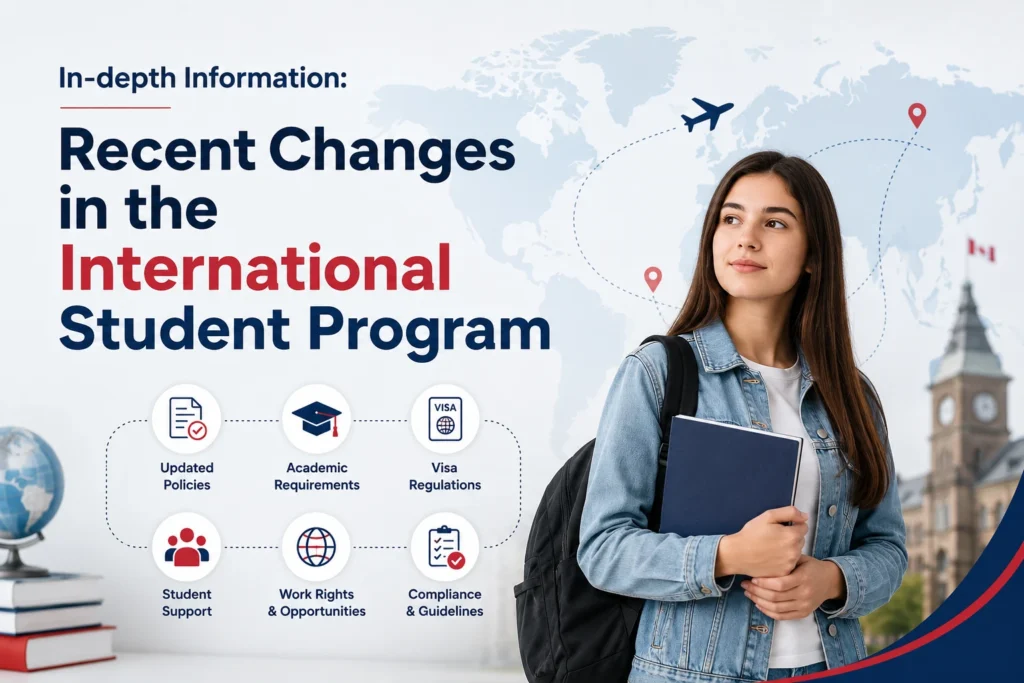
In-depth Information: Recent Changes in the International Student Program In-depth Information: Recent Changes in the International Student Program Further information was released by IRCC on Feb 5th, to give more clarification regarding the announcement of an intake cap on new international study permit applications and additional changes. While international students greatly enrich Canada’s campuses, communities, and economy, recent years have seen unsustainable growth in the International Student Program. These reforms aim to foster sustainable population growth in Canada, enhance system integrity, and ensure a positive experience for International Students Studying in Canada. 1. Cap and Attestation Letter: Starting from January 22, 2024, new international students who want to study at a college or undergraduate level in Canada must include a document called a Provincial Attestation Letter (PAL) with their application for a study permit. This letter shows that the student is part of a limit set by a province or territory for international students. If an application doesn’t have this letter, it will be sent back by Immigration, Refugees and Citizenship Canada (IRCC), unless there’s an exception. Provinces and Territories need to have a plan by March 31, 2024, for giving out these PALs. The Canadian government is also figuring out how the certificat d’acceptation du Québec (CAQ) from Quebec could be used as a PAL. If your application was sent to IRCC before January 22, 2024, or if you already got approval for a study permit and are planning to come to Canada soon for your program, you don’t need to do anything else because of this new limit. If you’re wondering about who needs a PAL and who doesn’t, don’t worry Focus Education is here to help clarify. Who required a provisional attestation letter (PAL)? Most applicants for post-secondary study permits Most of the students in non-degree granting graduate programs, such as certificate programs and graduate diplomas Who does not require a provisional attestation letter (PAL)? Master’s or doctoral degree students. Primary and secondary school students. In – Canada study permit and work permit holders (which includes study permit holders applying for an extension) Exchange or visiting students. In–Canada family members of study permit or work permit holders. Students whose application was received before 22nd Jan 2024. 2. Extended Post-Graduation Work Permit for Master’s Degree Graduates: Key Updates Recognizing the exceptional potential of graduates from master’s degree programs to excel in Canada’s job market and potentially transition to permanent residence, adjustments have been made to the Post-Graduation Work Permit (PGWP) duration. Effective February 15, 2024, graduates of master’s programs lasting less than two years, meeting all other PGWP criteria, will be eligible for an extended 3-year work permit. This modification aims to provide ample opportunities for acquiring the necessary Canadian work experience for permanent residence applications. For programs other than master’s degrees, PGWP duration will remain aligned with the program’s length, capped at a maximum of 3 years. Who is qualified for a longer post-graduation work permit (PGWP)? If you finish a program that’s at least two years long at a designated learning institution where you can get a PGWP, you can get a PGWP for three years. Also, if you finish a master’s degree program that’s less than two years long, you can get a three-year PGWP. 3. Updates on PGWP Eligibility: Public-Private College Partnerships In some provinces, public colleges allow private colleges to use their curriculum. This means students go to a private college but get a diploma from a public one. People are worried about the education quality and lack of help for students at these colleges. The Auditor General of Ontario is also worried about not checking if the programs and services are good enough. Because of this, IRCC has decided to limit work permits for students at these colleges. They think that if students can’t get work permits, fewer international students will go to these colleges Who can get a PGWP after finishing a program at a public-private partnership college? International students who are already enrolled can still get a PGWP if they meet all the other requirements. Who can’t get a PGWP after finishing a program at a public-private partnership college? New students joining this type of program won’t qualify for a post-graduation work permit. 4. Changes in Eligibility for Spousal Open Work Permits: What You Need to Know Soon, the rules for open work permits for the husbands, wives, or partners of international students will be changed. Who can qualify for an open work permit? Only spouses and common-law partners of students in graduate (master’s and doctorate) and professional degree programs can apply for an open work permit. After the changes take effect, spouses and common-law partners of international students who want to extend their current work permit will still be eligible for this type of permit. Who won’t be able to get an open work permit? The spouses and common-law partners of international students studying at other levels, such as undergraduate and college programs, won’t qualify for an open work permit anymore unless they already have one under this specific category. Therefore, the aforementioned details provide a comprehensive overview of the Recent Changes in the International Student Program. For further clarification or assistance regarding these updates, we encourage you to reach out to our experts at Focus Education. Our team is well-equipped to guide you through the necessary steps, whether you require insights into the policy’s implications or assistance in pursuing studies abroad. We offer tailored support, including options for Studying abroad with or without IELTS. To access our comprehensive assistance, visit us at Focus Education and connect with our dedicated professionals today.
ESSENTIAL SKILLS TO CULTIVATE DURING OVERSEAS STUDY

ESSENTIAL SKILLS TO CULTIVATE DURING OVERSEAS STUDY Essential Skills to Cultivate During Overseas Study Essential Skills to Cultivate During Overseas Study Embarking on the journey of studying in a foreign country entails more than just academic expertise. It demands a range of essential skills that exceed the boundaries of traditional classroom learning, equipping students to navigate the intricacies of international education. This guide will thoroughly examine 10 pivotal points that are indispensable for every student before venturing abroad to study. By acquiring and honing these essential skills before embarking on your study abroad journey, you can approach the experience with confidence, resilience, and preparedness. This guide aims to equip students with a historical toolkit of skills that will not only enhance their academic performance but also enrich their overall study-abroad experience. 1. Cultural Competence Cultural competence goes beyond simply acknowledging cultural differences; it involves actively seeking to understand and engage with diverse perspectives. This skill is particularly crucial in the context of international education, where students are exposed to numerous cultures and traditions. Active participation in intercultural events and exchanges is another effective way to foster cultural competence. By engaging in dialogue with individuals from different backgrounds, students can broaden their perspectives, challenge their assumptions, and develop empathy and respect for cultural differences. Furthermore, connections within the local community are essential for developing cultural competencies. By building relationships with locals, one can gain insights into the social norms, values, and customs of the host country, ultimately enriching the study abroad experience. Hence, actively engaging with diverse cultures and perspectives, not only enhances personal growth but also contributes to the more inclusive and interconnected global community. 2. Adaptability Adaptability is a crucial trait for students embarking on the journey of studying abroad, it involves the capacity to swiftly navigate through novel and unfamiliar situations that often accompany the experience of living and learning in a foreign country. Whether confronted with climate differences, diverse academic demands, or unfamiliar social norms, the ability to adapt is essential for thriving in such varied environments. To develop adaptability, students must be willing to step out of their comfort zones and embrace change. This entails being proactive in seeking opportunities for personal growth and learning from the diverse encounters that studying abroad offers. By cultivating adaptability, you not only ensure survival but also pave the way for flourishing amidst the dynamic and ever-evolving landscape of international education. 3. Communication Skills Communication skills are essential for thriving in the realm of international education. Whether it’s expressing oneself clearly or understanding others effectively, the ability to communicate plays a key role in connecting with peers, professors, and the local community. Improving communication skills encompasses various strategies. Seeking opportunities to enhance language proficiency, whether through language courses or immersive experiences, is another vital aspect. A well-developed capacity to articulate thoughts, seek assistance when needed, and engage in meaningful conversations significantly enriches the study abroad experience. It fosters deeper connections with people from diverse backgrounds and facilitates smoother integration into the academic and social fabric of the country. Ultimately, strong communication skills contribute substantially to the overall success and satisfaction of international education endeavours. 4. Effective Time Management Effective time management is essential for students navigating the multilayered landscape of studying abroad. Developing strong time management skills involves several key strategies. Primarily effective planning is crucial including setting clear priorities and establishing realistic goals to guide one’s schedule. Moreover, creating structured schedules helps the student to allocate time appropriately to various activities, ensuring they stay on track with their academic and personal objectives. Flexibility is essential as unexpected opportunities or challenges may arise during the study abroad journey. Hence, proficient time management fosters a sense of control and accomplishment, enhancing overall well-being and satisfaction. Students who excel in these skills are better equipped to seize opportunities, navigate challenges, and maximize their growth and learning potential during their time abroad. 5. Problem Solving Nurturing problem-solving capabilities involves various strategies. Engaging in experiential learning opportunities provides hands-on experience in navigating real-world challenges. Collaborating on group projects allows students to tap into collective wisdom and brainstorm creative solutions. Seeking guidance from mentors who have traversed similar paths can offer valuable insights and strategies for overcoming difficulties. Beyond academic success, mastering problem-solving skills equips students with a vital toolset for addressing the complexities of professional life. The ability to tackle challenges with resilience and resourcefulness is highly sought after in today’s competitive era. Hence, investing in the development of problem-solving skills during studies will not only enhance academic performance but also foster invaluable preparation for a future career. 6. Independence Independence is more than just a perk as it’s a transformative aspect of studying abroad. As students venture into unfamiliar territories, they are confronted with opportunities to cultivate self-reliance and autonomy. Financial management for instance becomes a significant aspect of independence as students must learn to budget effectively, allocate resources wisely, and prioritize expenses to sustain themselves throughout their time abroad. Navigating daily life in a new environment also requires independence. From understanding public transportation systems to seeking medical assistance when needed, students must learn to navigate facets of daily life autonomously. This newfound sense of independence serves as a solid foundation for future endeavours, equipping students with the flexibility and resourcefulness needed to thrive in an ever-changing world. 7. Resilience Building resilience is a multifaceted process that involves several key components. Firstly, cultivating a positive mindset is essential. This involves reframing challenges as opportunities for growth and viewing setbacks as temporary obstacles rather than insoluble barriers. Additionally seeking support from peers, mentors, and support networks can provide invaluable encouragement and guidance during difficult times. Embracing the learning opportunities inherent in adversity is another crucial aspect of resilience. By confronting challenges head-on and actively engaging with the lessons they offer, students can develop resilience and adaptability. Ultimately, possessing resilience equips students with the fortitude to navigate the highs and lows of studying abroad. By transforming challenges into opportunities for personal and academic growth,