Charting Your Course: The Significance of Research in Study aboard Planning

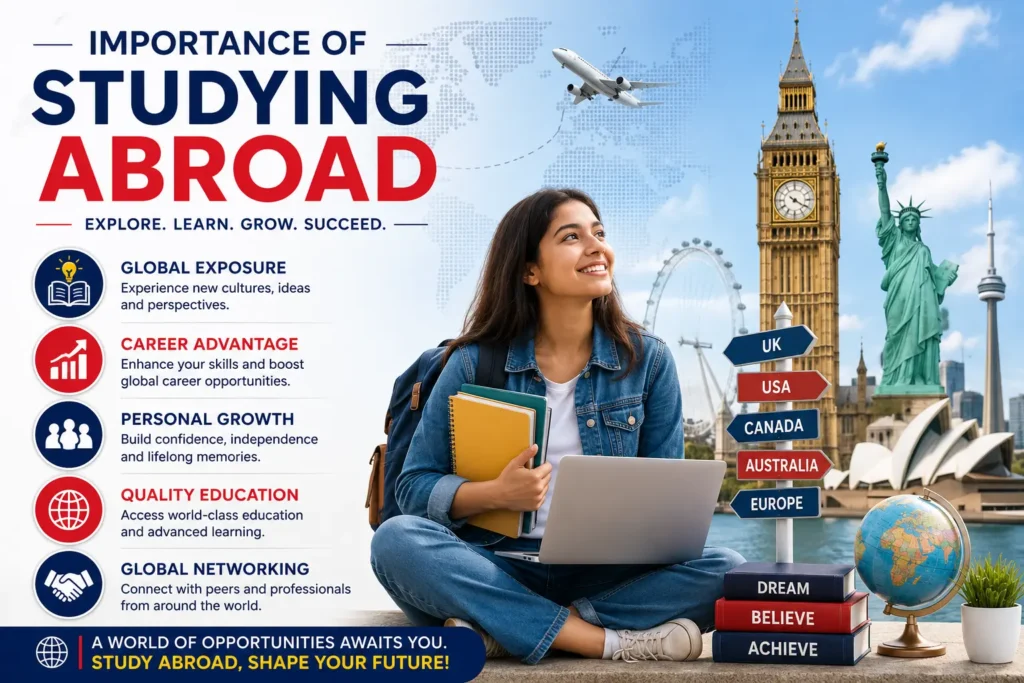
Charting Your Course: The Significance of Research in Study aboard Planning Chartting Your Course: The Significance of Research in Study aboard Planning Education serves as the gateway to the future, as tomorrow belongs to those who invest in their preparation today which is the custom of learning. Indeed, education forms the foundation upon which individuals can build their paths to success and achievement in the modern world. In the era where academic disciplines continue to expand; universities offer increasingly specialized subjects, the opportunities for securing a prosperous future through education have now been multiplied. The educational landscape has become a revolutionized innovation, particularly in the land of higher education, prompting a growing number of Indian students to seek overseas opportunities to enhance their knowledge and skills for the benefit of their native land’s advancement. Despite the fact, that international education has emerged as a desirable pursuit, it is imperative to evaluate several crucial factors before selecting a study destination. A prominent study abroad consultancy like Focus Education stands prepared to provide honest guidance tailored to your future aspirations. Let’s delve into the essential considerations when exploring courses and universities aboard. 1. Exploring Academic Program Quality: It’s crucial to delve into the academic programs available at universities in your preferred destination. This research not only reveals a range of courses but also the calibre of education, faculty proficiency, and program specialization. Neglecting this step could lead to disappointment if the university fails to provide the desired courses or if the quality of education falls short of expectations. Consequently, students may find themselves in a less-than-ideal academic environment, compromising their learning journey. Thus, thorough investigation into academic offerings ensures a more fulfilling and rewarding educational experience. 2. Clear picture of the Course: It’s essential to have a comprehensive understanding of the course you intend to pursue. This knowledge not only boosts your confidence but also provides clarity on where to begin your academic journey. With numerous variations of courses within the same subject, navigating through the options might seem daunting. Before settling on a course, it’s vital to engage in research and analysis. Ask yourself questions such as what ignites your passion and has the potential; to translate into a successful career, or where you visualize yourself in the next 5 years. Eventually, you will discover the ideal course that aligns with your strengths and aspirations becoming a defining aspect of your academic journey. Still, feeling overwhelmed by the abundance of choices? Rest assured; assistance is readily available. Focus Education is here to guide you through the process and help you find the perfect course suited to your ambitions. 3. Understanding University Standards and Rankings: The impact of your educational institute on your intellectual growth and skill development cannot be overstated. Typically, universities and colleges in developed countries uphold rigorous academic standards. However, the decision to choose the right university or college for your academic journey is critical. There are various avenues through which you can assess and compare the institutions. From understanding their campus rankings to touring their facilities virtually, technological progress has simplified the task. TIP: A quick Google search “QS World University Ranking” can provide information on a university’s ranking and programs with a click. As a leading study abroad consultant, we recognize the importance of finding the perfect institution for your international studies. That’s why we take the initiative to conduct thorough research on your behalf, ensuring that you enroll in a top-notch institution that aligns with your academic and career aspirations. 4. Scholarship/Financial Aids: There are numerous scholarship opportunities that significantly alleviate the financial burden of studying abroad. These grants cater to a diverse range of categories and are accessible to international students who achieve their eligibility criteria, whether based on academic merit, financial need, or other criteria, these scholarships serve as invaluable resources for those seeking to pursue their studies away from home. By successfully securing such grants, students can ensure a more comfortable and affordable educational experience in a foreign country. 5. Tuition Fees: Studying in developed countries often comes with higher costs when compared to the home country. However, it’s important to consider the return on your investment in these countries. This means that no doubt the expenses may be greater, but so too are the potential earnings and opportunities. Conducting thorough research before deciding on a study destination is essential. This research involves gathering detailed information on the total costs of the program along with expenses related to accommodation and the overall cost of living, including leisure expenses. By comparing these data precisely, you can make a firm decision that aligns with your goals and financial capabilities. 6. Admission Procedure: Admission procedures vary among universities, each with its unique methods of evaluating and eligibility for accepting students. To move with ease, it is advisable to familiarize yourself with the academic protocols of the chosen university. If you are still unsure about whom to reach out to for comprehensive information on the admission process, as a prominent education consultant, experts at Focus Education are here to provide guidance through every aspect of the admission journey. 7. Part-time Job Opportunities: One of the most significant advantages of studying abroad is the plethora of part-time job opportunities available to students. It not only gives a chance to earn income but also provides valuable work experience overseas. In countries such as the UK, the US, Canada, and Australia, students can explore varieties of on/off campus job options for a specific period as resolute by the government of perspective countries. Moreover, hourly pay is the norm in developed countries which makes it easy for students to budget their finances. Seizing this chance not only supplements income but it provides valuable exposure that enhances their overall academic journey abroad. 8. Employment Prospects in Home Country: Last but not least, it is crucial to consider the acceptance and employment prospects back in India if you are contemplating returning home after your studies. While overseas education certainly broadens your horizons,
Essential Advice for International Students Preparing for US Visa Interviews

Essential Advice for International Students Preparing for US Visa Interviews Essential Advice for International Students Preparing for US Visa Interviews Beginning on a journey to pursue Higher Education in the United States is a thrilling endeavor, but it comes with its fair share of challenges, particularly when it comes to obtaining the visa. For international students, the US Visa Interview is a crucial step in the process, serving as the gateway to fulfilling their academic aspirations in the land of opportunities. To help alleviate some of the anxiety surrounding this pivotal moment, at Focus Education we have gathered a comprehensive guide with essential advice for International Students Preparing for US visa Interviews. Here some important advice for preparing to acquire a US Visa: 1. Begin Early and Stay Informed: Preparation is key when it comes to navigating the US visa application process. Start early to ensure you have ample time to gather the required documents, familiarize yourself with the interview procedure, and stay updated on any changes to visa policies or procedures. 2. Arrange Essential Documentation: One of the most critical aspects of preparing for your US visa interview is ensuring you have all the necessary documentation in order. This typically includes your passport, Form DS-160 confirmation page, visa appointment confirmation, SEVIS fee receipt, financial documents, and any additional materials requested by the consulate or embassy. 3. Prepare for Interview Queries: Anticipate the types of questions you may be asked during your visa interview and practice your responses beforehand. Common topics include your academic background, intended course of study, reasons for choosing the US, ties to your home country, and plans upon completion of your studies. 4. Show Professionalism and Confidence Throughout: Approach your visa interview with professionalism and confidence. Dress appropriately, maintain good posture, and speak clearly and confidently when answering questions. Demonstrating professionalism can leave a positive impression on the consular officer conducting your interview. 5. Demonstrate Financial Stability: Providing evidence of financial stability is crucial for obtaining a US student visa. Be prepared to present documentation that proves you have the financial means to cover tuition, living expenses, and any other associated costs for the duration of your studies in the US. 6. Investigate Your Chosen University and Program: Familiarize yourself with the university and program you have chosen to study in the USA. Research its reputation, accreditation, faculty, facilities, and any other relevant information that can demonstrate your genuine interest and commitment to your academic pursuits. 7. Deepen Understanding of the US Education System: Take the time to educate yourself about the US education system, including its structure, curriculum, grading system, and academic culture. Having a thorough understanding of what to expect can help you better articulate your academic goals and aspirations during your visa interview. 8. Embrace Honesty and Authenticity: Above all, be honest and genuine throughout the visa application process. Avoid providing false information or embellishing details, as this can jeopardize your chances of obtaining a visa. Transparency and authenticity are essential virtues that can enhance your credibility in the eyes of the consular officer. In conclusion, preparing for a US visa interview as an international student demands meticulous planning, comprehensive preparation, and a self-assured demeanour. Adhering to these indispensable tips and guidelines can enhance your prospects of success, paving the way for a confident and optimistic start to your Academic Journey in the United States. If you are pondering how to kickstart these steps, fret not. Focus Education Global Pvt. Ltd. is here to provide comprehensive guidance every step of the way. Visit us now for a FREE one-on-one counselling session with our experts.
Destination Discovery – Delving Into The Matters Of Preparation For Studying Abroad

Destination Discovery – Delving Into The Matters Of Preparation For Studying Abroad Destination Discovery – Delving Into the Matters of Preparation for Studying Abroad Commencing a study abroad adventure is a fascinating experience that opens doors to new educational opportunities, cultures, and viewpoints. However, choosing to study abroad is a significant choice that requires thoughtful consideration, so doing the necessary research beforehand is vital. We will go over 15 compelling points in the following piece on the importance of taking the time to thoroughly research your Preparation for Study abroad Destination. Moreover, we navigate through potential pitfalls associated with each aspect, ensuring that prospective international scholars embark on their journeys well-prepared. 1. Academic Program: It is critical to comprehend the academic offerings of the universities in your preferred location. Researching may demonstrate the level of instruction, the area of specialization of the faculty, and the purpose of each program. Pitfall: Failing to research academic programs may lead to disappointment if the chosen university does not offer the desired course or may lack the expected quality. This can result in substandard academic experience. 2. Quality of Education: Developed nations often possess strong research environments with plenty of resources and cutting-edge labs. On the other hand, there might not be as many opportunities for studying in developing nations which would impact the depth of academic research. Countries with advanced economies typically integrate cutting-edge technology into educational systems, improving the learning environment. Pitfall: In developing countries, a lack of research possibilities could hinder academic exploration and consequently impact the educational process as a whole. 3. Linguistic Landscape: Academic performance is reliant upon possessing proficiency in the language of instruction. One way to reduce language barriers is to figure out if courses are provided with English as the medium of another language. Pitfall: Enrolling in programs without first familiarizing oneself with the language of instruction might cause academic difficulties that have a substantial impact on performance and the learning process. 4. Overall Costing: A thorough understanding of living expenses in the location where you want to study abroad is crucial for effective budgeting. Appropriate financial planning involves taking accommodation, transportation, food, and other expenses into account. Pitfall: Failing to investigate living expenditures may lead to financial strain, especially if expenses exceed expectations, potentially impacting the academic journey adversely. 5. Visa Requirement: For international students, it is crucial to be familiar with legislation, application procedures, and visa requirements. Navigation of the regulations of studying abroad is made easier by researching these areas. Pitfall: Failing to research visa requirements may lead to an application being denied or delayed, which could ruin your plans and leave you without prospects. 6. Cultural/Social Environment: For an effortless integration, it is essential to get familiar with the social and cultural environment of your study abroad destination. Investigating regional traditions, social norms, and community dynamics provides a priceless experience. Pitfall: Overlooking cultural and social aspects may result in cultural shock and difficulties in forming connections, potentially impacting overall experience and well-being. 7. Networking: Studying in a developed country can provide substantial networking chances with industry professionals, as well as access to a larger job market. In developing countries, networking opportunities may be more localized, requiring proactive efforts to build connections with the local job market. The global networking opportunities and exposure to diverse industries in developed countries enhance the employability and career prospects of international students. Pitfall: Neglecting to research networking opportunities may limit your connections within your chosen field. This oversight can impact your ability to secure internships, mentorships, or job opportunities. 8. Safety and Security: It is crucial to ensure the safety and security of the place you have picked. For accurate decision-making, it is imperative to conduct research on crime rates, political stability, and implemented safety measures. Pitfall: Ignoring safety precautions could put you in a dangerous situation, endangering your safety and sense of peace. 9. Quality of Lifestyle: It is crucial to discover the overall quality of life in your study abroad destination. To guarantee an ideal living environment, one should consider and research the elements like the condition of the air, public amenities, and overall well-being. Pitfall: Overlooking quality of life considerations may lead to dissatisfaction with your living situation. Issues like insufficient transportation or poor ventilation might affect your general well-being. 10. Career Goals: Researching the long-term impact of studying abroad on your career goals is crucial. Considering whether the experience of studying abroad fits into your career aspirations ensures that you make informed decisions. Pitfall: Failing to research the long-term impact on your career may result in choosing a destination or program that does not align with your professional goals. This oversight might have a long-term impact on your career. 11. Accommodation: Investigating accommodation options helps you find suitable and affordable living arrangements. Researching for a place to stay during your studies can involve exploring on-campus housing, off-campus apartments, or homestays as potential options. Pitfall: Failing to research accommodation options may result in living in an inconvenient location, experiencing housing issues, or paying higher rents. This oversight can affect your overall comfort and security during your studies. 12. Healthcare Facilities: Managing well-being necessitates looking into healthcare facilities and services. Being aware of the healthcare system in your area guarantees that you can get medical assistance when you need it. Pitfall: Neglecting healthcare-related factors might make it difficult to get medical attention, which puts your health at risk, especially in an emergency. 13. Weather and Climate Conditions: It is essential to know about the local environment and weather when studying abroad in order to adjust. Appropriate preparedness is aided by researching climate conditions. Pitfall: Ignoring climate factors can cause discomfort or a lack of preparedness for severe weather, which can negatively affect everyday life and well-being. 14. Transportation: Investigating transportation system facilities’ effective destination navigation. Independence requires an understanding of local transportation infrastructure. Pitfall: Not doing adequate research on transportation options might lead to increased transportation costs or trouble traveling, which can interfere with
Unlocking Opportunities : The Benefits of Pursuing a Master’s Degree In Ireland

Unlocking Opportunities : The Benefits of Pursuing a Master’s Degree In Ireland Unlocking Opportunities: The Benefits of Pursuing a Master’s Degree in Ireland Embarking on a journey towards a master’s degree is an investment in one’s future, and when considering where to pursue this higher education, Ireland stands out as an exceptional choice. Renowned for its esteemed educational system and forward-thinking curriculum, Ireland offers a plethora of benefits for students looking to advance their careers and expand their horizons. Ireland’s reputation for excellence in education, particularly in its master’s programs, is indeed noteworthy. The emphasis on a dynamic curriculum and dedicated faculty members reflects a commitment to preparing students for the challenges of a rapidly evolving global workforce. The opportunities for collaboration and networking with industry leaders further enrich the educational experience, providing students with valuable insights and connections that can propel their careers forward. Moreover, the focus on skills such as risk assessment, critical thinking, and logical reasoning equips graduates with the tools they need to navigate uncertainty and drive innovation in their respective fields. Ireland’s master’s programs seem to embody a holistic approach to education that not only imparts knowledge but also fosters the development of essential skills and competencies. Advantages: Ireland offers a top-notch educational system, a wide range of courses, and courses that are acknowledged globally by eminent academic associations. For students who merit it, most universities provide scholarships. There is a tech cluster in Ireland as it serves as Google’s European headquarters. Also, it is the world’s largest exporter of software. Ireland is well-known for its pharmaceutical industry. While pursuing master’s in Irish universities, international students also have the opportunity to work up to 20 hours a week while studying. Thanks to technical advancements in Dublin and other locations, numerous Irish colleges have connections with leading industries. Students can therefore get employment easily. Ireland provides two years of stay-back for master’s students. Students pursuing a master’s degree in Ireland are certain to acquire analytical and problem-solving skills that they may apply in the workplace. Every taught curriculum has a duration of one to two years. Similar to their undergraduate degrees, students enrolled in taught programs will frequently attend workshops, lectures, and seminars. Moreover, assessments are done for dissertations, programs, and evaluations. Graduates of Ireland’s master’s degree can expect secure employment and a good salary. A master’s degree in Ireland assists students in gaining profound knowledge in a certain topic, which they may then utilize as a foundation for managing risks and uncertainty in any industry or employment. Ireland’s master’s degree program offers great teaching techniques, extensive real-world experience, and an excellent master’s curriculum. In Ireland, a master’s degree is often equivalent to a Master of Arts (MA) or Master of Science (MS), with the former being applied to fields that fall within the social sciences, humanities, and arts. Conversely, the latter covers topics like engineering, physics, chemistry, technology, and so on. There are also master’s programs available in other fields, such as business administration and music. Enrolling in master’s degree programs in Ireland can significantly enhance students’ earning potential and employment opportunities. To make sure that students have a comprehensive understanding and are well-suited for the diverse demands in the sectors and other fields, universities in Ireland provide a wide selection of specialties and courses based on advanced technology. Ireland’s institutions serve the needs of students to maintain the modern systems and technologies that are vital to the developing world of today. It can be challenging to choose the best university for your ideal career because so many provide a wide range of distinctive programs and specific approach. Our Focus Education experts have put up a thorough list of Irish Institutes offering master’s degrees to make this work easier for you. Ireland’s top institutions for Masters Degrees: Trinity College Dublin University College Dublin University College Cork Griffith College Dublin Dublin City University Dublin Business School Cork Institute of Technology National University of Ireland Galway Limerick Institute of Technology Maynooth University Athlone Institute of Technology Letterkenny Institute of Technology Dundalk Institute of Technology National College of Ireland Institute of Technology, Carlow In conclusion, there are multiple motivations for studying in Ireland. Industries like software development and pharmaceuticals are doing well economically, Ireland has a lot to offer overseas students. What could be more amazing than attending school in a nation that provides you with a dynamic environment, breathtaking scenery, a comfortable lifestyle, and an abundance of professional chances? So why wait? Get in touch with Focus Education to learn more about how our knowledgeable team can fulfil your dream of studying in Ireland.
Navigating the Latest Updates from IRCC: What International Students Need to Know

Navigating the Latest Updates from IRCC: What International Students Need to Know Navigating the Latest Updates from IRCC: What International Students Need to Know It’s time to take note of some important changes coming your way in 2024. In a recent announcement, the Immigration, Refugees and Citizenship Canada (IRCC) has unveiled some significant changes that are poised to impact the landscape for international students aspiring to study in Canada. These updates, outlined below, underscore the government’s efforts to manage the entrance of overseas students while ensuring a sustainable and balanced approach to Canada’s education system. Temporary Cap on Study Permits: One of the most notable changes is the introduction of a temporary cap on the admission of overseas students. It’s projected that in 2024, approximately 3,60,000 study permits will be granted, marking a significant 35% decrease from the previous year. This cap aims to regulate the flow of international students and address any potential strain on educational resources. Furthermore, the cap for 2025 will be determined based on the outcomes and needs identified by the close of 2024. Limit on Study Permit Duration: Effective January 22, 2024, the federal government has restricted the duration of study permits, allowing applications to be accepted for a maximum of two years only. While this may seem restrictive at first glance, it’s a measure designed to encourage students to pursue their academic goals efficiently and effectively within a defined timeframe. Province-Specific Caps: Recognizing the varying degrees of growth in international student enrollment across different provinces and territories, IRCC has authorized the imposition of caps on the total number of foreign students enrolled in undergraduate programs within each region. Provinces experiencing unsustainable growth will see a reduction in study visa allotments, with Ontario expected to witness a substantial 50% decrease in acceptance rates. However, it’s worth noting that these caps won’t apply to international students pursuing master’s or doctorate degrees, ensuring that advanced education remains accessible and unrestricted. Those currently enrolled in master’s or doctorate programs, for instance, are exempt from the caps, reflecting Canada’s commitment to attracting and retaining top-tier talent in specialized fields. How this cap affects permits: For many, the burning question is: How will this cap affect my chances of securing a coveted study permit? It’s a legitimate concern, especially for those eagerly eyeing Canadian institutions for their higher education journey. With fewer study permits up for grabs, the competition to gain admission to Canadian Designated Learning Institutions (DLIs) is expected to intensify. It is unlikely that applying to a master’s or doctorate program in Canada will have an impact on your prospects of being granted a study permit. However, it could be more difficult for students to be eligible for a study permit if they enrol in undergraduate programs, such as bachelor’s, diploma, or certificate programs. Students who are interested in studying in Ontario, British Columbia, or Nova Scotia may have to contend with higher competition because these regions are predicted to have a more significant decrease in the number of study permits given. To provide further evidence of the validity of their application, students submitting study permit applications after January 22, 2024, will also need to get an attestation letter from the province or territory in which they want to study. This document will be in addition to the other documents that students already need to submit, such as the proof of financial assistance and the Letter of Acceptance (LOA). Nonetheless, until March 31, 2024, provinces and territories have been provided by the federal government to establish a procedure for issuing attestation letters to foreign students. For some summer intake students in 2024, this can result in longer processing periods and delays in the study permit application procedure. In essence, while the cap on study permits reflects Canada’s efforts to manage immigration flows and prioritize domestic interests, its repercussions wave through the global education landscape, impacting the aspirations of countless international students. As the terrain continues to shift, staying conversant of policy updates and adapting strategies becomes paramount for those charting their educational voyage to this nation. Changes to Post-Graduation Work Permit (PGWP) Eligibility: Shaping Career Paths: Another significant adjustment pertains to the eligibility criteria for Post-Graduation Work Permits (PGWPs). Effective September 1, 2024, international students enrolled in study programs offered by private universities with licensed curricula will no longer qualify for PGWPs upon graduation. This shift aims to prioritize graduates of public-private partnership (PPP) institutions while streamlining pathways to the Canadian workforce. Conversely, graduates of master’s programs can expect an extension of their PGWPs to three years, providing ample opportunities for professional development and career advancement. Revised Spousal Open Work Permit Criteria: Supporting Family Integration In a bid to align spousal open work permit eligibility with the academic pursuits of the primary student visa holder, the IRCC has introduced changes to the criteria for such permits. Spousal open work permits (SOWPs) were available to spouses of international students enrolled in qualifying full-time study programs in Canada up until 2023. But coming ahead, spouses of master’s and doctorate students as well as those enrolled in professional schools like law and medicine will be the only ones eligible for open work permits under section C42. Open work permits will no longer be available to spouses of overseas students enrolled in undergraduate and other college programs Updated Costs-of-Living Requirements: Ensuring Financial Sustainability: Effective January 1, 2024, international students must demonstrate financial capacity by meeting revised cost-of-living standards, which have increased to $20,635 (formerly $10,000). This adjustment aims to ensure that students can sustain themselves financially throughout their Studies in Canada, mitigating the risk of financial strain and enhancing overall student welfare. Additionally, specific requirements for students relocating to Quebec underscore the aspects of financial considerations. Students who want to Study in Canada after January 1, 2024, must provide enough evidence of their ability to pay for their studies in order to satisfy the new cost of living standards. For international students under the age of 18, proof of financial assistance
Ireland- An Ultimate Study Abroad Destination

Ireland- An Ultimate Study Abroad Destination Ireland- An Ultimate Study Abroad Destination Exploring the world through education offers unparalleled opportunities for personal and academic growth, one of the destinations that stand out for its appeal to International students is Ireland. Ireland presents a compelling case for those seeking an enriching study abroad experience as it is renowned for its vibrant culture, stunning landscape, and esteemed universities. Through this article, we will delve into what makes Ireland a top choice for worldwide students and why it is a prime spot in the study-abroad destinations list. With its welcoming environment and emphasis on education and personal growth, Ireland is an ideal location for students to excel academically and personally. Why choose Ireland? Ireland is one of the top destinations for higher education due to its numerous prestigious universities, globally acclaimed for their exceptional academic standards and dedication to student development. These institutions offer a wide range of programs and courses spanning various disciplines, ensuring that students have abundant choices to tailor their educational journey according to their interests and career aspirations. Whether one’s passion lies in business, engineering, arts, or science, Ireland provides a rich academic landscape to explore and thrive in. Moreover, Irish universities stand out for their cutting-edge research facilities and the calibre of their faculty members. Immersed in an intellectually vibrant environment, students have unparalleled opportunities to engage with pioneering research initiatives and learn from world-renowned experts in their fields. This exposure not only enhances their academic experience but also equips them with practical insights and skills crucial for their future careers. Furthermore, studying in Ireland offers more than just academic enrichment. The country’s rich cultural heritage, vibrant cities, and welcoming communities provide an enriching backdrop for personal growth and exploration. Students can immerse themselves in a diverse and inclusive society, fostering cross-cultural understanding and broadening their global perspectives. In essence, choosing Ireland for higher education promises a holistic learning experience that encompasses academic excellence, cutting-edge research opportunities, cultural enrichment, and invaluable networking possibilities, laying a solid foundation for a successful and fulfilling career journey. Why Irish Universities? Irish universities stand as pillars of academic excellence, with esteemed institutions like Trinity College Dublin, University College Dublin, and University College Cork leading the charge. Renowned for their commitment to delivering top-notch education, these universities boast a rich legacy of nurturing countless alumni who have risen to prominence in various spheres. Beyond their academic prowess, Irish universities foster a vibrant and inclusive atmosphere that celebrates diversity and fosters the free exchange of ideas. Here, students from around the globe come together, bringing with them a myriad of perspectives and cultural backgrounds. This multicultural tapestry not only enriches the academic discourse but also cultivates a global outlook indispensable in today’s interconnected society. University QS Ranking 2024 Trinity College Dublin (TCD) 81 University College Dublin (UCD) 171 University of Galway 289 University College Cork (UCC) 292 University of Limerick 426 Dublin City University (DCU) 436 Moreover, Irish universities prioritize student support and engagement, offering a plethora of resources and opportunities for personal and professional development. From cutting-edge research facilities to extensive extracurricular activities, students are empowered to explore their interests, hone their skills, and prepare for success in their chosen fields. In essence, choosing an Irish University not only guarantees a world-class education but also opens doors to a transformative learning experience enriched by diversity, innovation, and endless possibilities for growth and exploration. What to Expect from Studying in Ireland? Studying in Ireland provides a distinctive experience for international students to engage with a lively culture. The nation is celebrated for its warm hospitality and amiable locals, guaranteeing that students from abroad feel accepted and encouraged throughout their academic pursuits. Aspect Details Mode of Instruction Irish universities conduct classes in English, which is advantageous for Indian students, as it circumvents language barriers commonly encountered in countries with more complex linguistic structures, thus enabling smooth academic progression. Cost of Education Ireland’s universities offer relatively lower tuition fees compared to counterparts in other countries, thanks in part to government financial support, making it an economically viable option for international students seeking quality education without exorbitant expenses. Post-Study Visa Through the Irish Third-level Graduate Scheme, international students from non-EU countries can apply for post-study work visas, granting them the opportunity to remain in Ireland post-graduation, pursue employment prospects, and contribute to the local workforce, with the flexibility of full-time work. Cost of Living The cost of living in Ireland is notably reasonable, presenting students with a manageable financial landscape compared to the higher living expenses often associated with countries, thus easing financial burdens and allowing for a more comfortable student lifestyle. Customs and Culture Ireland’s rich cultural tapestry and breathtaking landscapes provide students with an immersive experience beyond academics, offering opportunities to delve into the nation’s heritage, explore its picturesque scenery, and engage with its vibrant communities, thereby enriching their educational journey with diverse cultural encounters and memorable experiences that extend far beyond the classroom. Schengen Visa: A Schengen visa is a document that permits visitors to enter the Schengen region for the following purposes: It gives an amazing opportunity to international students to explore 29 countries with this Visa while pursuing the course of their dreams. Scheduled quick visits within or via the borders of a Schengen state (short stay visa) travel through the international terminals of Schengen state airports (airport transit visa) The following are 29 countries that fall within the Schengen Area and cover nearly all of mainland Europe: Austria, Iceland, Italy, Latvia, Liechtenstein, Lithuania, Luxembourg, Malta, Netherlands, Norway, Belgium, Bulgaria, Croatia, Czechia, Poland, Portugal, Romania, Slovakia, Slovenia, Spain, Denmark, Estonia, Finland, France, Germany, Greece, Hungary, Sweden, and Switzerland. Selecting Ireland as a study destination offers numerous advantages that significantly enhance the educational journey of students. One notable benefit is the chance to obtain a globally recognized qualification. Ireland’s educational system places a strong emphasis on practical learning and real-world application, integrating internships, work placements, and industry projects into many programs. This
Demystifying the US Student Visa Application Process for Indian Students

Demystifying the US Student Visa Application Process for Indian Students Demystifying the US Student Visa Application Process for Indian Students Are you an Indian student dreaming of travelling to lively cities like New York, studying at famous schools like Harvard, or working in places like Silicon Valley? The United States has lots of likelihoods and a lively culture waiting for you. But before you can go on your American journey, you must understand the tricky world of US student visa. Over here we will explain how to apply for it, and give you important tips for success. Study in USA: The United States is globally renowned for its prestigious universities and diverse academic offerings, making it a top choice for international students seeking quality education and vibrant cultural experiences. From renowned Ivy League institutions to a myriad of specialized colleges, the US Higher Education System provides a plethora of opportunities for academic growth and exploration. Additionally, the country’s rich cultural tapestry enhances the student experience, offering opportunities for cross-cultural exchange and personal development outside the classroom. Whether it’s studying in the USA or engaging in extracurricular activities, students in the US are immersed in a dynamic environment that fosters both academic excellence and cultural enrichment. Student Visa Application Process: To start the process of applying for a student visa (known as the F1 visa), the first step is gaining admission to a university/college in the United States certified by the Student and Exchange Visitor Program (SEVP). This certification ensures that the institution meets certain standards for hosting international students. Once you’ve been accepted to SEVP-certified universities, you’ll receive a Form I-20 from that institution. This form is a vital document for your visa application, as it confirms your acceptance and outlines key details of your intended academic program, such as the start date, duration, and estimated costs. Essentially, securing admission to a SEVP-certified institution and obtaining the Form I-20 are the initial steps in the journey toward obtaining an F1 visa to study in the US. Apply for a US Student Visa: Once you have your Form I-20 from the SEVP-certified university you’ve been accepted to, it’s time to apply for the F1 visa at the US Embassy or Consulate in India. This process requires a few important steps. Firstly, you’ll need to complete the DS-160 online application form. This form asks for detailed information about yourself, your educational background, and your plans while in the US. After you’ve filled out the DS-160, you’ll need to schedule an interview appointment at the Embassy. Finally, you’ll need to pay the visa application fee. This fee is paid electronically through a designated payment system. Once you’ve completed these steps and attended your visa interview, a consular officer will review your application and determine whether you’re eligible for the F1 visa to pursue your studies in the US. Student Visa USA Cost: Budgeting for the costs of obtaining a US student visa is crucial as there are several expenses involved. Firstly, there’s the visa application fee, which is paid when submitting the DS-160 online application. Additionally, there’s the SEVIS fee, which is a mandatory fee paid to the Student and Exchange Visitor Information System (SEVIS) to maintain accurate information on international students. This fee must be paid before attending the visa interview. Apart from these mandatory fees, there may be additional expenses related to travel to the embassy or consulate for the visa interview, such as transportation and accommodation costs. Moreover, there might be expenses associated with gathering required documentation, such as obtaining transcripts or medical reports. It’s important to account for all these expenses when planning to apply for a US student visa to ensure a smooth and hassle-free process. F1 Visa Processing Time: The processing time for an F1 visa, which allows international students to study in the US, can fluctuate due to several factors. One crucial factor is the time of year you apply, as certain periods may see higher volumes of visa applications. Additionally, the workload of the embassy or consulate where you apply can impact processing times. To avoid any potential delays, it’s wise to submit your visa application well in advance of your intended program start date. By doing so, you provide ample time for any unexpected delays in the processing of your application. Planning ahead and applying early can help ensure that you receive your visa in time to begin your studies as scheduled, giving you peace of mind and minimizing stress during the visa application process. Process for US Student Visa: During your visa interview, it’s crucial to demonstrate your genuine intent to study in the USA by showing your commitment to your academic program and explaining how it fits your educational and career goals. You should also discuss your ties to your home country, like family or job prospects, to prove your intention to return after your studies. Additionally, you’ll need to provide evidence of your financial ability to cover tuition fees and living expenses in the US, which may include bank statements or sponsorship letters. The officer will evaluate your eligibility for the F1 visa based on this information, and you should be prepared to provide any requested documents promptly to increase your chances of success. Being well-prepared and organized is key to a successful visa interview. About Form I-20: Form I-20 is an important document issued by universities/colleges authorized by the Student and Exchange Visitor Program (SEVP) in the US. It acts as proof of acceptance into a specific academic program and provides essential details like the program’s start date, duration, and estimated costs. This information helps both students and immigration authorities understand when students are allowed to enter the US, how long they can stay, and whether they have enough financial support for their studies. Essentially, Form I-20 serves as a gateway for international students to pursue their academic goals in the US. It not only confirms their acceptance into a program but also ensures they meet the requirements for
Accommodation in Ireland

Accommodation in Ireland Accommodation in Ireland Looking to pursue higher studies and navigating the process of finding student accommodation in Ireland can be quite challenging. Securing suitable housing is often one of the most daunting tasks for students studying in Ireland. However, one of the notable advantages of studying in Ireland is its relatively low cost of living. If you are seeking on-campus student accommodation, it’s imperative to apply as early as possible to secure a spot at your desired university. If you are feeling concerned about Accommodation in Ireland, you have landed on the right page. This blog serves as your comprehensive guide to finding student accommodation in Ireland. Take a look! Student Accommodation in Ireland: Here is a basic overview of accommodation in Ireland for Indian Students: Room Type Price/Month On-Campus without food 800-1000 Euro approx. On-Campus with food 1000-1200 Euro approx. Off-campus, own apartment 800-1200 Euro approx. Off-campus, shared apartment 500-600 Euro approx. In Ireland, student accommodation typically falls into four categories: On-campus housing Long-term student hostels Living with a host family (known as digs or homestay) Private rental properties. Certainly, here’s a detailed look at each type of student accommodation in Ireland: 1. On-Campus Accommodation: On-campus accommodation is highly sought after among students in Ireland, although a bit costly. Typically, these accommodations consist of apartments housing 4 to 8 students, each with their own private bedroom while sharing communal spaces like the kitchen, living room, and bathroom. Rent is typically paid monthly, with a deposit required at the beginning of each semester. Upon departure, students can expect a refund of their security deposit. However, additional charges may apply for heating utilities, which are sometimes billed separately. Some student residences set limits on utility usage, and any excess charges may be deducted from the security deposit. 2. Private Off-Campus Student Accommodation: Private off-campus student accommodation serves as a viable alternative for students unable to secure on-campus housing. These accommodations often offer similar services and amenities to on-campus options. Some colleges even collaborate directly with off-campus providers when on-campus spaces are limited. However, private off-campus accommodation tends to come at a higher cost compared to on-campus options. In recent years, there has been a rise in luxurious accommodation offerings, with rents soaring as high as €10,000 for a 9-month lease. 3. Long-term Student Hostels: Long-term student hostels offer a flexible accommodation option, though with limited availability. Sharing the hostel with fellow students, residents can access communal living areas, kitchens, and private bedrooms upon payment of monthly rent. Included in the rent are amenities such as breakfast and utility bills, providing convenience and ease for students. 4. Living with a Host Family (known as digs or homestay): This option allows you to reside as a paying guest within an Irish family, offering a private room conducive to studying. It’s particularly popular among students enrolled in short courses, as well as those pursuing further and higher education. In Ireland, this arrangement is referred to as “living in digs,” while in other countries, it’s commonly known as “homestay.” “Digs” typically include both morning and evening meals, with students responsible for purchasing their own midday meal on campus or elsewhere. Additionally, there are no additional charges for utilities such as heating and lighting, and laundry services are often included. 5. Private rental properties: Private rented accommodation offers various options, including bedsits, flats/apartments, or sharing a house. Sharing accommodation is typically more cost-effective. Bedsit: A single-room unit with basic cooking facilities, a bed, and some furnishings. Bathroom facilities are shared with other occupants of the building. Flat/Apartment: Provides a kitchen, living room, bathroom, and one or more bedrooms. Costs vary based on size and quality; a compact one-bedroom may be pricier than a bedsit, while a larger apartment commands higher rent. House or Apartment Share: Often the most economical choice as bills are split among multiple occupants. Sharing a room further reduces living expenses. This option has become increasingly popular due to housing shortages. In all cases, rent is typically paid monthly and in advance, with a security deposit equivalent to one month’s rent required at the beginning of the lease. This deposit is refunded upon departure if no damage has occurred. Leases usually run for 9 or 12 months, and breaking the lease without notice or failing to meet lease terms may result in forfeiture of the security deposit. When seeking accommodation in Ireland, International students have a range of housing choices available to them depending on the cities they have decided to reside in. It’s crucial to carefully consider factors like safety, convenience, and basic amenities when selecting student accommodation. Remember to prioritize your needs and preferences. Please feel free to interact with Focus Education by leaving a message!
Myth Busters : Studying In Canada As An International Student

Myth Busters : Studying In Canada As An International Student Myth Busters: Studying in Canada as an International Student Are you considering studying abroad in Canada? As an international student, you may have heard various myths and misconceptions about life and education in Canada. But fear not! Today, we’re here to debunk some of the most common myths and set the record straight. Myth #1: Toronto is the capital of Canada: While Toronto is a bustling metropolis and a financial hub, the capital of Canada is actually Ottawa, located in the province of Ontario. So, if you’re planning to visit the nation’s capital, make sure you head to Ottawa! Myth #2: Canada is too cold to live in: Yes, Canada is known for its harsh winters, but the climate greatly varies depending on where you are in the country. From the mild temperatures of the West Coast to the snowy winters of Toronto and Montreal, Canada offers a diverse range of climates. So, don’t let the cold scare you off – there’s a perfect Canadian city for everyone! Myth #3: Finding a job to support yourself while studying is difficult: International students study in Canada have the opportunity to work both on and off campus while enrolled in a Canadian institution. While it may not cover all of your expenses, part-time work can help offset the cost of living and provide valuable work experience. Just make sure to budget wisely and manage your time effectively. Myth #4: Need to learn French: While French is one of Canada’s official languages, proficiency in the language is not required for entry into the country. English is widely spoken and understood across Canada, particularly in cities like Toronto, Vancouver, Calgary, Winnipeg. Unless you plan to visit Quebec or pursue a French-language program, you can get by just fine with English. Myth #5: The procedure of obtaining a student visa for Canada is difficult and complicated: While the visa application process may seem daunting, it’s not as difficult as you might think. With the right guidance from a reliable study abroad consultant like Focus Education, you can navigate the process successfully. From filling out application forms to compiling required paperwork, assistance is available every step of the way. Myth #6: Universities in Canada are not well-known worldwide: Canada is home to some of the top universities in the world, with a reputation for academic excellence and research innovation. The institutions are highly regarded internationally. With 19 universities listed in the QS World University Rankings for 2024, Canada’s reputation in higher education speaks for itself. Myth #7: For overseas students, Canada does not have any employment accessible: Canada’s strong economy offers plenty of job opportunities for international students, even those without prior experience or fluency in English. Many employers are open to hiring recent graduates, and having a Canadian degree can enhance your employability both in Canada and abroad. Plus, with entry-level positions available across various industries, there are plenty of opportunities to gain valuable work experience during your studies. Studying in Canada as an international student is a rewarding experience, but it’s essential to separate fact from fiction. By debunking these myths, we hope to help you make informed decisions and ensure that your educational journey in Canada is both smooth and enjoyable. So, pack your bags, embrace the adventure, and get ready to embark on the experience of a lifetime in the Great White North! In conclusion, debunking myths about studying in Canada reveals a wealth of opportunities for international students. With Focus Education’s expert guidance, navigating visa processes becomes manageable. Canada’s top universities, diverse cities, and welcoming atmosphere await those eager to embark on this enriching educational journey. Do visit Focus Education to streamline your Canadian experience, ensuring a smooth transition and maximizing your potential in Canada.
The Ultimate Guide to Choosing the Right University in the USA for Indian Students

The Ultimate Guide to Choosing the Right University in the USA for Indian Students The Ultimate Guide to Choosing the Right University in the USA for Indian Students Do you intend to study in the United States as an Indian student? Get ready for an amazing experience! US universities are famous for their top-quality education and lots of opportunities. Whether you’re into science, business, or something else, there’s a perfect fit for you. Plus, studying in the USA means meeting people worldwide and making connections for your future. So, let’s pursue and discover the endless possibilities that await you as you prepare to study in the USA! Factors to Consider: Academic Focus: When you’re thinking about which university to go to in the USA, it’s important to pick one that offers the subjects you’re interested in. This way, you’ll enjoy learning about what you love. You can find out about the different university programs by checking their websites, using college search websites, and exploring on academic forums. These resources can help you figure out US university majors for Indian Students. Location and Campus Life: The location and campus environment of a university can significantly impact your overall experience. Factors like climate, urban versus rural settings, and the presence of a large Indian student community are crucial considerations. Many Indian students seek universities with a substantial Indian population for a sense of community and support. Researching campus life and student organizations can be facilitated through online platforms, social media groups, and student forums, offering insights into US Universities with large Indian student populations. Cost and Financial Aid: Cost and financial aid are key factors to weigh when selecting a university. Considering tuition fees, living expenses, and scholarship opportunities is essential. Numerous scholarships are available specifically for Indian students studying in the USA, including merit-based scholarships, need-based aid, and government-sponsored programs. Exploring financial aid options can be facilitated through university websites, scholarship databases, and educational consultants, aiding in identifying scholarships for Indian students in the USA. Accreditation and Ranking: Accreditation and university rankings provide insights into the quality and reputation of academic institutions. Ensuring accreditation guarantees a university meets established standards of excellence. University rankings offer valuable information about a university’s standing and performance. Understanding the difference between national and regional rankings and interpreting them in the context of your academic goals is essential. Utilize resources such as university websites, ranking publications, and educational consultants to assess accreditation and rankings when selecting top-ranked universities in the USA for Indian students. Additional Considerations for Indian Students: When considering studying in the USA, Indian students need to weigh additional factors beyond academics, such as visa requirements, career opportunities, and alumni networks. Understanding the visa process is crucial, and many universities offer support to international students navigating the complexities of obtaining student visas. Furthermore, a strong alumni network and robust career services can significantly enhance the student experience and pave the way for future success in both the USA and India. Let’s explore these important considerations further to ensure a well-rounded decision-making process for Indian students aspiring to study in the USA. Visa Requirements and Support: When planning to study in the USA, navigating the visa process can be daunting. However, resources and organisations like Focus Education specialize in guiding students through every step, from application to visa processing. Now, you might wonder how exactly Focus Education can assist you in this journey. Here are the steps where we can provide support to secure your USA visa. Initial Consultation Documentation Application Assistance Interview Preparation Follow-up Support Visa Guidance Post Visa Assistance Overall, Focus Education aims to make the visa process as smooth and stress-free as possible, allowing you to focus on preparing for your studies and making the most of your educational experience in the USA. Career Opportunities and Alumni Network: A strong alumni network and career services can greatly benefit International Students Studying in the USA. Many universities offer extensive career support, including job placement assistance, resume workshops, and networking events. Alumni connections can be invaluable for future job prospects, both in the USA and back in India. Leveraging alumni networks can open doors to internships, job opportunities, and mentorship, enhancing the overall student experience and preparing graduates for success in their careers. Research Tools and Resources: Indian students have a plethora of resources available to aid them in researching US universities. Among these, Focus Education Global Pvt. Ltd. stands out as an accessible and reliable option, offering expert guidance for those seeking to pursue their careers in the USA. Furthermore, platforms like Quora and Reddit host numerous student testimonials, offering firsthand perspectives on the experiences of Indian students at various universities. These diverse resources collectively empower Indian students to make informed decisions when selecting universities in the USA. Conclusion & Taking the Next Step In conclusion, choosing the right US university involves several key steps: researching academic programs and majors, considering location and campus life, evaluating cost and financial aid options, assessing accreditation and rankings, understanding visa requirements and support services, exploring career opportunities and alumni networks, and resources like Focus Education Global Pvt. Ltd. play a pivotal role in providing personalized guidance throughout the decision-making process. To move forward, we encourage readers to create a shortlist of universities based on their priorities, focusing on factors like academic fit, campus environment, and potential career opportunities. For personalized guidance and support in this process, consider reaching out to Focus Education for a free consultation on choosing US universities. Let’s take the next step together toward your exciting academic journey in the USA!